


Korea Commits $1.5B to Fund-of-Funds, Targeting $3B in Total Venture Capital


Korea is addressing two critical challenges in its startup ecosystem—the concentration of venture capital in Seoul and the shortage of unicorn-scale companies—with a $1.5 billion (KRW 2.14 trillion) fund-of-funds commitment that aims to mobilize $3 billion (KRW 4.35 trillion) in total venture capital for 2026. The Ministry of SMEs and Startups, working with the Korea Venture Investment Corporation (KVIC), will leverage public funding to attract matching private investment.
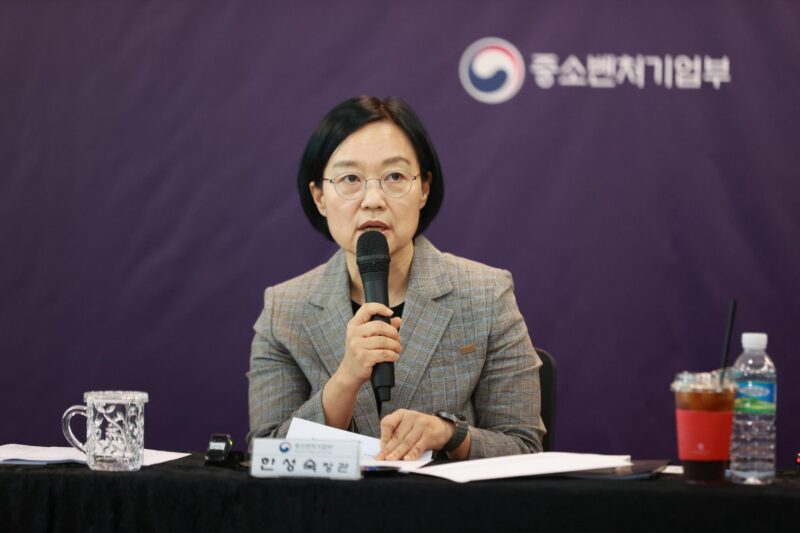
The strategy tackles Korea’s venture ecosystem from three angles: creating a systematic path to unicorn status for AI and deep-tech companies, spreading investment beyond the Seoul metropolitan area, and building exit markets that have long frustrated investors.
Building Korea’s Next Tech Giants
The Next Unicorn Project represents the government’s most structured approach yet to creating billion-dollar companies. Rather than scattering capital across stages, the government is committing $385 million (KRW 550 billion) to mobilize $909 million (KRW 1.3 trillion) in total funding that maps to company maturity. Startup and Scale-up Funds will receive $517 million (KRW 740 billion) to support companies from early discovery through growth rounds exceeding $70 million.
The program introduces a new Unicorn Fund targeting roughly five near-unicorn candidates with combined public-private investments exceeding $210 million (KRW 300 billion). Companies that secure major foreign venture capital backing can access an Overseas Expansion Fund worth $175 million (KRW 250 billion), designed to use international investor commitments as springboards for global scaling.
Fixing the Seoul-Centric Problem
Korea’s venture capital flows overwhelmingly to Seoul, leaving regional cities struggling despite strong universities and industrial bases. The Regional Growth Fund directly confronts this imbalance with $161 million (KRW 230 billion) in government commitments—the largest regional allocation ever—that will mobilize $280 million (KRW 400 billion) in mother funds and $490 million (KRW 700 billion) in sub-funds through partnerships with local governments, universities, and banks.
Starting this year, four regions annually will establish these funds, aiming to create $17.1 billion (KRW 24.5 trillion) in regional venture capital by 2030. The goal isn’t just investment distribution but creating each region’s first unicorn, which requires sustained capital availability through multiple funding rounds. To enforce real change, all fund-of-funds portfolios must now invest at least 20% outside Seoul, with extra selection advantages for funds committing higher regional percentages.
Creating Exit Options
Korea’s venture investors face a persistent problem: limited ways to cash out successful investments. Public offerings remain difficult, and secondary markets barely function compared to the US or Europe. The government is committing $210 million (KRW 300 billion) to fix this bottleneck.
Secondary funds will get $140 million (KRW 200 billion) to purchase existing stakes from portfolio companies or fund limited partners. To jumpstart LP share trading—currently underdeveloped—these funds must acquire at least 10% of LP positions, creating actual market activity. An additional $70 million (KRW 100 billion) supports M&A funds focused on business succession, offering investors alternative exit paths beyond IPOs.
Supporting Early Stages and Comebacks
Early-stage investment has contracted as investors chase later-stage deals with clearer returns. The government is countering this trend by doubling seed-stage funding to $227 million (KRW 325 billion). Half flows through the “Rookie League” program backing emerging VC firms and accelerators, preventing the ecosystem from ossifying around established players.
The Restart Fund, for entrepreneurs with previous failures, quadruples to $140 million (KRW 200 billion) and now covers companies pivoting their business models—recognizing that startup failure often means the business model rather than the team. Youth entrepreneurship gets $47 million (KRW 66.7 billion), while women entrepreneurs receive $12 million (KRW 16.7 billion).
Attracting Foreign Capital
Korean startups struggle to attract overseas investors unfamiliar with the market. The Global Fund addresses this with $91 million (KRW 130 billion) in government commitments to mobilize $699 million (KRW 1 trillion) through two mechanisms: an ad-hoc investment track enabling partnerships with major international firms, and a new global mother fund in Singapore targeting $140 million (KRW 200 billion) by 2027. The Singapore vehicle aims to make Korean venture investing more accessible to Southeast Asian and global limited partners.
Industry-Specific Programs
Beyond the core strategy, specialized funds address specific sectors. The Ministry of Culture, Sports and Tourism is committing $349 million (KRW 499 billion) to create $512 million (KRW 731.8 billion) in funds for intellectual property development ($140 million / KRW 200 billion), culture-technology ventures ($70 million / KRW 100 billion), and Korean film production ($28 million / KRW 40 billion). The Ministry of Oceans and Fisheries adds $10.5 million (KRW 15 billion) for maritime companies outside Seoul.
The program also introduces accountability measures. Impact funds maintaining $23 million (KRW 33.4 billion) in funding must now track and report portfolio companies’ social value creation, with results influencing future fund manager selection.
The entire initiative reflects a shift from simply providing capital to engineering ecosystem transformation—addressing structural problems in regional distribution, exit markets, and growth-stage funding that have constrained Korea’s venture ecosystem despite its strong technical talent and entrepreneurial energy.
MORE FROM THE POST
- South Korea Approves Record $11.3B Budget for SMEs and Startups in 2026
- MSS’s Major Move in Singapore: $270M Fund to Boost Korean Startups Globally
- Korea’s MSS Launches Global Startup Center in Seoul to Support Foreign Entrepreneurs
- MSS of Korea Enhances Support for Super Gap Startups in AI, Quantum and Space Sectors
- ‘Startup Korea Fund’ launched with KRW 500 billion from government and private investors
- Fund
- Korea
- Korea Venture Investment Corporation
- Korean government
- Korean startup
- Ministry of SMEs and Startups
- Policy
Share


Leave a Reply