


San Francisco-based Deft Robotics has raised undisclosed seed funding from Rainfall Ventures and Korean VC firm SpringCamp. The robotics startup is going after what’s widely considered the hardest problem in manufacturing automation: the “last 20%” of processes that have stubbornly resisted traditional robotic solutions.
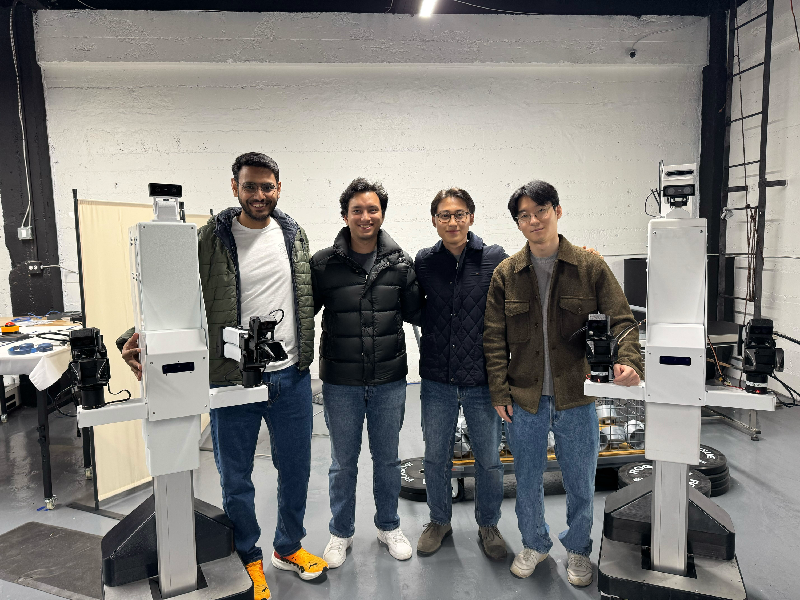
Founded by Shinhee Lee (CEO) and Jungwon Shin (CTO), Deft Robotics builds drop-in automation workcells using wheeled humanoid robots for automotive and electronics manufacturers. The company operates as a systems integrator tackling the messy, unpredictable tasks that conventional industrial robots simply can’t handle.
Where traditional industrial robots shine at repetitive work in controlled settings, Deft Robotics focuses on AI-powered perception and learning that lets robots adapt on the fly. The goal is automating tasks that need human judgment—aligning parts, inserting cables, flexible assembly—pushing into territory machines haven’t been able to crack.
The approach is straightforward: learn from humans first, automate later. Workers initially control robots through teleoperation, which generates a steady stream of video, sensor, and robot state data. That data trains machine learning systems to gradually take over, though humans can still jump in remotely when things go sideways. Even those error recovery moments feed back into the system, making it smarter over time.
Under the hood, Deft uses lightweight transformer models built specifically for factory floors. Instead of throwing massive general-purpose AI at the problem, they’ve streamlined everything to efficiently handle the visual and state information that actually matters in manufacturing, keeping computational costs down while staying responsive to real-world variations.
“Traditional automation was all about repeating the same motions over and over,” explains CTO Jungwon Shin. “We’re building robots that can actually see what’s happening and adjust their actions accordingly. AI learning lets us automate the non-standard stuff that’s been out of reach.”
The founding team brings serious manufacturing and mobility credentials. Lee spent time at Tesla as a hardware engineer and product manager, working on mass production systems. Shin came from Hyundai Motor Company and autonomous vehicle startup Motional, where he worked on vehicle and autonomous driving control systems.
Rather than building its own hardware at scale, Deft partners with established robot manufacturers and pours its energy into software, AI, and systems integration. That means customers can add automation without tearing up their existing facilities. The company’s currently working through POCs and pilots with global automotive and electronics manufacturers.
“Deft is laser-focused on the hardest-to-automate parts of the factory floor,” says Honggyu Choi, Partner at SpringCamp. “The way they’re combining AI and robotics gives them a real shot at scaling across global manufacturing—that’s what caught our attention.”
Next up, Deft plans to expand beyond North America into manufacturing facilities worldwide, building out its data pipeline and refining its AI models to steadily push robot autonomy higher.
MORE FROM THE POST
- Autonomous Mobile Robot Firm TWINNY Completes $13.7M Series C Funding Round
- Korean Physical AI Startup XYZ Raises $8.73M Series B to Push Humanoid Robots Into Offices and Homes
- RLWRLD Raises $26M in Seed 2 Round to Scale Physical AI Across Industrial Sites
- Kakao Ventures Backs U.S. Robotics Simulation Startup Parallax Worlds in Seed Round
- CarbonSix Raises $4.3M Seed Round to Advance AI-Driven Manufacturing Automation
Share

Most Read
- 1
- 2
- 3
- 4
- 5

Leave a Reply