










General-purpose AI chatbots are pushing deeper into sensitive, expert domains like healthcare, finance and law. OpenAI and Anthropic have already shipped healthcare-specific tools — OpenAI’s consumer-facing ChatGPT Health and Anthropic’s hospital- and payer-focused Claude for Healthcare — and on May 4 both companies announced private-equity-backed joint ventures on the same day, aiming squarely at the consulting industry. OpenAI’s “The Deployment Company” launched at a $10 billion valuation; Anthropic’s $1.5 billion joint venture with Blackstone, Hellman & Friedman and Goldman Sachs explicitly named financial services among its target industries. Now OpenAI has turned that financial-services target into an actual product.
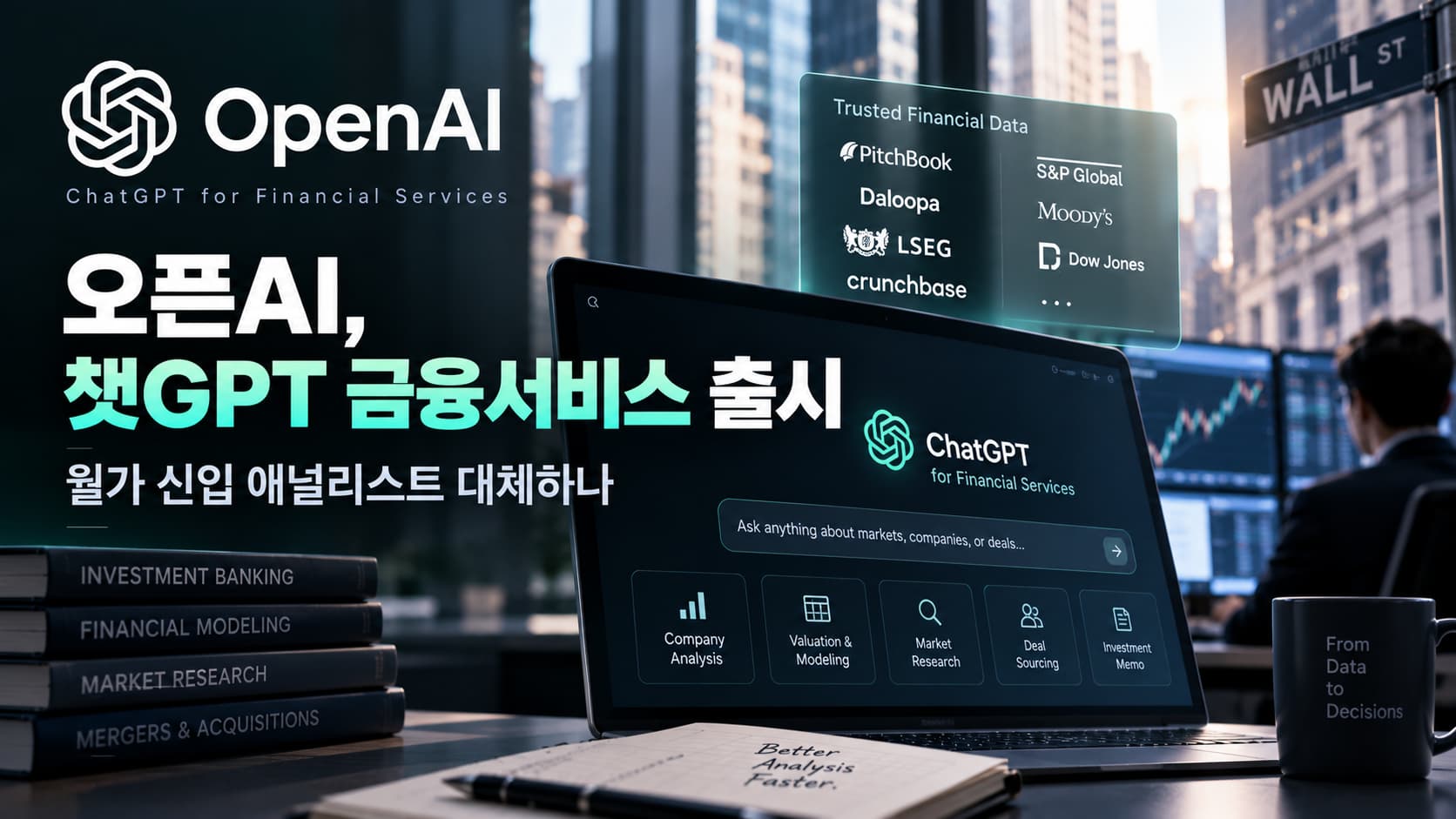
OpenAI announced the launch of ChatGPT for Financial Services, a tailored ChatGPT Work experience combining GPT-6 Astra’s reasoning with built-in premium financial data from Daloopa, PitchBook, LSEG News and Crunchbase. Developed through design partnerships with Morgan Stanley and Evercore, the product initially targets investment banking and equity research, with out-of-the-box support for value analysis, LBO modeling, buyer screening, earnings analysis and pitchbook preparation.
OpenAI indexes and hosts the data itself, so teams can use it without setting up MCP connectors, and the product includes granular citations that trace figures and claims back to specific tables and passages — letting a banker check exactly which costs were excluded from an adjusted EBITDA figure, for example. For firms with existing subscriptions, OpenAI is working with S&P Capital IQ, LSEG, MSCI, Dow Jones Factiva and Moody’s on shared sign-in integrations that recognize a user’s existing entitlements, and the product supports more than 50 connectors including Datasite, Box, Preqin and Intapp. Crunchbase CEO Jager McConnell said reliable private-market data is hard to find and validate from public sources, but Crunchbase’s structured, continuously verified private-company data is “now at the fingertips of financial teams using ChatGPT,” letting them “move from questions to meaningful insight much faster.”
The Consumer Version That Came First
This isn’t OpenAI’s first move into finance. In May, the company launched a personal finance feature for ChatGPT Pro subscribers, connecting more than 12,000 financial institutions through Plaid so users could ask about spending patterns and long-term financial planning in a chat interface — built partly on expertise from OpenAI’s acquisition of personal-finance startup Hiro. That version ran on GPT-5.5. ChatGPT for Financial Services extends that same push from consumer personal finance into enterprise investment-banking work.
What This Means
The most direct impact targets the work of junior bankers and associates — company research, running comps, testing valuation scenarios, and building pitchbooks — tasks Wall Street has used to train waves of college graduates for decades. According to CNBC, one venture capitalist warned the product “removes the ability for junior bankers to learn what a wrong model looks like,” adding that a decade from now the industry could end up with managing directors “who have never built a model from scratch” — calling that the whole point of apprenticeship, “and it just got automated by OpenAI.” OpenAI has pushed back on that framing, comparing the tool to Excel: a productivity boost per employee rather than a replacement for junior hiring.
A second effect falls on financial data providers. Daloopa, PitchBook, LSEG News and Crunchbase all opted for deep integration, letting OpenAI index and host their data directly. Legacy subscription providers like S&P Global, LSEG, MSCI and Moody’s instead chose the more defensive sign-in integration model, preserving their own distribution and pricing while adding accessibility. Which approach wins more influence inside OpenAI’s ecosystem is worth watching.
A third effect is the widening enterprise rivalry between OpenAI and Anthropic. Anthropic is pursuing financial services (among other verticals) through its PE-backed joint venture’s forward-deployed engineering model, while OpenAI is going after the same end customers — large financial institutions — through a bundled vertical product inside ChatGPT Work. Both moves are part of a larger push by the two labs to capture the integration margin that consulting firms used to collect.
Where This Sits Competitively
A cluster of startups already sells AI research tools to investment banks and hedge funds. Rogo AI, deployed at Lazard, Nomura and Jefferies, delivers output in investment-banking formats — Excel models in firm templates, PowerPoint decks — and automates comps, model-building and pitchbook prep; it raised a $160 million Series D led by Kleiner Perkins at roughly a $2 billion valuation. Hebbia, valued at $700 million on $161 million raised, focuses on unstructured document analysis like deal memos and data rooms. AlphaSense, with more than 450 million premium documents indexed, is a market-intelligence search platform valued at $4 billion with over $200 million in ARR. Perplexity has also entered the space with a dedicated financial research product, as OpenAI itself noted in May.
Most of these startups have built their businesses as a layer on top of OpenAI’s and Anthropic’s own models via API. Now that OpenAI is bundling data, model and workflow into its own vertical product, those same startups find themselves competing directly with their core infrastructure supplier.
MORE FROM THE POST
- AI Agent Platform Casap Raises $56M Series B to Automate Financial Services Operations
- Anthropic’s Q3 Revenue Hits $16.8B as Growth Slows and IPO Valuation Debate Begins
- Google Unveils Gemini Work Agent as Big Tech’s Agent Race Heats Up
- Microsoft Is Behind on AI Models. Its Answer Is to Own the Office Instead.
- Anthropic’s Q2 Revenue Reported Above $11.5B — Profitable, and Ahead on the IPO Track
Share

Most Read
- 1
- 2
- 3
- 4
- 5

Leave a Reply