



The Boring Company Raises $3B Series D at $23B Valuation







Elon Musk once said roads need to go 3D to solve traffic — and the tunneling startup built on that idea just quadrupled its valuation with the UAE’s backing.
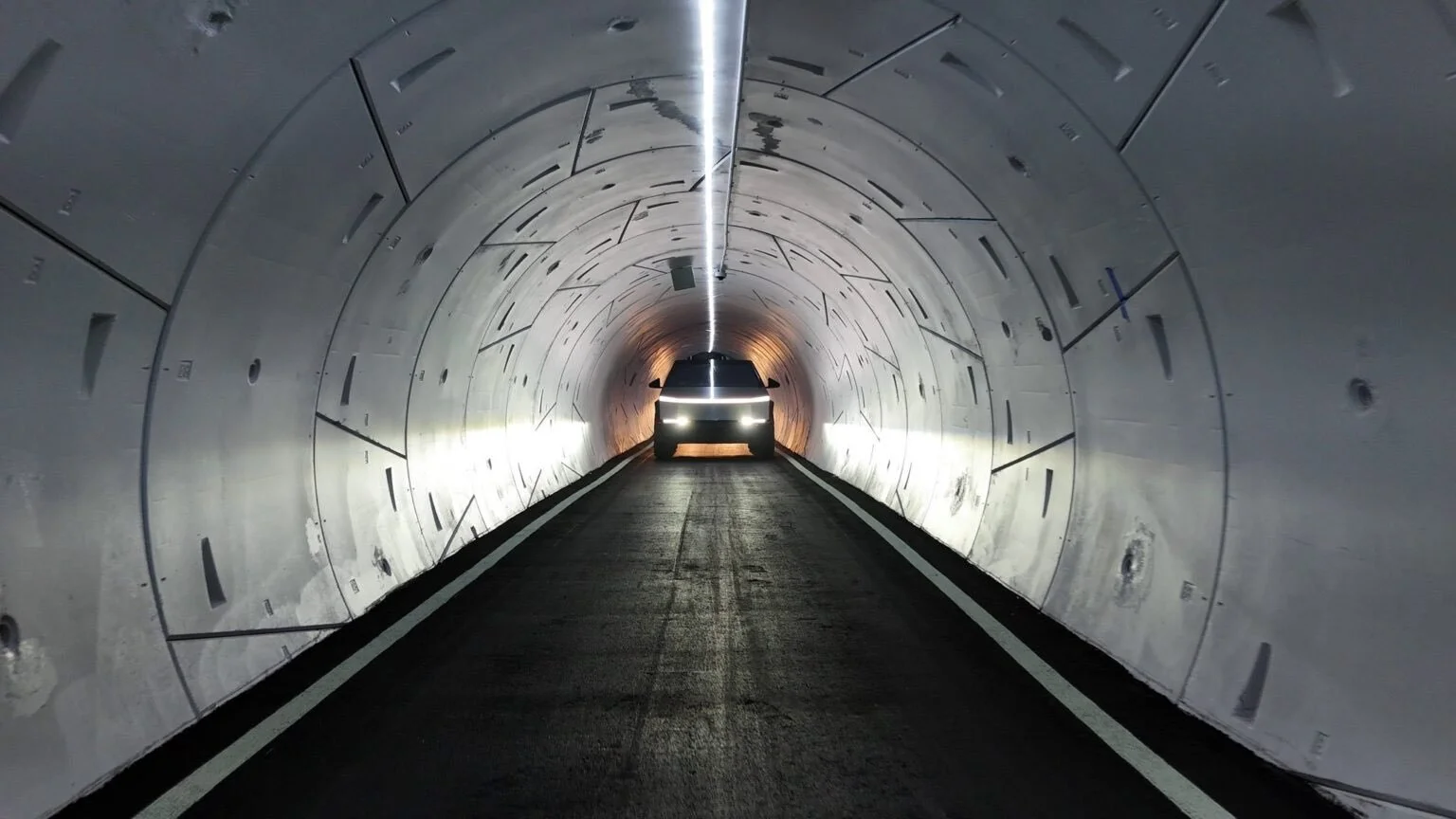
The Boring Company is a tunnel-construction and transportation-infrastructure startup founded by Musk to fix urban congestion with underground tunnel networks. Its “Loop” system is an express underground transit network that behaves more like a highway than a subway — passengers travel directly between stops without stopping at every station in between — aimed at freeing up the 20-30% (up to 60% including parking) of urban surface land that roads typically occupy, for pedestrians and green space instead. The company believes the same architecture can scale from intra-city (Loop) to inter-city (Hyperloop) as boring speeds increase.
The Boring Company announced a $3 billion Series D led by the United Arab Emirates and affiliated investment entities, with participation from Sequoia Capital, Andreessen Horowitz (a16z), Temasek, Valor Equity Partners, Vy Capital, Human Capital, Shamal Holding, and Baron Capital. The round values the company at $23 billion.
The Boring Company’s valuation has climbed from roughly $800-920 million in 2019, to $5.675 billion after an April 2022 Series C co-led by Sequoia and Vy Capital, to nearly 4x that level now. The new capital will fund more than 150 kilometers of tunnel infrastructure across the UAE, expand ongoing Loop projects in Las Vegas, Nashville, and Dubai, and accelerate R&D on its next-generation tunnel-boring machine, Prufrock.
The Machine Behind the Shift: Prufrock and Crewless Tunneling
The past two years mark The Boring Company’s shift from a single Las Vegas Loop operator to a multi-city tunneling program, centered on its Prufrock platform. Older machines needed a launch pit, a crane, and heavy civil work to enter and exit the ground; newer Prufrock machines launch and retrieve directly from a transporter called The Monster, eliminating that setup entirely.
In May 2025, the company demonstrated Zero-People-in-Tunnel (ZPIT) continuous mining — advancing the machine and erecting a full tunnel ring simultaneously with no crew inside the tunnel. By August 2026, ring building was fully autonomous: six concrete segments weighing about 3,750 pounds each were placed with millimeter precision in under a minute, monitored remotely from the company’s Global Operations Control Center in Texas. Supporting systems introduced in the same window include Liner Truck 3, an all-electric segment hauler built on Tesla Model 3 battery and drive units, and Vertical Cassette 7, a continuous conveyor moving up to 990 tons of material per hour to support advance rates of up to four miles per week.
Beyond Vegas: Nashville, Dubai, and Texas
Vegas Loop remains the company’s operating showcase, with new stations and connectors opened at Westgate, Encore, Fontainebleau, and Sahara Las Vegas. The Encore connector, linking the Las Vegas Convention Center to the Encore Resort, was completed in under 12 weeks and finished with a craneless “porpoise” retrieval near the Wynn golf course — cutting a 15-minute surface drive down to about 55 seconds. The company has added Cybertrucks to its passenger fleet, demonstrated Full Self-Driving on select segments, and started limited service to Harry Reid International Airport, with dedicated 2.3-mile Airport Connector tunnels already built and set to open soon. In July 2025, Vegas Loop received the TSA’s Gold Standard Award for security and resilience; Clark County has since approved 19 additional stations, bringing the entitled network to 123 stations and total ridership past four million. The company recently began work on its 25th tunnel overall — the 14th in Las Vegas.
Outside Nevada, The Boring Company and the State of Tennessee announced Music City Loop in July 2025 — a privately funded underground system connecting downtown Nashville, the Music City Center, and Lower Broadway with Nashville International Airport. Tunneling began the same day the company received its Tennessee DOT permit, on February 25, 2026. It’s the company’s first hard-rock project, using a Prufrock Main Beam machine rated at more than four million pounds of grip force and 1.5 million pounds of thrust. By August 2026, two machines were mining simultaneously, a third was in final assembly in Bastrop for shipment to Nashville, and the project had cleared votes for airport and convention-center stations along with signed residential and commercial station agreements.
Internationally, The Boring Company signed a construction contract with Dubai’s Roads and Transport Authority for the pilot phase of Dubai Loop — 6.4 kilometers of tunnel and four stations, with construction set to begin in late 2026; precast production for the pilot is already underway. The company also completed the Cybertunnel at Tesla’s Giga Texas factory, an industrial tunnel that cut Cybertruck transfers from the production line to the outbound lot from about 12 minutes via State Highway 130 to under a minute underground.
Where The Boring Company Sits Competitively
Tunneling a mile of urban transit in the U.S. typically runs $250 million to $1 billion. The Boring Company is targeting $8-10 million per mile with Prufrock — roughly 99% cheaper — a gap wide enough that the company holds something close to a monopoly on private express-transit tunneling in the U.S. Traditional TBM makers like Herrenknecht still dominate large public infrastructure contracts, but don’t really compete for the urban-passenger-tunnel niche The Boring Company created.
The closest challenger is EarthGrid, which is developing a “plasma boring robot” that melts through rock with torches reaching up to 27,000°C and has raised more than $30 million in seed funding. But EarthGrid is targeting utility tunnels — power, broadband, water — rather than passenger transit, putting it in a different market from The Boring Company’s Loop business. In practice, The Boring Company’s real competition isn’t another startup — it’s the traditional subway and light-rail projects that still cost hundreds of millions to billions of dollars per mile.
MORE FROM THE POST
- Etched Raises $700M at $21B Valuation After Jane Street Tested Its Chip
- AI Operating System for Wealth Management Nevis Raises $70M Series B
- Whop Raises $200M Series D at $5.1B Valuation Led by Sequoia and Shopify Ventures
- Physical AI Asset-Health Platform Tractian Raises $130M Series D at $1.4B Valuation
- AI Code-Validation Startup Blacksmith Raises $66M Series C at $1B Valuation
- a16z
- Elon Musk
- funding
- Overseas funding
- sequoia capital
- seriesD
- Temasek
- The Boring Company
- Valor Equity Partners
- Vy Capital
Share

Most Read
- 1
- 2
- 3
- 4
- 5

Leave a Reply