



Exein Raises $270M at $1.7B Valuation to Secure Physical AI







Exein has announced $270 million in new funding at a $1.7 billion valuation, funding its US and APAC expansion as it builds the security layer for robots, drones, vehicles and other machines that use AI to act in the physical world. It comes just nine months after Exein raised €100 million in December 2025, led by Blue Cloud Ventures, which brought its 2025 total to €170 million. The new round was led by Headline, with participation from Sofina, Goldman Sachs, EIB Group through the European Tech Champions Initiative (ETCI), KfW Capital and T.Capital, alongside existing investors Balderton, HV, Intrepid Growth Partners, 33N Ventures, Lakestar, Supernova Invest, Blue Cloud Ventures and Geodesic Capital. It closed significantly oversubscribed.
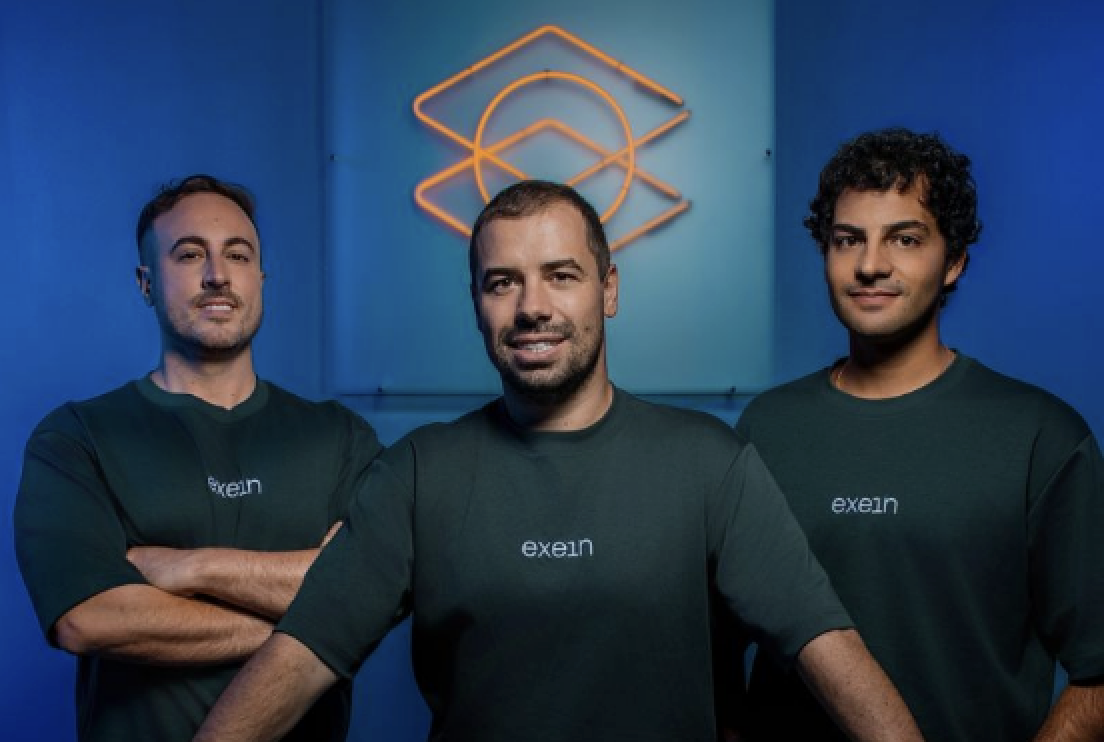
The round lands as Exein sees around 5,000 new, non-repetitive attacks a week across its network of two billion devices — 5x last year’s volume — with attackers increasingly using AI to scale attacks against intelligent devices that make real-world decisions: moving cars, running grids, operating healthcare equipment. A compromised machine doesn’t leak data, it takes an action in the real world. One of the company’s answers is Photon, a preemptive runtime architecture launched earlier this year that runs at the kernel level to stop malicious execution before it happens.
“AI is moving out of the cloud and into the physical world, and this is the transition Exein was built for,” said Gianni Cuozzo, founder and CEO of Exein. “We’ve developed deep expertise in how machines operate, invested heavily in the technology needed to protect them and built a global footprint that gives us an understanding of machines at a scale few others can match. Frontier models are pushing the patch window to zero. Attacks now happen at machine speed, so defense has to as well. Physical AI is the natural next step for Exein: we’re building machine-time security for machine-time attacks.”
Exein is also training a proprietary foundation model for Physical AI security on two years of machine telemetry drawn from its footprint of more than two billion devices — real operational data on how machines actually behave, rather than human-generated text. It will power autonomous security agents that understand and defend the systems they run on at machine speed, without waiting for human intervention. The agentic security architecture ships by the end of 2026, with first foundation models expected in Q1 2027.
“As AI moves into robots, vehicles, and critical infrastructure, securing the physical world will become one of the defining cybersecurity challenges of the next decade,” said Clarey Zhu, partner at Headline. “Exein’s deep expertise in embedded systems and unique machine data give it a powerful advantage as it scales globally, and that advantage traces back to the team. Gianni and his team have incredible technical and commercial depth, they put customer trust above all else, and they have always chosen the harder, long-term-oriented path.”
Alongside the equity round, Exein is upsizing its revolving credit facility, led by J.P. Morgan, with KfW joining as an additional lender, strengthening its ability to pursue M&A across Europe and the US.
The company has established its APAC headquarters in Taiwan and secured new partnerships across semiconductors, industrial computing and connected infrastructure. It has opened a legal entity in Japan, with expansion planned for Q4 2026, and a new office in South Korea is set to open by 2027. The new funds will also drive Exein’s US expansion, growing the team and opening a new Bay Area office. “Gianni had the foresight to build for this transition years ahead of the market, and we are delighted to support him and the team as they scale Exein globally,” said Maxence Tombeur, managing director at Sofina.
Founded in 2018 in Rome by Gianni Cuozzo as a spin-off of his firmware-security consultancy Aspisec, Exein has raised more than $600 million to date, with its valuation climbing thirtyfold in two years to make it Europe’s most valuable cybersecurity scaleup.
Competition to secure the machines AI is moving into is intensifying. Claroty protects industrial control systems and critical infrastructure and raised a $150 million Series F in January. Armis, a cyber exposure management platform spanning IT, OT and medical devices, was recently acquired by ServiceNow for $7.75 billion. Both are closer to network-level monitoring, while Exein defends from inside the device — at the firmware and kernel level. On that same device-level approach, Israel’s Sternum is the closest comparison, using a lightweight technique it calls Embedded Identity Verification to deterministically block known vulnerabilities and zero-day exploits on-device. Fortaegis, which en.wowtale.net covered this month, also pitches physical-AI and infrastructure security but at a different layer — rooting security in the silicon itself, rather than the firmware and runtime layer Exein protects.
MORE FROM THE POST
- Autonomous Construction Startup Bedrock Robotics Raises $600M Series C at $4.1B Valuation
- Physical AI Asset-Health Platform Tractian Raises $130M Series D at $1.4B Valuation
- AI Efficiency Lab Flapping Airplanes Raises $1B Series A at $6B Valuation
- AI Code-Validation Startup Blacksmith Raises $66M Series C at $1B Valuation
- AI Planning Platform Pigment Raises $250M Series E at $2.3B Valuation
Share

Most Read
- 1
- 2
- 3
- 4
- 5

Leave a Reply