



OpenAI Launches Always-On Agent ‘Dots’ Amid Reports of $1.4T Funding Talks


AI used to need an open chat window to do anything. Now it keeps working after you close it. The industry’s next battleground is shifting from chatbots that answer questions to agents that run in the background toward a goal you set once.
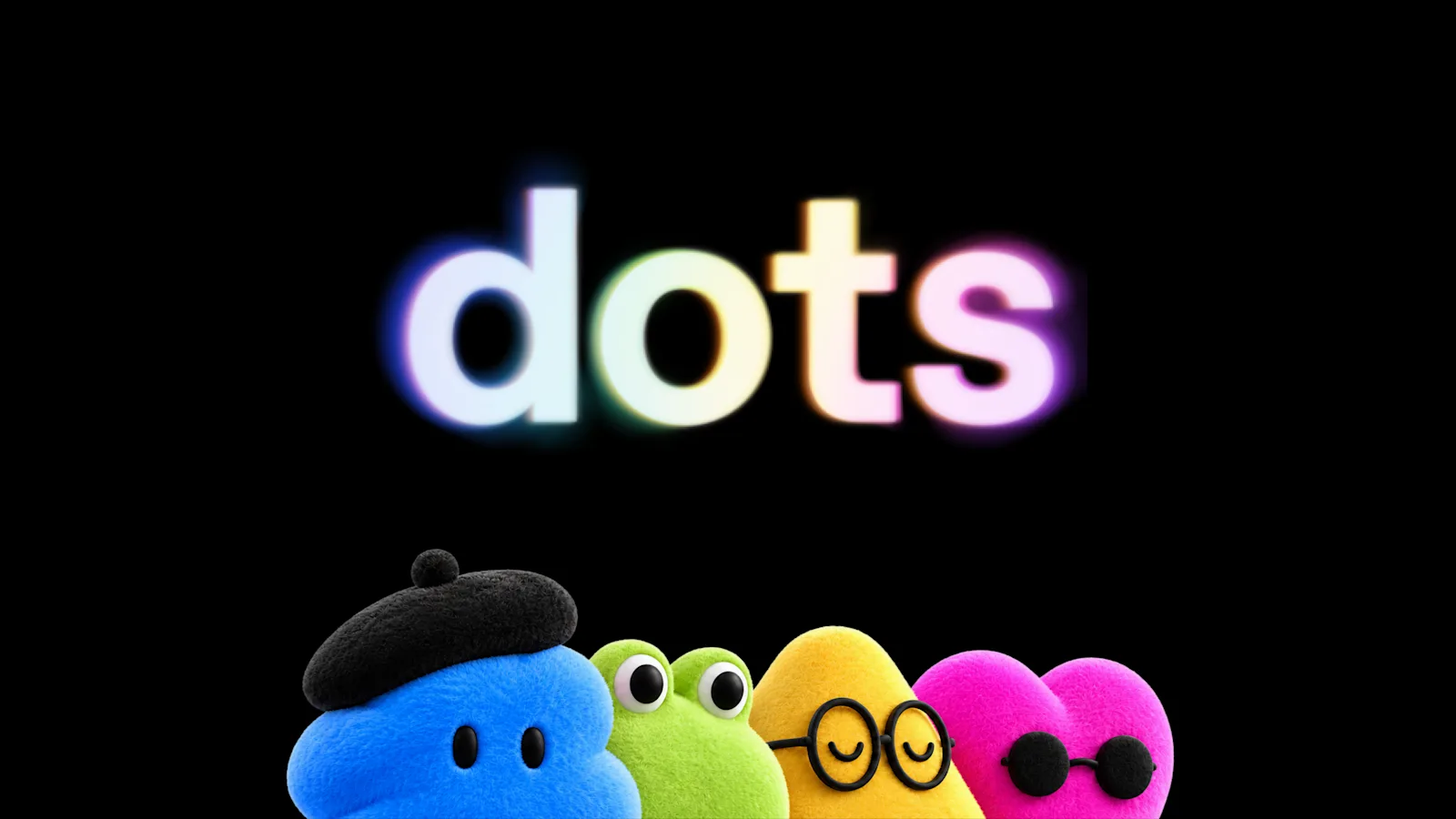
OpenAI unveiled a new personal AI agent called “dots” — not another conversational interface like ChatGPT, but a personal-assistant-style agent that gets its own cloud computer and browser once a user sets a goal, and keeps working on it in the background. The announcement came at OpenAI’s annual developer conference, DevDay 2026, held September 29 in San Francisco, according to TechCrunch and other outlets.
Dots Is Built to Work, Not Just Chat
Dots runs on OpenAI’s latest model, GPT-6 Astra. Users start by creating and naming a “primary dot” and shaping its personality; OpenAI says its longer-term vision is teams of specialized dots — one for coding, one for research — working together on a user’s behalf.
The use cases OpenAI points to are concrete: a developer can have a dot monitor customer feedback and ship bug fixes on its own, while a researcher can have one automatically rerun an analysis every time new data comes in. Dots can be reached inside ChatGPT as well as through workplace messengers like Slack and Teams, with SMS support coming soon. For enterprise customers, dots plug into Microsoft’s Agent 365 security and governance framework.
It isn’t open to everyone yet. Per OpenAI’s own announcement, dots are rolling out gradually to ChatGPT Pro and Business Premium subscribers aged 18 and up in supported markets — and at launch, even Pro subscribers in the European Economic Area, Switzerland, and the UK are excluded. There’s no separate charge; it’s bundled into existing subscription tiers.
“Dots are remarkably capable, always-on agents built to handle really anything you can think of,” CEO Sam Altman told CNBC. “They bring AI into a whole new form factor to work and give you more time and attention so you can do the things that you care about.” He added a personal note: “I’ve been really surprised at what a difference this makes to my life. I feel like I’ve finally gotten some of my attention back. I no longer feel quite as addicted to my phone in the same way.”
Dots was DevDay’s headline consumer story, but not the only one. OpenAI also shipped “GPT-6.1 Sol” for developers, priced at roughly a fifth of GPT-6 Astra’s token cost, and introduced a new $500-a-month “Pro 500” tier offering 25x the usage of Plus. Notably, OpenAI said it would hold off on releasing a next flagship model, “GPT-6.1 Astra,” citing security concerns.
Funding Talks Said to Value OpenAI at $1.4 Trillion
Around the same time as the Dots launch, reports surfaced that OpenAI is pursuing a large new funding round. Bloomberg reported OpenAI is in talks to raise at least $30 billion in fresh capital at a $1.4 trillion valuation — roughly 64% above the $852 billion valuation it carried after closing a $122 billion round led by SoftBank, Amazon, and Nvidia this past March. Outlets covering the talks stress they remain at an early stage and terms could still change.
The round is widely read as a bridge ahead of an eventual IPO rather than a replacement for one. Altman told Fortune that going public this year would be premature, with a listing now expected no earlier than 2027. Coverage of the talks also noted OpenAI’s run-rate revenue reportedly hit $40 billion in August, up about 70% since July, a jump attributed to the company’s sharpened focus on coding products. No lead investor for the new round has been reported yet.
Competitors: Meta’s Muse, and Anthropic’s Different Bet
The rival most outlets reached for first is Meta’s personal AI agent, Muse. Launched in April, Muse climbed to the No. 1 free app on Apple’s App Store within two weeks in September — a milestone wowtale covered as a sign Meta might finally be a real contender — and has reportedly topped 2.5 million downloads in the US alone. Its cutesy 3D avatar makes for an obvious comparison to dots. But it has also drawn scrutiny: a tech columnist claimed Muse read his private messages on a Mac even with Full Disk Access turned off, and Meta publicly disputed the claim, saying the Messages integration is strictly opt-in — a dispute widely cited as a preview of the privacy risks this new always-on-agent category will have to manage. Altman, for his part, called Muse “a nice product” but said he doesn’t feel directly threatened by it.
Anthropic is riding the same always-on-agent wave but taking a different route. On September 16, it announced it would merge its conversational “Claude” chat product with its background, multi-step agent, “Claude Cowork,” into a single assistant — so users no longer have to decide upfront which tool a task needs. Claude now determines on its own whether a request calls for a document, a slide deck, or a longer-running autonomous task. Cowork itself debuted as a research preview in January, went fully live for paid subscribers in April, and has since expanded to Chrome’s side panel, mobile, and web.
Where OpenAI is leaning into a cute avatar and a “give me my life back” consumer pitch, Anthropic is doubling down on coding and long-form professional workflows with a more utilitarian pitch: one assistant that quietly picks the right tool for the job. Same race toward always-on agents, different target market.
MORE FROM THE POST
- Microsoft Is Behind on AI Models. Its Answer Is to Own the Office Instead.
- OpenAI, Anthropic, Google and Meta All Ship New Models — With the Same Catch
- Google Unveils Unified ‘Gemini’ Work Agent as Big Tech’s Agent War Reignites
- Anthropic Merges Cowork and Chat, Launches Claude Docs and Slides
- Anthropic’s Q2 Revenue Reported Above $11.5B — Profitable, and Ahead on the IPO Track
Share


Leave a Reply