


A Chinese startup is making its way into the Korean agricultural market. Founded in 2018, YJ Electric is leading the charge with its innovative solutions.
YJ Electric aims to transform agriculture through smart farm systems designed to address inefficiencies and environmental issues in traditional farming. Conventional practices often result in overuse of water, fertilizers, and pesticides, causing environmental degradation and biodiversity loss. Farmers also face unpredictable crop yields due to challenges such as weather conditions and soil health. YJ Electric’s smart farm system tackles these problems by reducing water usage by up to 90% and minimizing the need for pesticides.

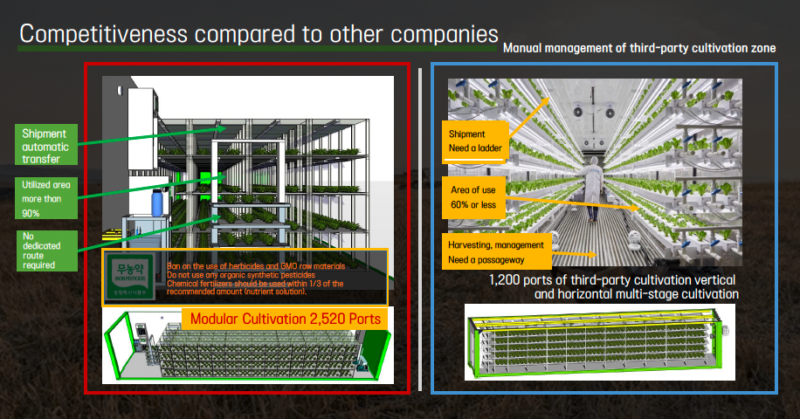
The company offers two types of smart farms: prefabricated containers and modular systems. Prefabricated containers can be quickly installed anywhere, while modular systems provide flexibility and maximize space efficiency, making them suitable for urban environments. These smart farms require low initial investment, no large land areas, and minimal expertise, making them an attractive option for younger generations interested in farming without leaving the city. They also serve as innovative interior features, breaking the notion that farming is confined to rural areas.

YJ Electric’s technology integrates automated crop cultivation, AI-driven optimization of growth conditions, high-efficiency LED lighting, and advanced climate control systems, ensuring year-round production. The company is currently developing a Proof of Concept (POC) container, with final testing scheduled for the end of December.
The global smart farming market is expected to grow to $22 billion by 2025, with Korea’s market projected to reach $450 million. Targeting B2B, B2C, and B2G sectors, YJ Electric aims to build a stable supply chain by offering both smart farm systems and the fresh produce grown in them.
Over the past three months, YJ Electric has signed four MOUs, two investment LOIs, and other agreements, solidifying its entry into Korea. Through the K-Startup Grand Challenge 2024, a program designed to support foreign startups entering Korea, the company is leveraging local partnerships to innovate within Korea’s advanced technological ecosystem.
With initiatives like the Global Startup Center and the newly introduced Startup Korea visa, the Korean government is actively fostering foreign startups. YJ Electric’s potential contributions to Korean agricultural innovation could be significant, and its journey into the Korean market will be one to watch closely.
What problems are YJ Electric trying to solve?
Traditional farming often faces challenges like water scarcity, inefficient fertilizer use, and excessive pesticide application. This can lead to unpredictable crop yields due to factors such as weather, pests, and poor soil health. Additionally, conventional farming practices can contribute to environmental issues like soil degradation, water pollution, and biodiversity loss.
How are we trying to solve this problem?
By implementing our smart farming solutions, we aim to reduce environmental impact, increase crop yield, and enhance food security.
What sets your technology apart from competitors?
Our smart farms offer several advantages. They’re protected from harsh weather conditions, allowing year-round operation. We use cutting-edge technology like automated irrigation, AI-powered monitoring, and energy-efficient LED lighting.
This not only reduces water consumption by 90% but also eliminates the need for pesticides. Plus, our farms are easy to set up, requiring minimal initial investment and expertise, making them accessible to a wider audience, especially younger generations. Our technology also optimizes space utilization and minimizes labor requirements.
What is the product/service we are providing, and what is its current status?
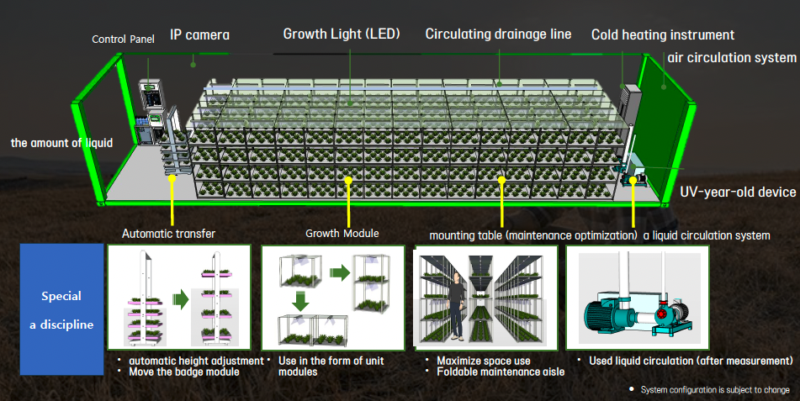
We’ve been working hard to develop a highly efficient modular smart farm system. It comes in two main types: a prefabricated container farm that can be easily transported and set up anywhere, and a flexible modular farm that can be customized to fit different spaces.
We’re currently building a prototype container, aiming to complete it by mid-December. After that, we’ll conduct final testing by the end of the month.
What is the market size our product/service is targeting, and who are our key target customers?
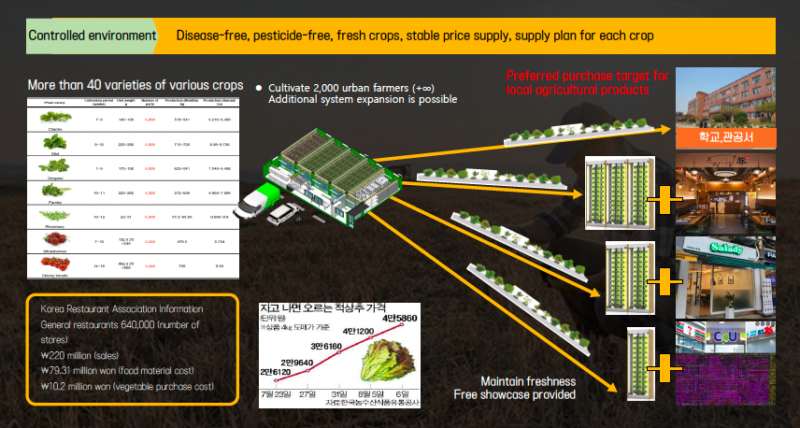
The global population grows, so does the market. This is why the global smart farm market is projected to grow to $22 billion by 2025. Similar trends are seen in the Korean market, where the local smart farm industry is growing rapidly and projected to reach 450 million dollars next year.
Everyone needs fresh vegetables with stable supply and prices. Our clients include B2B, B2C, and B2G. To meet this demand, we offer both smart farms and the vegetables grown in them.
Why did we enter the Korean market, and what are we trying to achieve here?
We believe Korea is a prime market for our smart farming solutions. Beyond business opportunities, we want to collaborate with local companies and research institutions to develop innovative technologies that can benefit everyone. We’re committed to fostering innovation through these partnerships.
What is our business model?
We offer two main types of smart farm systems: prefabricated container farms and modular farms. Based on our analysis, the best way to see a return on investment is to purchase at least four containers. With that, you can expect to recoup your investment within 3 to 4 years.
What have been our achievements so far, particularly in the Korean market?
For the past 3 months, we’ve signed 4 MOUs, 1 NDA, 2 LOIs for investment, and 1 partnership agreement and one sales contract. Additionally, we’ve applied for a technology patent.
What are our team’s competitive advantages?
In our team, we have an inspiring team of researchers and engineers. Regarding me, I’m a graduate from Shanghai Tongji University. I majored in Chinese Economic and trade, I worked in companies such as HMM and Maersk, which are the biggest shipping companies. I have extensive experience in sales, operations, and business development.
What do we need most right now to enter the Korean market?
We are actively seeking partners in Korea to accelerate our business growth and technological development. Our strategy centers on establishing collaborative partnerships that provide deep market insights, robust distribution networks, and innovative R&D capabilities.
By leveraging Korea’s advanced technological ecosystem, we aim to form strategic alliances with local companies, research institutions, and industry leaders. These partnerships will enable us to penetrate the Korean market efficiently, access cutting-edge innovation, and create mutual value through collaborative technological and business initiatives.
MORE FROM THE POST
- [KSGC Interview] Pettinee Brings Telemedicine Innovation to Korea’s Growing Pet Care Market
- [KSGC Interview] OneDegree Global : ‘Bringing Cutting-Edge AI Security and Insurtech Solutions to Korea’
- [KSGC Interview] Jaggle.AI: An Ambitious Startup from Bhutan Setting Its Sights on Asia, Especially Korea
- [KSGC Interview] Amatelus’ SwipeVideo: “Revolutionizing Personalized Video Viewing Experiences”
- [Korean Startup Interview] HOW3, Pioneering Virtual Music Characters in Global Digital Content Market
- AgriTech
- agtech
- EN
- Interview
- K-Startup Grand Challenge
- K-Startup Grand Challenge 2024
- Korea
- smart farm
- Startup Together
- wow together
- WOWTALK
- YJ Electric
Share



Leave a Reply