



AI-Native CRM Lightfield Raises $47M Series A


A startup that once chased 20 million users trying to replace PowerPoint just came back with a CRM aimed squarely at Salesforce.
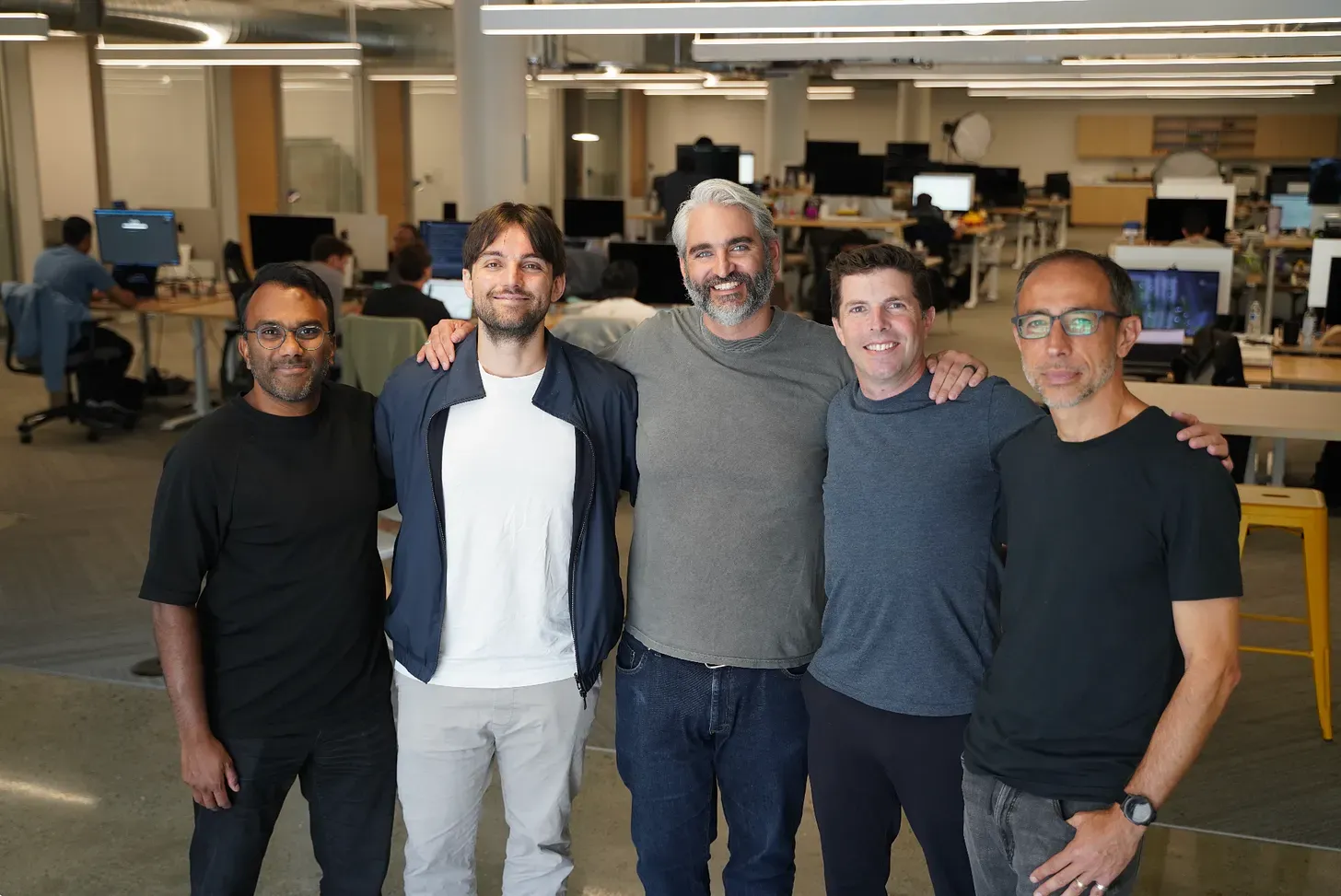
Lightfield builds an AI-native CRM for “companies that run on agents.” Founded in 2020 by ex-Meta engineers Keith Peiris and Henri Liriani, the company started life as Tome, an AI presentation tool incubated at Greylock that reached 20–25 million users and raised an $81 million Series B in 2023 at a $300 million valuation. In 2024, the founders cut headcount from 70 to 7 and rethought the business from scratch — they’d come to believe the real problem wasn’t slides, but that sales had no reliable memory of the customer. A year in stealth later, Lightfield launched.
Lightfield announced a $47 million Series A led by Andreessen Horowitz (a16z), with participation from Maverick Capital, Coatue, Audacious, Alumni Ventures, Greylock, and Lightspeed Venture Partners — the latter three all held over from the Tome days.
More than 5,000 companies have signed up since Lightfield launched in November 2025, and the company reports 400% net dollar retention.
“Agents don’t fail because the models aren’t capable. They fail because the data they work with is incomplete, inaccurate, and missing the structure needed for comprehension,” said Keith Peiris, cofounder and CEO of Lightfield. “Lightfield builds a world model of the business from every customer interaction, so every person and every agent works from the same understanding of what’s true and what happens next.”
“Building a system of record is one of the hardest things to do in software, because you have to earn a customer’s trust before they’ll hand you the data that runs their business,” said Joe Schmidt IV, Partner at Andreessen Horowitz. “This team earned it with thousands of companies in under a year.”
What a “World Model” Actually Means
Lightfield’s core pitch is turning the CRM’s flat table into a living, connected graph. A traditional CRM is filled in by hand — a rep types a name, a deal stage, a note, after the call, from memory. Whatever they don’t have time to enter simply disappears, and an agent working from that CRM has nothing but the empty fields to go on.
Lightfield instead pulls in every touchpoint automatically — email, calendar, calls, Slack, LinkedIn — and links people, companies, and conversations into one connected record: who works where, who said what to whom and through which channel, and how each exchange moved a deal forward or back, all preserved over time. Because it’s a record of what actually happened rather than what a person typed, the company says an agent can read it and reason about what’s likely to happen next.
On top of that record, agents run through a standardized SDK, execute analysis in a code sandbox, and are checked by evals to keep output quality consistent. Every record is also readable and writable via API, MCP, and CLI, so anything a person can do in the product, an agent can do too.
“Every platform shift produces a new system of record. Salesforce defined it for the cloud era, and Lightfield is defining it for the agent era,” said Alex Rampell, General Partner at Andreessen Horowitz. “Companies building with agents need more than a CRM with AI features. They need a system designed from the ground up for agents to work from.”
Where Lightfield Sits Competitively
Salesforce and HubSpot still dominate CRM, and both are bolting on agent features of their own — Agentforce and Breeze, respectively. But Lightfield’s real competitive set is the newer wave of CRMs and GTM platforms built AI-native from day one.
London-based Attio raised a $52 million Series B led by GV, bringing its total funding to $116 million; it’s used by more than 5,000 companies including Lovable and Granola, and is targeting 4x ARR growth this year. Where Attio leans on automated data capture and customizable workflows, Lightfield goes a step further, centering its pitch on a “business world model” agents can reason and act from independently.
On another front are AI-native GTM startups focused less on CRM itself than on generating pipeline. Unify, whose customers include Cursor and Perplexity, raised a $40 million Series B led by Battery Ventures at a $260 million valuation, using AI agents to automate prospecting and personalized outbound. Unify’s focus sits earlier in the funnel — pipeline generation — while Lightfield is positioning itself as the system of record for the entire sales process.
With CRM long considered SaaS’s last holdout against disruption, whichever approach wins may end up setting the standard for sales software in the agent era.
- a16z
- agentic AI
- Andreessen Horowitz
- Coatue
- CRM
- funding
- Greylock
- Lightfield
- lightspeed venture partners
- Overseas funding
- seriesA
- Tome
Share

Most Read
- 1
- 2
- 3
- 4
- 5

Leave a Reply