




Big money keeps flowing into AI drug design. Enveda raised a $311 million Series E for natural-product-based medicines last week, and Superluminal Medicines raised $60 million for GPCR-targeted drugs earlier this month. Now Basecamp Research has closed a $140 million Series C of its own.
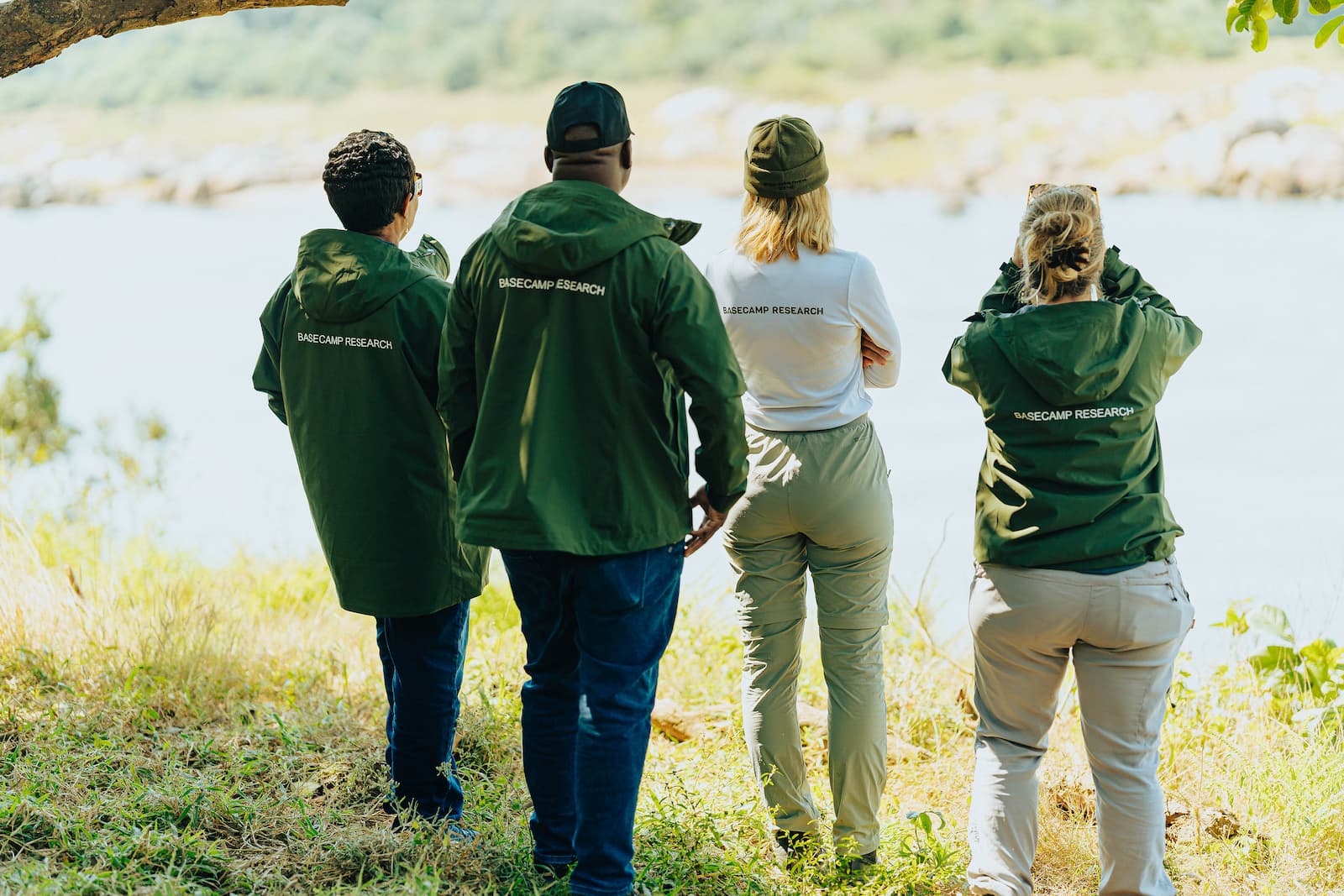
Basecamp Research’s goal is to cure diseases that remain incurable today, by designing medicines that reprogram the body to repair itself. Its approach is distinctive: a foundation model trained on proprietary biological data, paired with technology that writes the resulting designs directly into DNA inside living cells.
The data comes from the Trillion Gene Atlas, built with NVIDIA, Anthropic, PacBio, and Ultima Genomics through access-and-benefit-sharing partnerships in more than 30 countries — the world’s largest proprietary biological AI training dataset. Trained on it, the company’s EDEN models aim for a universal understanding of how DNA works across all of life, rather than being built for one narrow task. Feed EDEN information about a disease, and it can generate candidate therapeutics directly, spanning cell and gene therapies, enzymes, and peptides, according to the company.
That approach has already been validated. In June, Basecamp connected EDEN’s antibiotic and vaccine design models to Anthropic’s Claude Science. In trials with the University of Pennsylvania, 97% of the antibiotic peptides EDEN designed zero-shot were active against WHO priority pathogens, and one candidate showed efficacy comparable to a last-line antibiotic in mice infected with a multidrug-resistant superbug.
Founders Glen Gowers and Oliver Vince met as undergraduates at Oxford. Gowers holds a PhD in synthetic genomics and worked at GSK on translating the field into medicines; Vince holds a PhD in biomedical engineering focused on drug delivery for brain cancer. In 2019 the pair set out with off-grid DNA sequencing gear on a polar expedition across Iceland’s Vatnajökull glacier — the trip that led them to found Basecamp Research in 2020. They’ve since collected samples from more than 200 sites across 30-plus countries, cataloguing over a million species previously unknown to science.
The oversubscribed $140 million round was led by S32, with participation from Menlo Ventures’ Anthology Fund, Catalio Capital Management, European Tech Collective, Firebrand River Capital, Inception Fund, King Philanthropies, the NATO Innovation Fund, NVIDIA, PostScriptum, Redalpine, The Rockefeller Foundation, Singular, Sovereign AI, and True Ventures. Roche Vice-Chairman André Hoffmann also invested personally.
It’s Basecamp’s first raise in roughly two years, following a $60 million Series B led by Singular in October 2024; the company had raised $85 million prior to this round. S32 General Partner Andy Conrad, the former CEO of Google’s Verily, is joining the board. Basecamp also hired Richard Pearce, formerly of Biogen, as Chief Business Officer to expand pharmaceutical partnerships.
The funding will train a new generation of EDEN models and advance a therapeutics pipeline toward clinical development, starting with in vivo cell therapy. Today’s cell therapies are manufactured outside the body and cost hundreds of thousands of dollars per patient. Basecamp is pairing EDEN’s ability to design long, complex DNA sequences with large serine recombinases that can precisely integrate them into the genome, aiming to reprogram a patient’s cells directly inside the body — a shift the company believes could change how cancer and autoimmune disease are treated. CEO Glen Gowers said reprogramming the body to heal itself is the next phase of medicine, and that this funding brings the technology closer to the patients who need it.
The Competition
Several well-funded players are already racing to design medicines with AI. Xaira Therapeutics launched in 2024 with $1 billion in funding and Nobel laureates David Baker and Carolyn Bertozzi among its co-founders. Isomorphic Labs, spun out of Google DeepMind and led by AlphaFold’s Demis Hassabis, has struck billion-dollar-plus partnerships with Eli Lilly and Novartis. Generate:Biomedicines designs proteins that don’t exist in nature from scratch, with major deals from Amgen and Novartis. Where those companies focus on designing molecules and proteins, Basecamp’s differentiation is the proprietary biological data itself — collected independently rather than licensed or scraped.
In the narrower in vivo cell therapy space, CREATE Medicines is the closest comparison, having raised a $122 million Series B for in vivo CAR-T programs targeting autoimmune disease and cancer.
MORE FROM THE POST
- AI Natural-Medicine Biotech Enveda Raises $311M Series E
- Superluminal Medicines Raises $60M Series B for AI-Driven GPCR Drug Discovery
- Defense Biotech Pilgrim Raises $25M Seed at $150M Valuation
- Heidi Raises $340M for Its AI Care Partner, Now Valued at $900M
- Angle Health Raises $600M at a $2.7B Valuation
- Basecamp Research
- BioHealth
- biotech
- Drug Discovery
- funding
- mega funding
- Nvidia
- Overseas funding
- S32
- seriesC
- True Ventures
Share


Leave a Reply