





AI models keep getting smarter, yet they still struggle to understand the videos, documents and conversations people have accumulated. A startup building memory infrastructure that preserves the structure of that data has now raised a Series A.
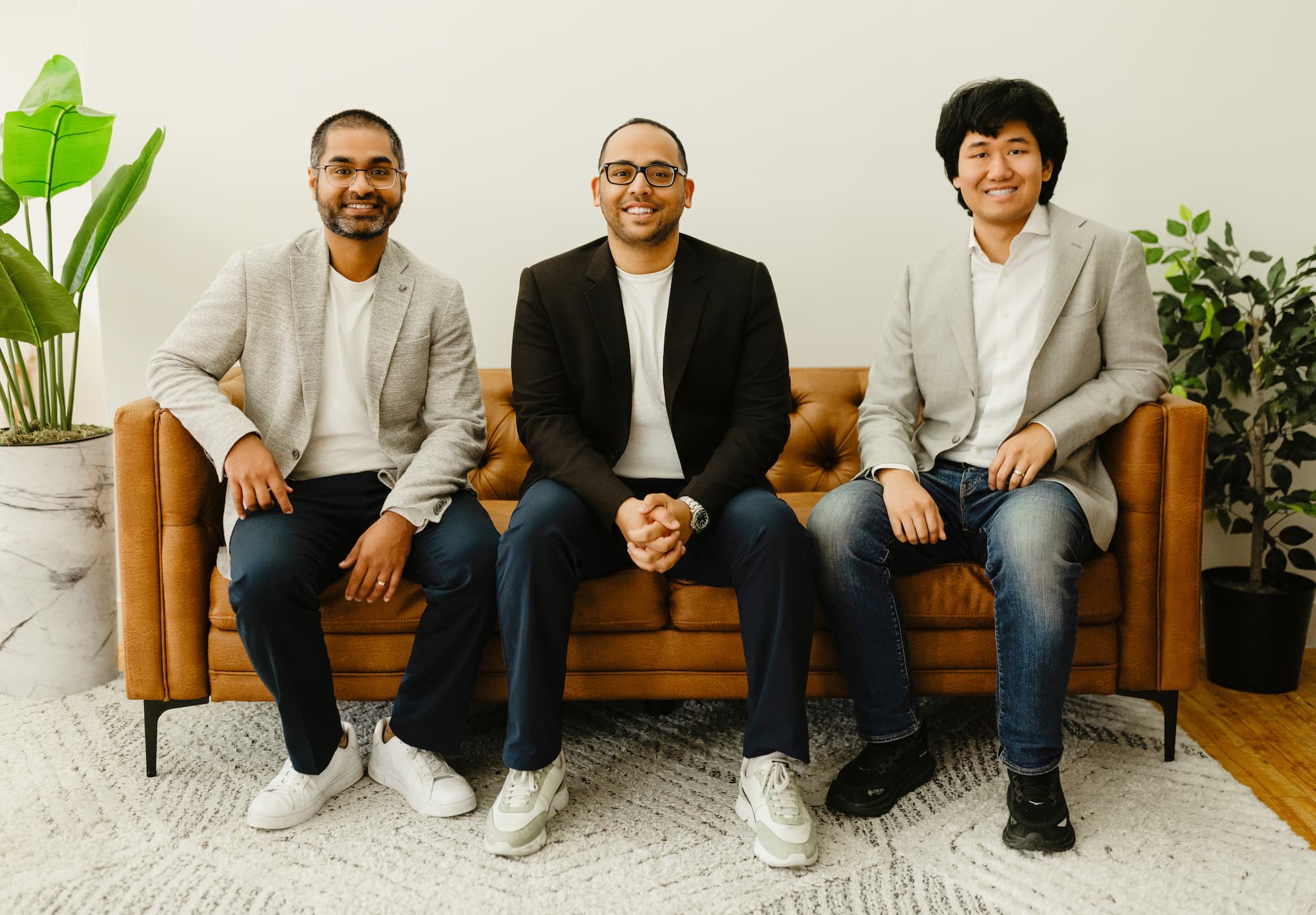
Graphon Labs announced a $35 million Series A on Nov. 10. RRE Ventures led the round, and according to the press release, HP, Energy Impact Partners, Hitachi Ventures and Gaia VC participated. It comes six months after the company’s seed round and brings total funding to $43.3 million. Graphon plans to use the money to expand its infrastructure for developers and enterprise customers, then extend from the cloud and on-premises deployments to consumer devices.
The seed round drew some attention in Korea. According to May reports from The Next Web and SiliconAngle, Novera Ventures led the $8.3 million seed, with Perplexity Fund, Hitachi Ventures, Gaia Ventures, Samsung Next and GS Futures also participating. The Next Web reported that GS Group is an early customer, using the technology for convenience-store traffic analysis and safety monitoring on construction sites.
The problem Graphon targets is that AI “memory” today is mostly storage. Fine-tuning and retrieval-augmented generation (RAG) have been used to bring company knowledge into models, but when documents are cut into pieces and searched as vectors, sentences with nearly identical words and opposite meanings, such as “refund allowed” and “refund not allowed,” can land close together. A rule may be found while the fragment holding its exception is missed. The company likens it to tearing a book apart page by page, crumpling the pages and trying to find them again.
Its answer is to keep the structure. Graphon reads mixed data such as video, images, spreadsheets, recordings and markdown files and builds a detailed graph without deciding in advance which relationships will matter. It then uses a compressed representation of that graph, the “graphon,” to guide where to search. According to press reports, the graphon is a mathematical concept formalized around 2008 by UC Berkeley professors Jennifer Chayes and Christian Borgs, among others, and the two serve as technical advisers.
Developers use it much like S3: put files in a bucket and Graphon builds the structure. The website lists four APIs, Storage, Search, Answer and Research. Products are split into Graphon Enterprise, Graphon Developer and Graphon On-Device Memory for phones, laptops, cameras and wearables, and enterprise customers can choose hosted, customer-managed VPC or on-premises deployment.
The performance figures are the company’s own. Graphon says it scored 93.9% accuracy on the LoCoMo conversational memory benchmark while using 58% fewer tokens than loading the full conversation, and 90.2% accuracy with 95% token savings on ConvoMem. On ATM-Bench, which spans video, audio and text, it reported 81.7%, 5.0 percentage points ahead of the next entry on the public leaderboard. None of these numbers has been independently verified.
Disclosed customers include the San Francisco 49ers and Hitachi Rail. The 49ers are weighing it for finding sponsorship opportunities and supporting staff work, while Hitachi Rail is evaluating its potential to surface contextual knowledge in industrial settings and improve AI reasoning. RRE Ventures’ Raju Rishi pointed to the fact that models can reason and agents can act, yet neither improves without accumulating knowledge, as the reason for investing.
The company is led by CEO Arbaaz Khan, who said in the company blog that working as an applied scientist on an Amazon customer service team made him feel the gap between a plausible answer and a correct one. He founded the company with Clark, with whom he had researched graph-based techniques since their PhD days to help robots remember where they had been and explore unfamiliar environments. May reports named Clark Zhang as chief technology officer and Deepak Mishra as chief operating officer. The company says its team includes engineers and researchers from Amazon, Meta, Google, Apple and NVIDIA.
Several startups are already competing in the agent memory layer. Mem0 lets developers add persistent memory to AI with a few lines of code and has raised $24 million across its seed and Series A. Supermemory, founded by a 19-year-old, raised a $3 million seed for a memory engine that analyzes documents, chats and emails. Memories.ai focuses on video memory, processing up to 10 million hours of footage, and raised an $8 million seed with Samsung Next participating. Letta, backed by Felicis, is also named as a rival. While those companies lean toward particular kinds of data such as conversation logs or video, Graphon pitches weaving video, documents and spreadsheets into a single graph.
MORE FROM THE POST
- Fragment Launches With $56M to Have AI Agents Resolve Procurement Exceptions at Large Manufacturers
- Dealership AI Agent Flai Raises $27M Series A
- Ande Raises $52M Seed and Series A for Corporate Entertainment
- Raindrop Raises Series A, Bringing Total Funding to $50M
- AI Evals and Post-Training Company Mercor Raises $750M Series D at $20B Valuation
- agentic AI
- AI
- AI Infra
- Energy Impact Partners
- funding
- Gaia VC
- Graphon Labs
- Hitachi Ventures
- HP
- Memory
- Overseas funding
- RRE Ventures
- seriesA
Share

Most Read
- 1
- 2
- 3
- 4
- 5

Leave a Reply