





Making voice AI sound natural takes more than accurate transcription and clear speech. In Japanese, subjects are often left unsaid, and the level of politeness shifts depending on who is speaking to whom. Even a brief acknowledgment or a pause can carry meaning. For voice AI to work in everyday life and at work, it has to grasp context, follow the flow of a conversation, and know when to respond.
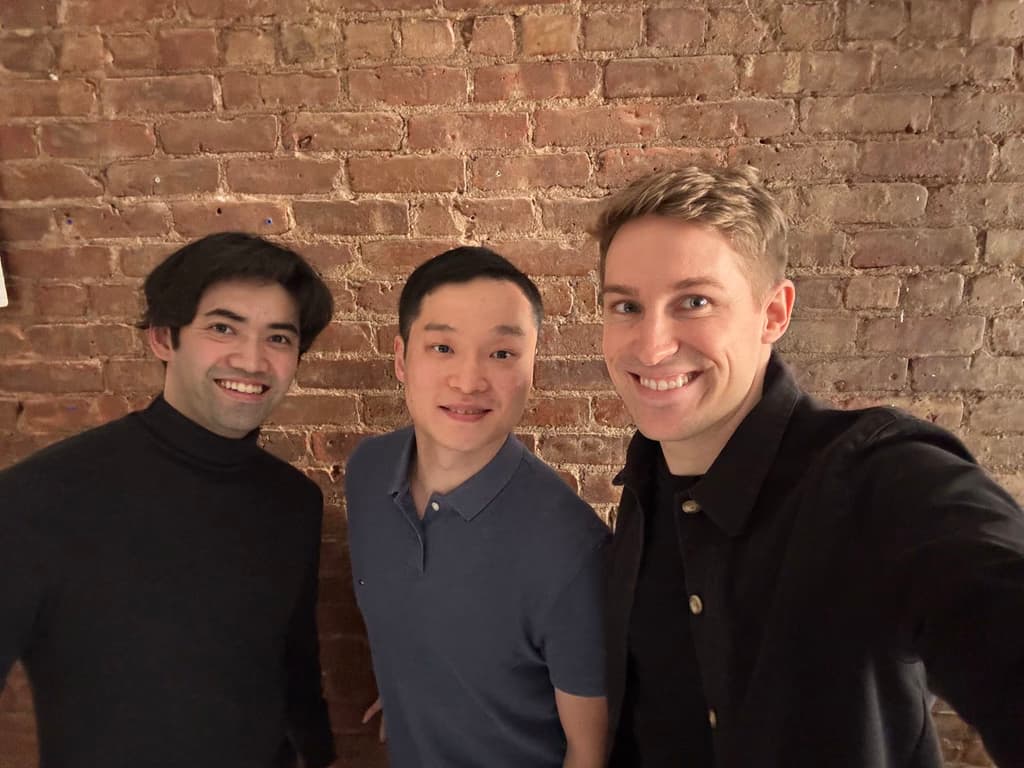
Kotoba Technologies, a Japanese voice AI startup that has been working on exactly this problem, is joining ElevenLabs. Kotoba announced the deal on its official blog on November 16, saying the two will build the future of voice AI from Tokyo.
Kotoba was founded in July 2023 by two AI researchers. Its work centers on a speech foundation model called Koto, and on turning research into products. Its track record includes Japanese-language voice agents for Salesforce‘s Agentforce Voice, voice AI inside products at large companies in Japan and the US, simultaneous interpretation technology that supported the artist YOASOBI, and its own interpretation app, Kotoba.
Noriyuki Kojima is co-founder and CEO, and Jungo Kasai is co-founder and CTO. Kojima holds a computer science PhD from Cornell and has led large language model projects on Japan’s Fugaku supercomputer. Kasai holds a computer science PhD from the University of Washington and has also served as a research assistant professor at the Toyota Technological Institute at Chicago.
The acquisition is expected to close later in the fourth quarter of 2026, subject to customary regulatory approvals and closing conditions. The official announcement does not disclose a price. Nikkei Asia reported that ElevenLabs will buy all of Kotoba’s shares for more than $100 million and make it a wholly owned subsidiary. According to the same report, Kotoba has grown from two people to 15 in three and a half years and has raised more than $23 million in total.
Kotoba closed an $11.83 million seed round led by Globis Capital Partners in June 2025. It later raised another $10 million in a round led by Kindred Ventures, with Salesforce Ventures and Sony Innovation Fund participating. Salesforce Ventures is also an ElevenLabs investor, and it welcomed the combination of the two teams.
ElevenLabs was founded in 2022 by ex-Palantir Mati Staniszewski and ex-Google Piotr Dąbkowski. It raised a $500 million Series D in February at an $11 billion valuation, then reached a $22 billion valuation in September through a $300 million employee tender offer. Its annual recurring revenue rose from $350 million at the end of 2025 to more than $500 million this year.
Japan is not new territory for ElevenLabs. It opened a Japanese subsidiary in April 2025 as its first overseas base, and has partnered with companies including NTT Docomo. The deal gives it in-house Japanese language research.
The two companies plan to combine Kotoba’s East Asian language research and product expertise with ElevenLabs’ research capabilities, computing resources and global business infrastructure. They aim to improve voice AI starting with Japanese and extending to Korean and other languages, and to bring voice agents that can handle complex Japanese conversations into everyday business operations. The Kotoba team will keep working on research, product development and deployment support in Japan, and will contribute its research to the models and products ElevenLabs delivers worldwide.
ElevenLabs CEO Staniszewski said a user’s language and social norms need to be built into the technology’s architecture from the start, and that Kotoba has done this for Japan. Kotoba said it hopes the deal offers Japanese researchers and entrepreneurs another model for growth.
The voice AI field
ElevenLabs is far from alone in voice AI. Deepgram has pushed from speech recognition into AI agent infrastructure and raised $130 million. Sesame is building emotionally expressive AI companions and raised a $250 million Series B. Gradium, a spinout from Kyutai, is developing a unified audio language model and raised a $70 million seed round. Nari Labs is working on Korean-language speech synthesis.
MORE FROM THE POST
- Manus Raises $500M+ as an Independent Company After Meta Deal Collapses
- AI Training-Data Startup Micro1 Reportedly Hits $4B Valuation
- Fleet AI Platform Motive Raises $1.3B+, Withdraws IPO Filing
- Hugging Face Explores Sale at $13 Billion or More
- Databricks Closes $5B at $190B Valuation — $25B Raised While Still Private
Share

Most Read
- 1
- 2
- 3
- 4
- 5

Leave a Reply