










Lute, a physical AI startup based in Warsaw, Poland, and San Mateo, California, has raised a combined $20 million in pre-seed and seed funding. The company builds foundation models that give robots a sense of touch, and it did so just 10 months after its January 2026 founding. Cofounders Paweł Budzianowski, the CEO, and Krzysztof Walas announced the round in a post on the company’s blog on November 25.
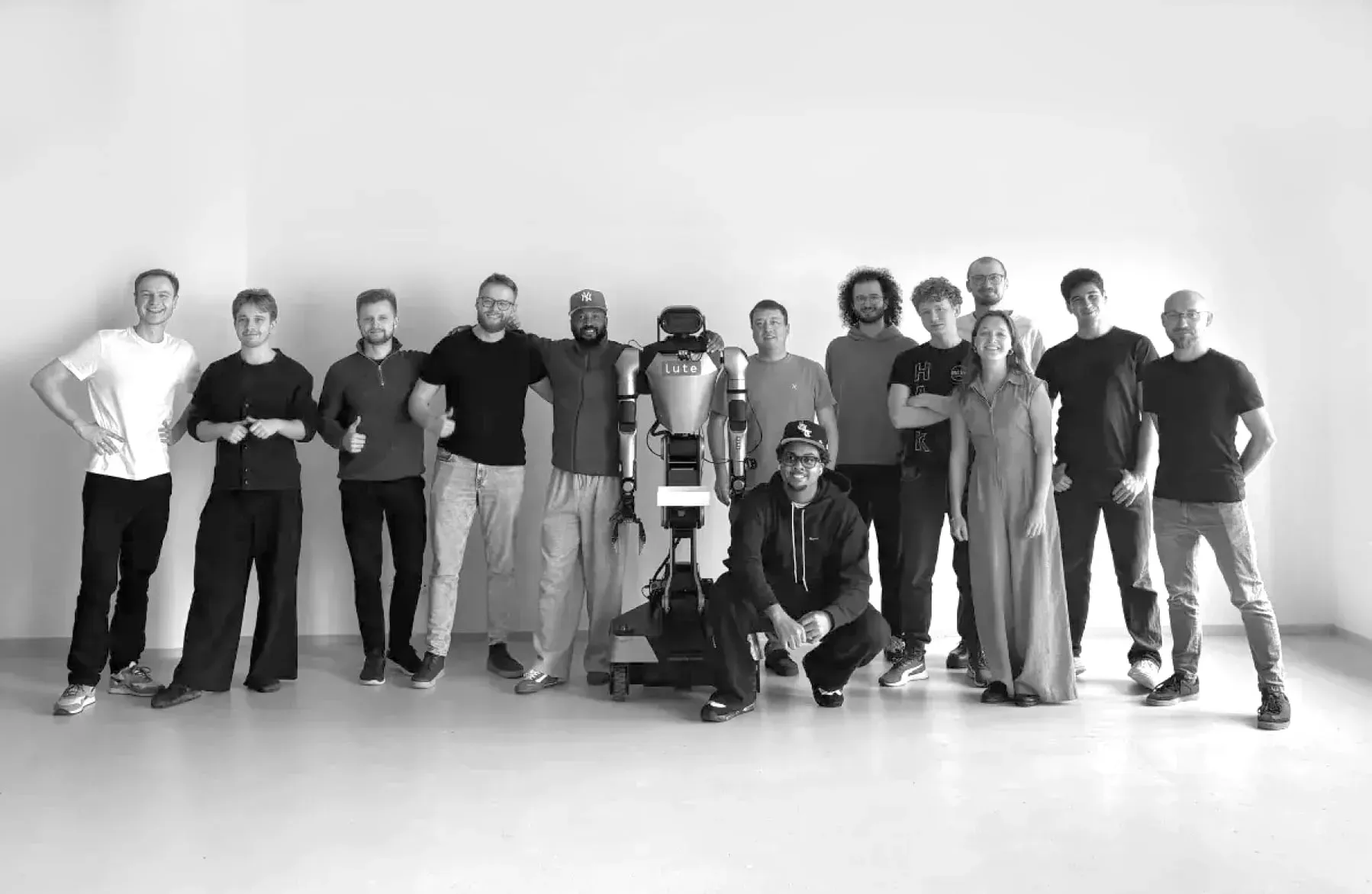
OTB Ventures and FORWARD.one co-led the seed round. The earlier pre-seed was led by Credo Ventures and Seedcamp. Inovo VC, Borusan Ventures, ff Venture Capital and Naval Ravikant, the AngelList cofounder, also participated. The valuation and the split between the pre-seed and seed rounds were not disclosed. Lute will use the money to scale tactile data collection, train and improve its models, and deploy with more customers. It is hiring in research, engineering and deployment in Warsaw and San Mateo.
Lute is targeting workplaces that are short of labor. Manufacturing, retail, logistics and health care employ about 1.4 billion people worldwide and produce about 40% of world GDP, the company noted, yet these sectors face growing labor shortages in Europe and the US. Intelligent robots, it argues, can turn those gaps into capacity.
Robots that only see, now with touch
Most robots and physical AI models today rely on vision alone. Vision tells a robot where things are, but says little about contact: how firmly it is gripping an item, whether the item is starting to slip, or how soft or fragile it is. People feel a box slip from their grip before they see it move. That is why Lute bet on touch.
With partners, Lute co-designed compact tactile sensors made of an elastic material called an elastomer and built them into a portable data-collection rig. The sensors read where contact occurs, the load, and the pressure over time, which lets the company collect touch data at scale in any environment.
The first model trained on that data is Lute-0, a “video-action model” that takes in video and outputs the next actions. It ingests wrist-camera views, a task instruction and touch signals, and predicts the next eight frames of video and the next 32 robot movements. Lute compared it with π0.5, which it calls the leading open-source robot model, from Physical Intelligence. Lute-0 was pre-trained on far less data and in much less time, yet performed on par with or better than π0.5 on a set of retail tasks, with half the latency. On a task of picking and placing soft snacks, its success rate was 98% versus 70% for π0.5. All of these figures come from Lute’s own evaluation. The company says Lute-0 is the first of a new family of foundation models trained on touch as well as vision.
A model alone is not enough, Lute stressed; deployment is what matters. Its models already run at Europe’s largest automotive parts distributor, which it did not name, and it works with some of the world’s largest retailers, also unnamed, to put robots on their sites. It is also partnering with system integrators, which install robot hardware for their clients, starting in health care and manufacturing. On site, the robot handles the work on its own whenever possible, and remote monitoring and human support step in when it needs help. Edge cases, failures and interventions flow back into training so each deployment improves the next.
“Many system integrators want to deploy AI-driven robots, but few have the machine learning expertise to do it. Lute removes that barrier,” said Kris Pałucki, investment director at OTB Ventures. Boy de Jonge, investment manager at FORWARD.one, said the team’s sense of urgency “put Lute’s models onto real retail and logistics sites within months.”
Few rivals put touch first
Money is already pouring into robot foundation models. Physical Intelligence, maker of π0.5, raised $600 million at a $5.6 billion valuation last November and was reported in March to be in talks to raise about $1 billion at $11 billion or more. Skild AI raised $1.4 billion in January at a $14 billion valuation, and Generalist, founded by DeepMind alumni, raised $400 million in a Series A and then a further $200 million two months later.
Others focus on fine hand movements. Eka Robotics raised a $150 million Series A last month, building dexterous robot hands with physics simulation and reinforcement learning rather than human data. Genesis AI raised a $500 million Series A on November 18, backed by data gathered with human-hand-sized robot hands and gloves. For picking in logistics and retail, Dexterity raised $95 million in additional funding in March 2025 at a valuation of $1.8 billion.
Startups that put touch and force sensing first are still early. Zurich-based Enact Intelligence came out of stealth last month and raised a $30 million pre-seed round, backed by redalpine, Notion Capital and firstminute capital. Rather than using separate touch sensors, it reads force from inside a robot’s actuators. Lute differs in putting touch at the center of its model design and tying together sensors, data-collection hardware and on-site deployment. With its performance edge so far shown only in its own tests, the things to watch are outside validation and how quickly it can expand across large retailers’ sites.
MORE FROM THE POST
- Embo Raises $110M Seed Led by a16z to Build a Robot Brain on World Models
- Veeda AI Raises $90M Seed to Build “The Matrix” for Physical AI
- BrightAI Raises $97 Million to Put Physical AI on Pipes, Poles and Power Lines
- Genesis AI Raises $500M Series A to Build Human-Handed General-Purpose Robots
- Imperial Spinout Machenta Raises $40M Seed for Robots That Learn From a Single Demonstration
- AI
- Borusan Ventures
- Credo Ventures
- ff Venture Capital
- FORWARD.one
- funding
- Inovo VC
- Lute
- Naval Ravikant
- OTB Ventures
- Overseas funding
- physical ai
- pre-seed
- robotics
- seed
- Seedcamp
Share

Most Read
- 1
- 2
- 3
- 4
- 5

Leave a Reply