










Fusion power plants have so far been treated as one-off projects: build one in the world and see if it works. Starforge, a startup in Munich, Germany, wants to flip that order. It says it will design its reactors from the very first unit as products to be stamped out in factories, dozens or hundreds at a time, and it has raised a €6.6 million pre-seed round to do it.
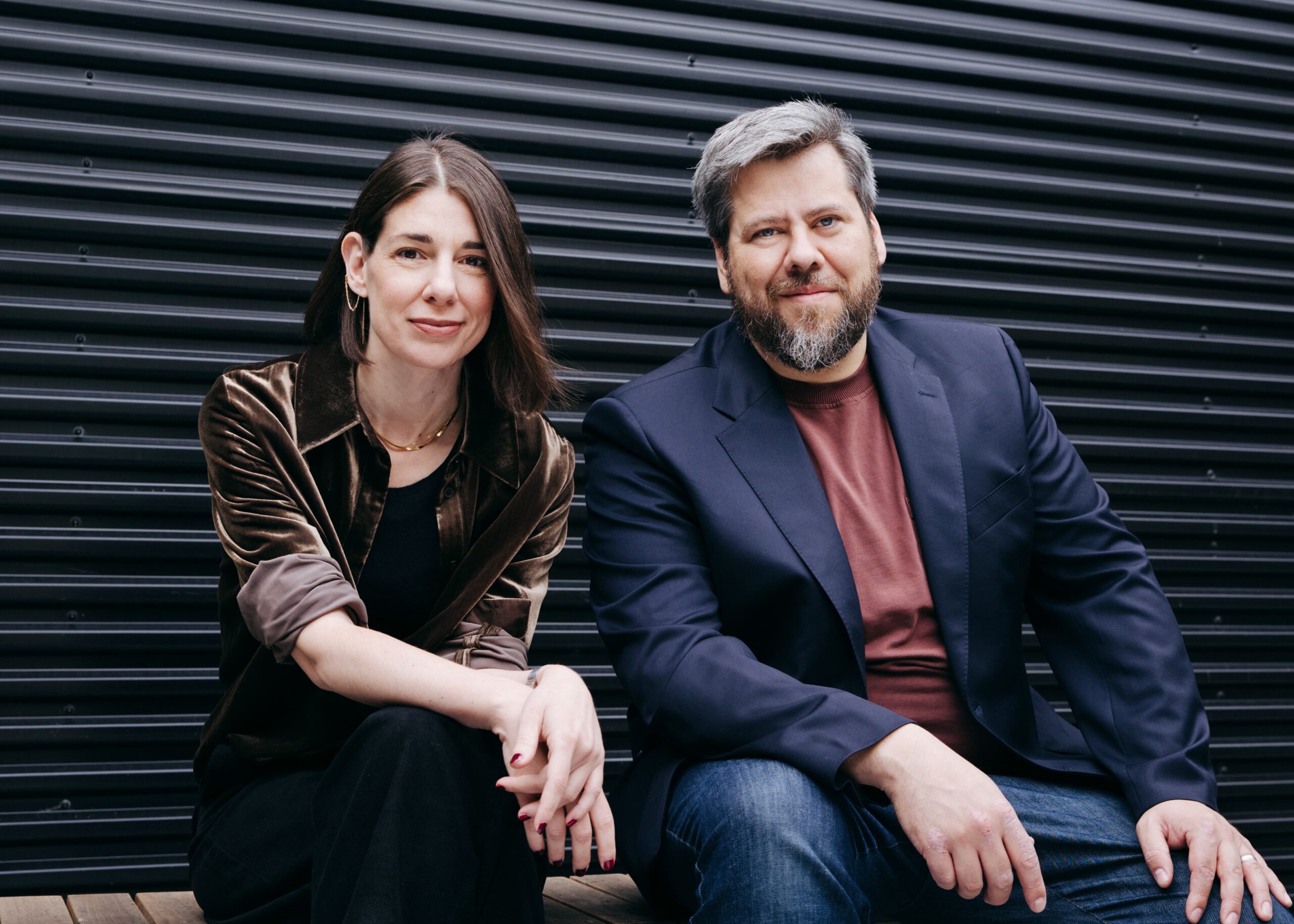
Starforge went public on November 26 (local time) with a pre-seed round co-led by AENU and First Momentum Ventures. Auxxo Female Catalyst Fund, Kvanted, Silicon Roundabout Ventures, Arcas Ventures and UnternehmerTUM Funding for Innovators also took part. First Momentum says it incubated Starforge. According to TNW, the round closed in eight weeks.
Fusion tries to reproduce on Earth the reaction that powers the sun in order to generate electricity. That takes a device that can hold ultra-hot fuel, called plasma, in place, and many fusion companies are spending their money proving that such a device works. Starforge asks the next question: how do you build working machines cheaply and in volume? The company argues that fusion only matters if it is affordable, on time and available everywhere.
What Starforge sells is not electricity but reactors. It plans to design fusion reactors, sell them and service them, with utilities, governments and private operators as customers. The first product, Unit One, is a spherical tokamak. A tokamak holds plasma inside a doughnut-shaped magnetic vessel, and a spherical tokamak shrinks the hole in the doughnut so the shape is closer to a rounded apple. The company says about 85% of its internal volume produces fusion power, which makes it efficient for its size. Each unit is rated at 250 MWe and designed to last more than 40 years.
“Factory-made” boils down to three design choices. First, the same module is built over and over, so unit costs fall as volumes rise. Second, the joints of the superconducting magnets, the core component, are remountable so the reactor is easier to service in the field. Third, Starforge takes a “minimum viable reactor” approach, building its first product from parts that existing supply chains can provide rather than waiting for new industries to appear. The company also stresses that parts are designed for production lines and that finished reactors can be shipped and assembled wherever power is needed.
The reason is cost. The company assumes unit costs fall 15% each time cumulative production doubles, so the twentieth reactor would be 15% cheaper to build than the tenth. On that learning effect it aims to supply electricity at around €0.05 per kilowatt-hour at fleet scale. The 15% is the company’s model assumption, though. TNW pointed to ETH Zurich research that estimates cost declines for energy technologies at 2% to 8% per doubling of capacity, against 23% for solar modules. Whether fusion reactors can get cheaper as fast as solar is still unproven.
Over the next 24 months Starforge plans to grow the team, finish the conceptual design of Unit One and secure initial customer commitments in Europe. It targets commercial operation in the mid-2030s.
The team pairs someone who knows fusion physics with someone who has put complex hardware into mass production. CEO Ana Koller holds PhDs in plasma physics and fusion engineering and has worked at the Max Planck Institute for Plasma Physics, MIT and Commonwealth Fusion Systems. Co-founder and COO Jonathan Janssen has two decades in aerospace and energy manufacturing, including manufacturing technology roles at GE, Lilium and VoltStorage. Starforge was founded in Munich in March this year. Koller has said she wants fusion to be unremarkable infrastructure that people drive past without a second thought.
Fusion startups differ by how they confine plasma. In the tokamak camp that Starforge joins, Koller’s former employer Commonwealth Fusion Systems is ahead, and Britain’s Tokamak Energy works on spherical tokamaks. Among stellarators, which confine plasma with twisted magnets, Proxima Fusion, also in Munich, became Europe’s largest fusion company after a $468 million raise, Type One Energy raised a $200 million Series B and Thea Energy a $100 million Series B. Helion, taking a different approach, raised $465 million at a $15.5 billion valuation. While those companies spend to prove their devices’ performance, Starforge makes manufacturing, servicing and shipping the starting point of its design. Its €6.6 million, though, is small next to what they have raised.
MORE FROM THE POST
- Mavria Raises $130M to Date at a $1B Valuation to Build AI Data Centers in a Factory
- Sodium-Ion Battery Maker Peak Energy Raises $108M Series B
- Grid Flexibility Platform Voltus Raises $225M Series D
- VEIR Raises $110M Series C to Scale Superconducting Power Delivery for AI Data Centers
- Carbon-Negative Power Plant Maker Reverion Raises $175M, Eyes AI’s Power Crunch
- AENU
- Arcas Ventures
- Auxxo Female Catalyst Fund
- Energy
- First Momentum Ventures
- funding
- Fusion
- Kvanted
- Overseas funding
- pre-seed
- Silicon Roundabout Ventures
- Starforge
- UnternehmerTUM Funding for Innovators
Share

Most Read
- 1
- 2
- 3
- 4
- 5

Leave a Reply