





Turning an idea into software used to require capital, technical fluency, and time — a barrier that killed countless ideas before they existed. Stockholm-based Lovable tore that barrier down. Describe what you want in natural language and its AI builds a working app: “vibe coding,” which puts software creation in the hands of non-developers.
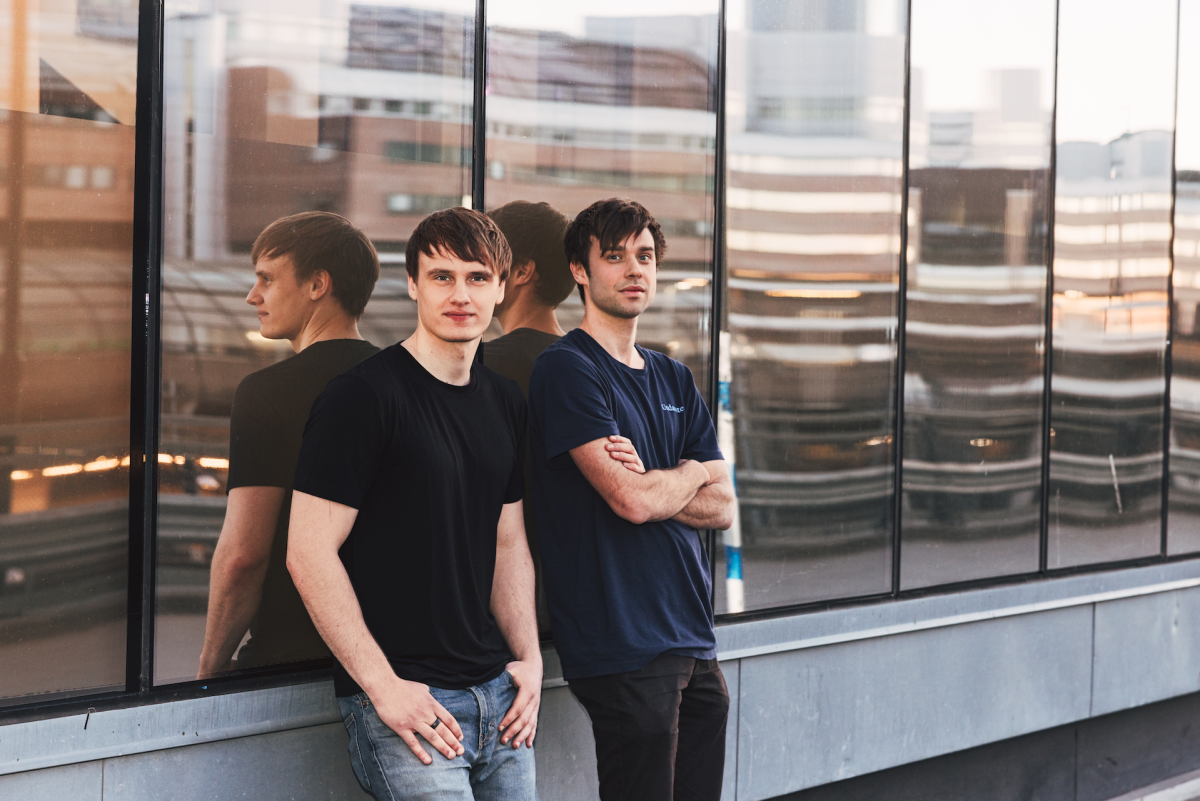
Lovable announced a $400 million Series C at a $13.3 billion valuation, led by Menlo Ventures and co-led by the Scaleup Europe Fund, managed by EQT. New investors span continents — Balderton Capital and Carmignac in Europe, Kaszek Ventures and LTS Growth in Latin America, Tencent and World Innovation Lab in Asia, and Regent in the U.S. — alongside returning backers Accel, Antler, CapitalG, DST Global, Evantic Capital, HubSpot Ventures, and Salesforce Ventures.
The pace is remarkable. Just eight months ago its Series B valued Lovable at $6.6 billion; that has now doubled. Revenue has followed: after crossing $500 million in ARR in June, the company is tracking toward $600 million by the end of August. Since launching in November 2024, users have created more than 60 million projects, and Lovable-built apps draw over 900 million visits a month. Within its first year Lovable reached employees at half the Fortune 500; less than a year later, that’s near two-thirds.
From a build tool to a platform for running a business
Lovable’s direction is clear: not just building apps, but running businesses. Since its Series B it has added payments, SEO and AI-search discoverability tools, deeper integrations with Google Workspace, Microsoft 365, Salesforce, Stripe, and ElevenLabs, automatic and scheduled security scanning, AIUC-1 certification (the first security standard for AI agents), and governance features like publishing controls and workspace insights.
Nearly 8 in 10 users are building a business or side project they hope to monetize, and more than a third already earn revenue, the company says. In the UK, Lex Deak built fashion app WNTD on Lovable, saving £25–30K a month and closing a £3M round; Brazil’s Viver de IA built its CRM, finance tools, and website on Lovable and is tracking toward R$100 million in revenue; at US-based Nursa, a product VP built a new enterprise product in a single weekend, after which the company rolled Lovable out to 200+ employees and began retiring 10 SaaS systems. Inside Adidas, NVIDIA, Deutsche Telekom, and Zendesk, teams build internal tools the same way.
Next, the product becomes more proactive — understanding what users are trying to achieve and carrying out work without waiting to be prompted. Lovable says it will keep drawing on multiple models while post-training promising open-source ones, and plans to grow to roughly 450 people this year, keeping its center of gravity in Stockholm while expanding in London, Boston, San Francisco, and New York.
Can Europe’s vibe-coding champion hold the crown?
The vibe-coding market is crowded, with developer-focused tools like Cursor and Cognition on one side and non-developer platforms on the other. Lovable has pushed furthest into non-technical users and enterprise workflows.
This round also carries weight for European tech sovereignty. Co-lead EQT is Europe’s largest private markets investor, with €269 billion in assets under management. The Scaleup Europe Fund it manages is a €5 billion vehicle created under the EU’s Startup and Scaleup Strategy — EQT was appointed manager in May — designed to close the late-stage funding gap that has long pushed European scaleups to raise, and often relocate, abroad. Lovable is among its first investments. “They prove that Europe has no shortage of exceptional founders,” said EQT partner and fund co-head Victor Englesson, while Menlo’s Matt Murphy called Lovable “one of the most generational companies of the AI era.” The test is whether it can sustain that growth while becoming the platform companies actually run their operations on.
MORE FROM THE POST
- CodeRabbit Raises $143M at $1.5B Valuation, Extending AI Code Review Into Agentic Change Management
- Cognition Raises Over $2B at $48B Valuation
- Samsung Leads Mistral’s €3B Series D, Europe’s Largest Tech Funding Round
- Higgsfield’s $400M Series B: $5.4B Valuation and $700M Revenue
- Numeral Raises $100M Series C for AI-Powered Sales Tax Compliance
- Accel
- AI coding
- EQT
- funding
- Lovable
- mega funding
- Menlo Ventures
- Overseas funding
- Salesforce Ventures
- seriesC
- Tencent
- vibe coding
Share

Most Read
- 1
- 2
- 3
- 4
- 5

Leave a Reply