



Prevalent AI Raises $22M, Its First Outside Capital in Nine Years







Gartner expects enterprises to spend $240 billion on information security this year, up 12.5% from last year. Spending more, however, does not make the decisions easier. Every new tool adds another pool of data that does not connect to the others, and what actually poses a risk stays just as blurry.
The same pattern is now repeating in enterprise AI. Gartner forecasts that more than 40% of agentic AI projects will be cancelled by the end of 2027, citing escalating costs, unclear business value and inadequate risk controls. Those three reasons share one root: missing context. AI makes reliable decisions only on top of data that is clean, connected and current.
Building context without moving the data
Prevalent AI pulls hundreds of scattered enterprise data sources into a single knowledge graph. Its AI continuously cleans and connects that data, showing what exists across an organization, how the pieces relate, and where the gaps sit. People and AI systems end up reading the same map.
The word “sovereign” in its pitch is doing real work. The knowledge graph lives inside the customer’s own infrastructure rather than a shared cloud, a design that follows from serving regulated industries where data cannot easily leave the building. Global banks, telecom operators, insurers and critical national infrastructure operators are among its customers.
Security was the starting point, because fragmented data turns into loss fastest there. In cases the company disclosed, one global insurer cut the time to produce executive security reports by 95%, and an international banking group improved its incident detection by more than 80%. The same foundation now extends to financial crime analysis, compliance and operational intelligence.
How GCHQ alumni lasted nine years
Prevalent AI was founded in London in 2017 by Paul Stokes and Arun Raj, alongside a team drawn from British intelligence agency GCHQ. Sir Iain Lobban, who directed GCHQ from 2008 to 2014, and Andrew France, a former deputy director for cyber defence operations at GCHQ who went on to lead Darktrace, were part of that group.
The growth path is the unusual part. The company took no outside growth capital for nine years, expanding on founder-led customer demand and staying profitable from its very first customer. In 2021, Istari — part of Singapore’s sovereign wealth fund Temasek — became a minority shareholder by buying existing shares, but no new money entered the business.
Annual recurring revenue has more than doubled over the past twelve months, as agentic AI deployments push enterprises to look for a data foundation they can trust.
The first check in nine years
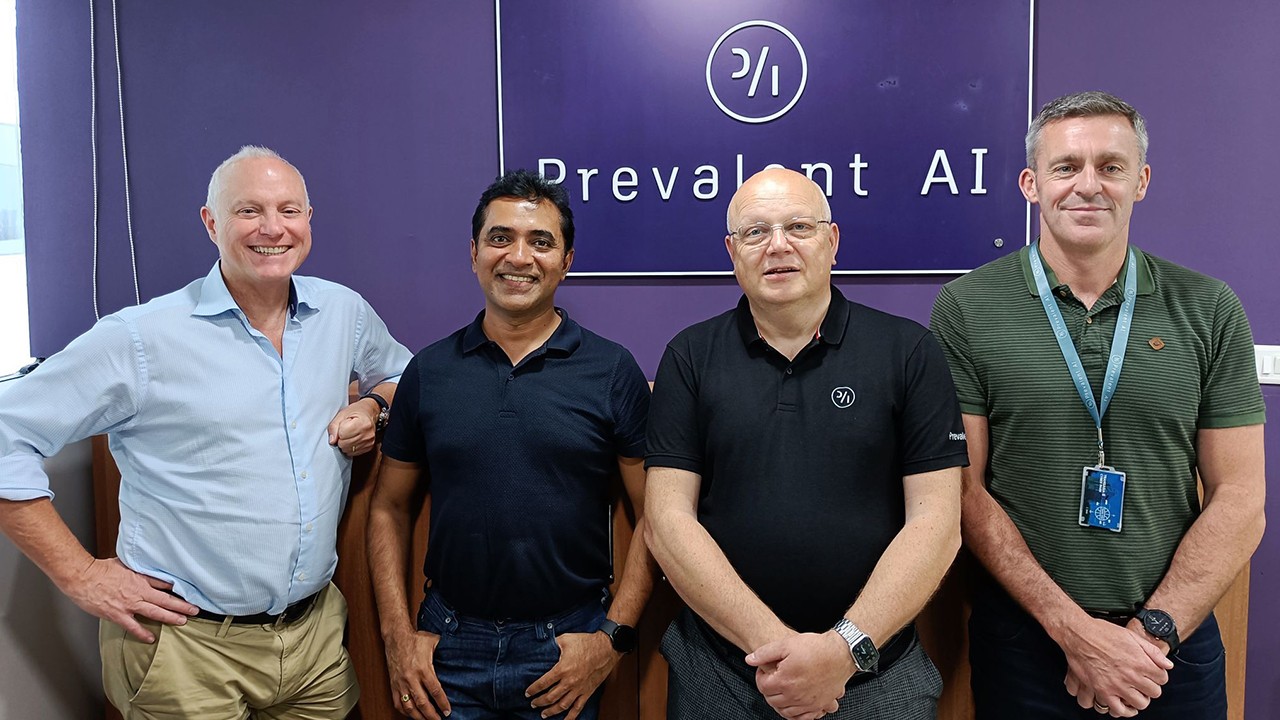
Prevalent AI announced a $22 million investment from Integrity Growth Partners, a Los Angeles growth private equity firm. It is the first primary capital in the company’s nine-year history.
The investor said it valued a genuinely differentiated, AI-native technology that the world’s most demanding enterprises rely on, built while maintaining capital discipline. As security stacks grow more complex and agentic AI raises the stakes on data quality, it expects demand for a unified context layer to intensify.
The money goes in four directions: formalizing a global go-to-market organization across sales, marketing, customer success and partnerships; deepening existing markets while accelerating U.S. expansion; extending the knowledge graph beyond security into broader risk and enterprise use cases; and strengthening the leadership team, following recent appointments of a chief financial officer and an SVP of global sales.
The competitive field
The problem of organizing data so AI can use it is being answered from several directions.
The closest neighbor is DataHub, which raised $35 million on a pitch built around data context management for the AI era. Where Prevalent AI starts in security and widens into the enterprise, DataHub starts from the data catalog and moves toward the same point.
On the security-data side, consolidation continues. Cyera acquired Oasis for $1 billion to bring data and AI identity together, and Keyfactor took more than $1 billion in growth investment for machine identity management. In identity, Oak raised $60 million to govern human, machine and AI-agent identities on one plane.
Others come at it through operations. Torq reached unicorn status on $140 million for security operations automation, and 7AI raised $130 million in the largest Series A the cybersecurity sector has seen. Those companies take over the work; Prevalent AI supplies the material the work is judged on.
That a bootstrapped company would take capital now fits this picture. The contest over who owns the context layer is being settled, and even the disciplined players need speed.
MORE FROM THE POST
- AI Operating System for Wealth Management Nevis Raises $70M Series B
- Physical AI Asset-Health Platform Tractian Raises $130M Series D at $1.4B Valuation
- AI Planning Platform Pigment Raises $250M Series E at $2.3B Valuation
- Rillet Achieves Unicorn Status With $100M Series C Funding
- Sierra Raises $1.75B at a $30B Valuation as Banks and Insurers Adopt AI Agents
Share

Most Read
- 1
- 2
- 3
- 4
- 5

Leave a Reply