



Castelion Raises $1B Series C at $13B Valuation to Mass-Produce Hypersonic Missiles


Hypersonic weapons are expensive. A single round costs millions of dollars and production lines are narrow. Deterrence built on a small number of exquisite weapons wobbles the moment an adversary decides to compete on volume. That is the gap the United States has been staring at in conventional deterrence.
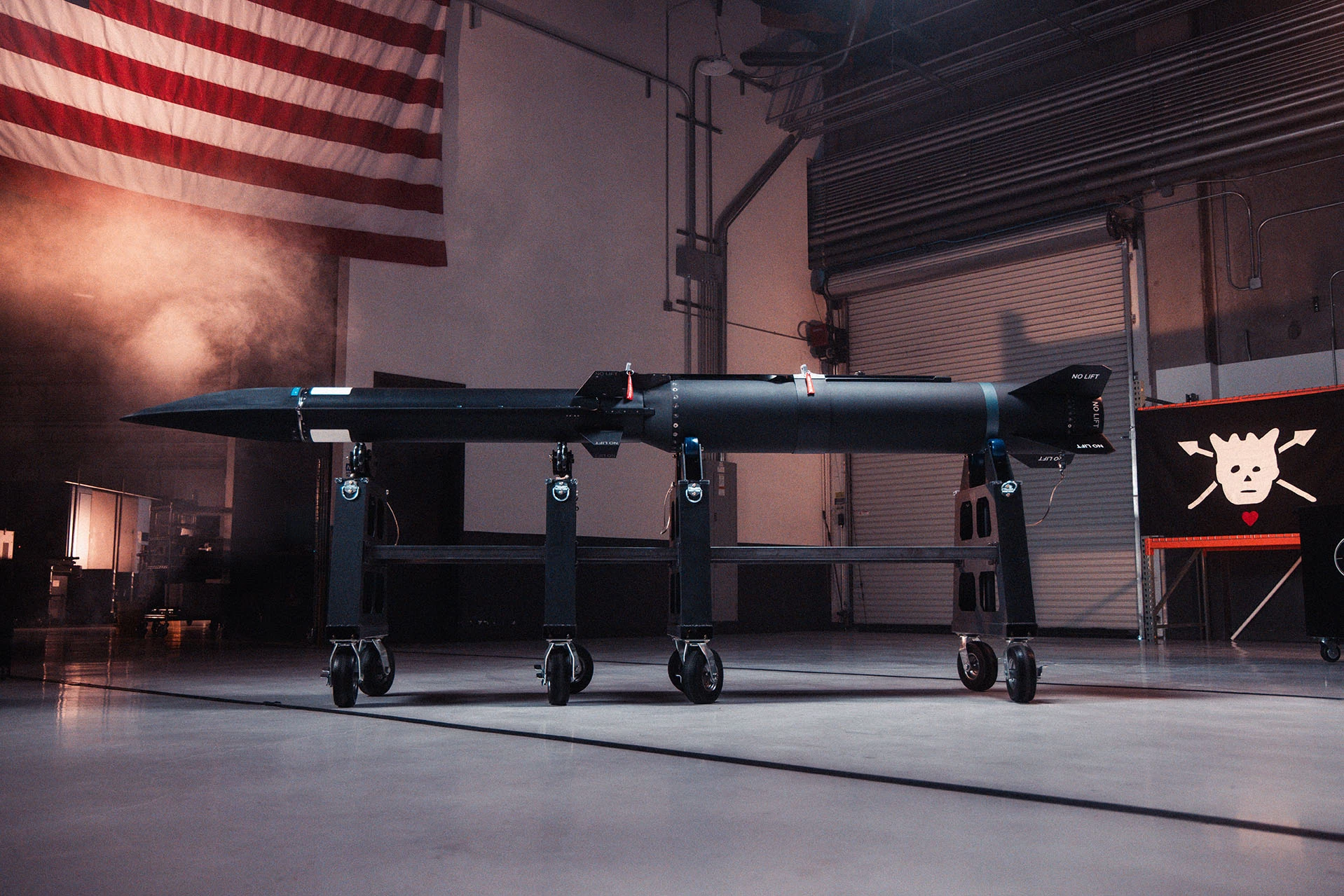
Castelion inverted the equation. It designs around commercial components and mass production to drive unit cost down, then competes on quantity. Blackbeard, its first hypersonic strike missile, was engineered from inception for industrial-rate output, commercial unit cost and continuous flight-test iteration.
Clean sheet to program of record in four years
The company took Blackbeard from a clean sheet to a program of record in under four years, an unusually fast run in this field. Fielding is targeted for 2027. Over the past 18 months it has secured more than $500 million in U.S. military contracts.
It built the production base with its own capital. The Project Ranger campus in Sandoval County, New Mexico spans 1,000 acres and is the largest dedicated hypersonic missile manufacturing facility in the country. Castelion has already put more than $250 million of private money into the site and will commit hundreds of millions more from this round to expand capacity. Designed in California, built in New Mexico, supplied by small and large businesses across the country.
$800M in equity, plus a $250M revolver
Castelion announced a $1 billion Series C at a $13 billion valuation.
The structure is worth separating. $800 million is equity financing; the remaining $250 million is committed financing for a revolving credit facility. Both are announced as one round, but they are different kinds of money — the revolver gives a company that has to keep adding factory capacity room on working capital.
The equity was co-led by JPMorganChase’s Strategic Investment Group, Andreessen Horowitz, and funds managed by Carlyle. JPMorganChase framed it as part of its Security and Resiliency Initiative, backing companies that strengthen the defense industrial base. Lightspeed Venture Partners, Lavrock Ventures, Altimeter, General Catalyst and Interlagos joined, alongside new investor T. Rowe Price.
Andreessen Horowitz has invested in manufacturing and defense under its American Dynamism thesis, arguing that the hardest and most important problems are physical ones. Lavrock came in at pre-seed and Lightspeed led the Series A before a complete system had flown; both have participated in every round since.
Range next, then defense
The capital splits three ways. First, pushing Blackbeard production to its maximum rate. Second, accelerating a much longer-range precision strike weapon that has been in development for several years. It reuses Blackbeard’s core technologies, components and manufacturing techniques while extending range substantially — the aim is to complement large, exquisite systems with a dramatically cheaper alternative that can be built at far higher rates, making long-range hypersonic strike fieldable in meaningful quantities.
Third, defensive systems. The same manufacturing methods and rapid iteration model get applied to air and missile defense, focused on lower unit cost, higher production rates and greater magazine depth.
The competitive field
Defense startup funding moved up a tier this year. Anduril doubled its valuation to $61 billion on a $5 billion round, Shield AI raised $2 billion at $12.7 billion, maritime autonomy company Saronic took $1.75 billion at $9.25 billion, and Europe’s Helsing raised $1.8 billion.
Narrow it to hypersonics and the field sharpens. Hermeus reached unicorn status on a $350 million Series C for its Mach 5 uncrewed aircraft, and Venus Aerospace raised $91 million to prepare hypersonic engines for production. Both work on aircraft and propulsion, however, where Castelion is focused on stamping out the missiles themselves. On the intercept side, True Anomaly raised $650 million to build space-based interception.
The closest analogue on the manufacturing thesis is Hadrian, which raised $1.37 billion for automated factories that produce defense components. Finished weapons versus parts is a real difference, but the logic is the same: drive cost down, drive volume up, rebuild the defense industrial base.
MORE FROM THE POST
- Cognition Raises Over $2B at $48B Valuation
- Deep-Strike Missile Maker Covenant Exits Stealth With $250M, Unicorn Valuation
- Rillet Achieves Unicorn Status With $100M Series C Funding
- Heidi Raises $340M for Its AI Care Partner, Now Valued at $900M
- Open Cosmos Raises €300M to Build Europe’s Sovereign Satellite Infrastructure
- Altimeter Capital
- Andreessen Horowitz
- Carlyle
- Castelion
- defence
- funding
- General Catalyst
- Interlagos
- JPMorganChase
- Lavrock Ventures
- lightspeed venture partners
- manufacturing
- mega funding
- Overseas funding
- seriesC
- T. Rowe Price
Share

Most Read
- 1
- 2
- 3
- 4
- 5

Leave a Reply