



Stoke Space Raises $1B Series E, Total Funding Hits $2.3B, Unveils Larger Nova Block 2


Full reusability is increasingly seen as the inevitable end state for space transportation, and capital is following that thesis into rocket startups. Every mature transportation system has been built around fully reusable vehicles — it’s the only way to reach the cost floor while scaling availability, and the launch market is no exception.
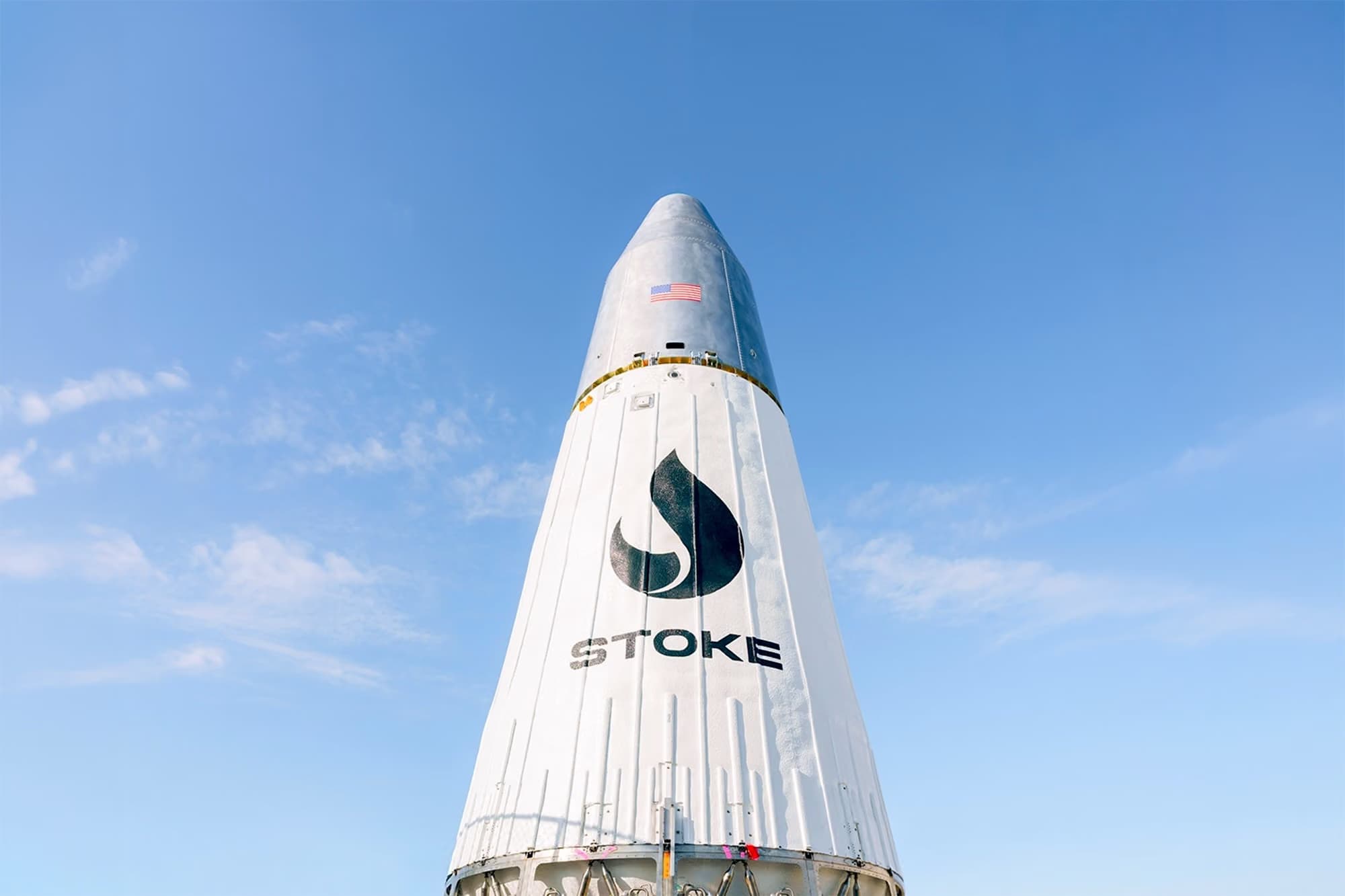
One of the leaders of that push just raised a major round. Stoke Space, which is developing fully and rapidly reusable launch vehicles, announced it has completed an initial closing of a $1 billion Series E round, bringing its total capital raised to $2.3 billion. The company’s Nova rocket is designed for full reuse of both stages, and its first vehicle, Nova Pathfinder, will carry payloads to orbit while proving out that architecture and Stoke’s operational capabilities. Stoke is targeting early 2027 for Pathfinder’s first orbital launch.
The new capital also funds a bigger vehicle. Alongside the funding, Stoke unveiled Nova Block 2, a higher-capacity rocket that delivers 15 metric tons to low Earth orbit in a 5-meter payload fairing, carrying forward Pathfinder’s architecture and reuse technologies. Stoke is targeting 2029 for Nova Block 2’s first launch, with production and flight cadence ramping quickly from there.
Stoke Space was founded in 2019 by CEO Andy Lapsa and Tom Feldman. Lapsa previously worked at Blue Origin, where he helped develop the BE-4 engine before leading the BE-3 and BE-3U engine programs.
The round was co-led by Point72 Ventures and Spark Capital, with participation from General Innovation, Glade Brook Capital, US Innovation Technology, Washington Harbour Partners, Woven Capital, Y Combinator and other new and existing investors. The round follows a $510 million Series D in October 2025. Reports put Stoke’s valuation ahead of this round at roughly $9 billion.
Point72 Ventures partner Chris Morales said Stoke is pursuing one of the most important opportunities in space transportation — making launch fully reusable, reliable and scalable — and that the company has shown both the technical progress and the ambition to build a launch system capable of serving the market at industrial scale. Spark Capital general partner Clay Fisher said full reusability offers an order-of-magnitude cost and service advantage over partially reusable rockets, and that Stoke paired the right thesis seven years ago with a blistering pace of execution.
Lapsa said the company is humbled by the trust investors and customers have placed in it, and that the investment lets Stoke scale toward the capability and cadence its customers require. He described Nova Pathfinder as the way Stoke turns Nova’s promise into flight-proven capability, learning quickly and de-risking the hardest parts of a fully reusable architecture, while Nova Block 2 scales those lessons into the capacity and cadence customers are asking for.
Where Stoke Sits Competitively
SpaceX dominates the reusable-launch market with Falcon 9 and Starship, and everyone else is racing to close the gap. Nasdaq-listed Rocket Lab posted $600 million in 2025 revenue and an $1.85 billion backlog to become the No. 2 US launch provider, and is developing its own partially reusable Neutron rocket. Blue Origin broke SpaceX’s monopoly in the medium-lift market with New Glenn’s successful launch in January 2025. Relativity Space and Firefly Aerospace round out the field with their own vehicles.
Stoke stands apart as the only company among these pursuing full reuse of both rocket stages, putting it in the most direct comparison with SpaceX’s Starship. While Rocket Lab and Blue Origin have focused on partial reuse and near-term LEO commercialization respectively, Stoke has designed for full reusability from day one.
MORE FROM THE POST
- Satellite Bluetooth Network Hubble Raises $200M Series C, Hits $1.6B Valuation
- The Exploration Company Raises $450M, Europe’s Largest Space-Tech Series C
- Pixxel Raises $100M Series C, India’s Largest Space-Tech Round
- Muon Space Closes $250M Series C to Industrialize Satellite Constellations
- Space Pharma Reentry Capsule Maker Varda Space Raises $251M Series D
- funding
- General Innovation
- Glade Brook Capital
- mega funding
- Overseas funding
- Point72 Ventures
- seriesE
- spacetech
- Spark Capital
- Stoke Space
- US Innovation Technology
- Washington Harbour Partners
- Woven Capital
- Y Combinator
- 우주항공
Share

Most Read
- 1
- 2
- 3
- 4
- 5

Leave a Reply