





AI agents have never been easier to build, but making them reliable and affordable in front of real customers remains hard. Teams can spend months checking agents by hand and still miss scenarios that only show up in production, and once agents are live, running a frontier large language model (LLM) to operate and evaluate every interaction is slow and expensive. Plurai, a startup that borrows simulation from autonomous driving to close that gap, has raised seed funding and opened its platform to all agent builders.
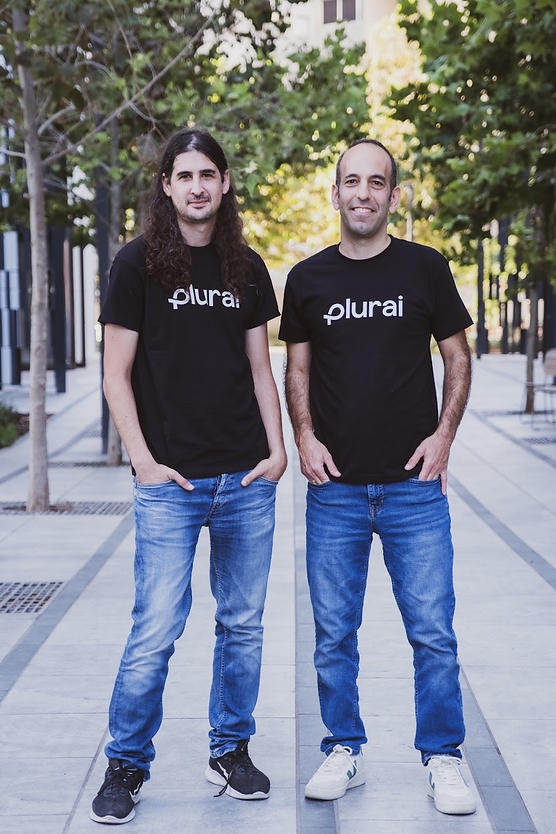
New York-based Plurai announced on Nov. 11 a $13 million seed round led by Team8, with participation from U&I, Velocity and Mercer, plus more than 20 angel investors. Angels include CyberArk founder Udi Mokady and Reah Miyara, Senior Director of Google Models at Google Cloud, and Dr. Eyal Carmi, CTO of Microsoft 365 Copilot, has joined the advisory board. Plurai had previously limited access to select partners and customers; it is now available to every agent builder, with a free tier.
The platform starts with a digital twin of an agent and its world, built from the customer’s own knowledge base, tools and policies. Plurai then runs thousands of realistic and adversarial users against the agent in a sandbox, aiming to surface policy violations, hallucinations, incorrect actions, broken tool calls, failed tasks and sensitive data leaks before customers do.
The same simulation is used to improve the agent. Plurai generates fixes for the failures it finds and uses the simulation data to train small language models (SLMs) tailored to each agent. In production, these models can replace frontier LLMs to run the agent at lower cost, or act as always-on evaluators and guardrails that check every action against company policy. New failures they catch flow back into the simulation. The company describes the loop as simulate, fix, post-train, repeat.
The performance figures come from design partners and are the company’s own. Plurai says agent development cycles fell from months to hours, failures reaching real users dropped 82%, and the cost of running reliable agents fell 97%. In joint work with NVIDIA and Nebius for a global enterprise customer, models Plurai post-trained outperformed OpenAI and Anthropic frontier models on accuracy at 40x and 44x lower cost, respectively. The customer was not named, test conditions were not disclosed, and the results have not been independently verified.
From self-driving simulation to AI agents
Co-founders Ilan Kadar (CEO) and Elad Levi (CTO) worked at autonomous-driving data company Nexar, where Kadar was VP of AI and Levi an AI architect, building real-time systems for self-driving companies such as Waymo. Kadar says Waymo built trust by testing and training across more than 20 billion simulated miles, roughly 100 times its real-world driving, and that Plurai applies the same approach to agents by exposing them to the hardest and rarest situations before users see them. Aviad Harell, Managing Partner at Team8, said simulation will become as fundamental to the agent stack as CI/CD is to software.
The company also points to its own research. BARRED, a method for generating synthetic training data for custom SLMs, was accepted at ICML 2026, and other work covers serving hundreds of tailored SLMs in real time on a single GPU. Developers can start from tools they already use, including Claude Code, Codex and GitHub Copilot, and teams can simulate agents built on enterprise platforms such as Salesforce Agentforce.
Plurai says it works with AI-native and highly regulated companies, including Fortune 500 and major financial firms. It was named a Representative Vendor in Gartner’s 2026 Market Guide for AI Evaluation and Observability Platforms, a category Gartner projects 60% of software engineering teams will adopt by 2028, up from 18% in 2025, the company said.
A crowded field turns to simulation
Agent evaluation and monitoring already attracts heavy funding. Braintrust, whose customers include Notion and Replit, raised an $80 million Series B led by ICONIQ at an $800 million valuation, and Cisco moved to acquire Galileo, which says its own small model, Luna-2, cuts evaluation costs. Raindrop, which raised a Series A led by CRV for $50 million in total funding, also uses small models trained per customer to catch agent failures and recently launched a simulation product that replays production traffic against code changes. Patronus AI raised a $50 million Series B led by Greenfield Partners and is shifting from evaluation toward building environments in which agents train. Plurai’s pitch is to tie simulation, fixes and custom small models into one product. With several rivals converging on the same idea, proving simulation fidelity and cost savings in customers’ production environments will likely decide the winners.
MORE FROM THE POST
- Fragment Launches With $56M to Have AI Agents Resolve Procurement Exceptions at Large Manufacturers
- Ande Raises $52M Seed and Series A for Corporate Entertainment
- Raindrop Raises Series A, Bringing Total Funding to $50M
- Graphon Labs Raises $35M Series A to Give AI Agents Long-Term Memory
- AI Evals and Post-Training Company Mercor Raises $750M Series D at $20B Valuation
Share

Most Read
- 1
- 2
- 3
- 4
- 5

Leave a Reply