










Construction is a $16 trillion global industry that has barely changed in half a century. Meanwhile, U.S. housing supply has fallen roughly 4 million homes short of demand. The workforce that built the last century of housing is aging out, too — just 10% of U.S. construction workers are under 25, and 41% of today’s workforce is expected to retire by 2031.
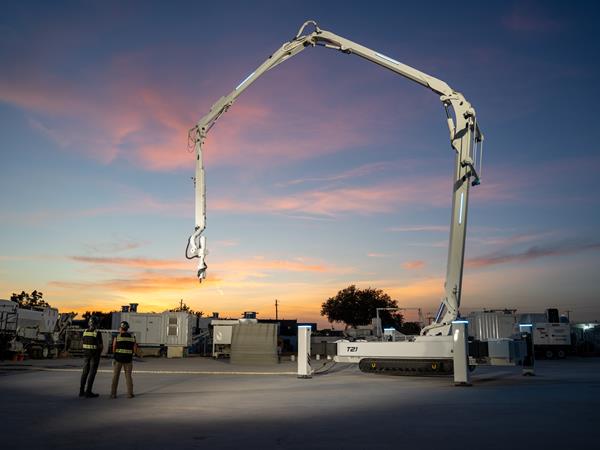
Austin-based ICON says robotics and 3D printing are its answer to that structural crisis, announcing a $200 million Series D.
At the center of ICON’s platform is Titan, a multi-story robotic 3D-printing construction system. It’s engineered to build an average home at 40% lower cost than the national average, in six weeks less time, the company says. Its proprietary building material, FormCrete, is rated for winds above 175 mph — more than four times the 40 mph standard for conventional stick-frame construction — with a fire rating of 2+ hours versus 0.5 hours for traditional building.
The business spans three units: Build, which constructs residential, commercial, and hospitality buildings directly; Tech, which supplies ICON’s integrated construction platform to other builders; and Prime, the defense and space division. Prime is working with NASA on Project Olympus, developing construction systems meant to build on the Moon, and has won more than $370 million in government contracts to date.
“Construction automation has crossed from potential into proven reality,” said co-founder and CEO Jason Ballard. “This round puts that reality in builders’ hands: more Titan systems deployed across the country, deeper capability in housing, commercial, and defense, and continued work on the technology that will one day build humanity’s first structures beyond Earth.”
The round was co-led by funds managed by Baillie Gifford and BlackRock, with participation from Capital Factory, CAZ Investments, Moderne Ventures, Moonshots Capital, Norwest, Overmatch, The Syndicate, and Tiger Global. Baillie Gifford’s Luke Ward, Private Companies Investment Manager, said: “The industries hardest to change often have the most to gain, and the companies that transform them tend to become some of the most important of their generation.”
ICON raised a $207 million Series B led by Norwest in 2021, followed by a $185 million extension led by Tiger Global the next year, then a Series C co-led again by Norwest and Tiger Global in January 2025. With this Series D, the company’s total funding is reported at $700 million at a $1.4 billion valuation. That ratio is worth noting: nine years after its 2017 founding, ICON has raised an amount equal to roughly half its current valuation — a sign of how much capital-intensive manufacturing, R&D, and government work the company has funded along the way, and almost certainly meaningful cumulative dilution, though the exact cap table (liquidation preferences and all) isn’t public.
ICON says it’s on pace for 4x revenue growth this year. It has built more than 270 homes and structures across five U.S. states and two countries, including Wolf Ranch in Georgetown, Texas — built with homebuilder Lennar and billed as the world’s first and largest community of 3D-printed homes — more than 100 homes for people experiencing homelessness through Community First! Village in Austin, and, this past January, 10 barracks at Fort Bliss: the largest deployment of robotic construction technology in Department of War history and the first additively manufactured structures to meet the Pentagon’s Unified Facilities Criteria.
WOWTALE doesn’t yet have dedicated construction-tech (contech) coverage, and a search of our own archive for the closest adjacent company — Gritt, a solar-panel-installing construction robot — turned up a different niche rather than a direct rival. Looking externally, Mighty Buildings, which 3D-prints panels in a factory for on-site assembly, had raised $150 million as of September 2023. Phoenix-based Diamond Age, aiming to offset 55% of a home’s labor cost with 26 robotic end-of-arm tools, raised a $50 million Series A in 2022, with no newer round found. Denmark’s COBOD takes a different approach entirely, selling 3D-printing construction equipment to builders rather than building directly.
Image resources: – Official photo: https://cdn.prod.website-files.com/6981dd4dc49a03a3c838626e/6ac79b1537f5eea8edd8865c_ICON_Titan_At_RnD_Printland_Facility_Austin_TX.jpg – Official media kit: https://www.dropbox.com/scl/fo/h3wa9rnnn74a5bgp9vm77/AIyPlz6TSULXA4Vsv0p-5Lg?rlkey=soetmiji59zdpi3p2r3mbbvzt&e=3&dl=0
MORE FROM THE POST
- Physical AI Chipmaker SiMa.ai Raises $150M Series C at $1.45B Valuation
- ISR Drone Maker TEKEVER Raises $580M Series D
- Samsung Leads Mistral’s €3B Series D, Europe’s Largest Tech Funding Round
- Crusoe Raises $3.9B Series F at a $30.9B Valuation
- Lyte Raises $165M Series C to Give Robots a Trustworthy View of the World
- Baillie Gifford
- BlackRock
- contech
- funding
- ICON
- mega funding
- Norwest
- Overseas funding
- robotics
- seriesD
- Tiger Global
- unicorn
Share

Most Read
- 1
- 2
- 3
- 4
- 5

Leave a Reply