










Studio AIM is building AIMMOVIE, an AI-native mid-form OTT platform, and is preparing to raise USD 760,000 (1 billion won) in pre-Series A funding in Q4 2026.
As generative AI sharply lowers the barrier to video production, the number of AI creators is exploding worldwide. Just two or three years ago there were only 40 to 50 AI film festivals; in 2026 there are 300 to 400. But these creators face a critical problem: even when they make outstanding work, there is virtually no channel to earn money from it.
On YouTube, an algorithm built around short-form video yields meager view revenue for mid-form content of 5 to 30 minutes, and channels have often been suspended after posting AI-generated creative work. Festival prize money frequently fails to cover even the cost of the AI credits used to make a film. The creators have the will and the technology, but no sustainable revenue model.
The audience side is just as empty. Short-form feeds tire viewers with sensational, homogeneous recommendations, while established OTT services such as Netflix demand high subscription fees and an hour or more of viewing time. The market for mid-form content, where people can enjoy one complete story on a commute or before falling asleep, is vacant.
Studio AIM is preparing AIMMOVIE to fill that gap. The company is more than a platform builder: it is an AI content company that vertically integrates the full cycle of planning, production, quality control and distribution. It earns revenue from B2B AI video production for large corporate clients, builds technology through SceneFlow, an AI production-support SaaS selected for a TIPS R&D grant, and AEGIS, a quality-management solution, and channels all of these capabilities into the AIMMOVIE platform.
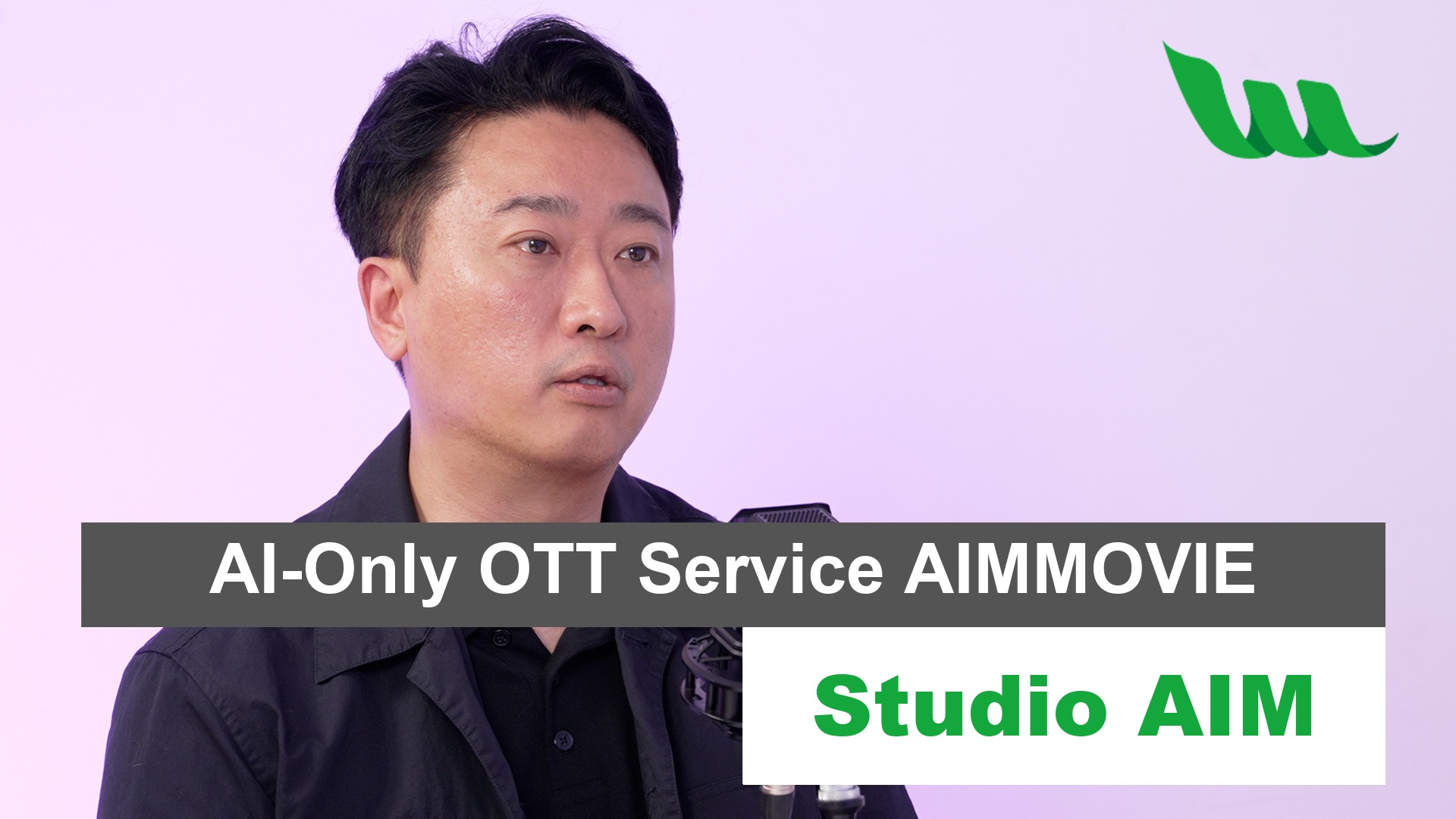
Studio AIM is a resident company at the Bucheon center of the Gyeonggi Content Agency. It was selected for the 2026 Public-Private Matching Commercialization Support program (G-VIP Reverse Recommendation Matching) and is putting that funding into AIMMOVIE’s launch marketing. Through its collaboration with the Bucheon International Fantastic Film Festival (BIFAN), it has secured commitments from directors of award-winning AI films to list their work on the platform, and a survey of 900 on-site attendees found that 91.2% were willing to sign up, giving it early traction. Growing within Gyeonggi’s content ecosystem with support from the Gyeonggi Content Agency and the Pangyo Gyeonggi Culture Creation Hub, Studio AIM tells its story through CEO Musin Lee.
What problem is Studio AIM trying to solve?
AI has solved the difficulty of making content, but the results are not connecting to an actual industry. At the center of the problem are two parties: creators and audiences.
First, AI creators have no revenue model. Even if you make an excellent AI film, it gets buried on YouTube by a short-form-centric algorithm and earns meager view revenue, and festival prize money often doesn’t cover the cost of AI credits. Creation is exploding, but there is no distribution channel where creators can earn sustainably.
At the same time, audiences have no “middle.” Short-form video on YouTube and TikTok wears viewers out with sensational, homogeneous algorithmic recommendations, and existing OTT services like Netflix demand high subscription fees and an hour or more of watching. The market for mid-form content (5 to 30 minutes) that lets people enjoy a complete narrative on a commute or before bed is empty.
In other words, there is no distribution platform connecting exploding AI creation with a new demand for viewing. We are building AIMMOVIE, an AI-native mid-form OTT, to fill that gap.
We also know a platform alone can’t solve this. The quality of AI content varies widely, so you need production capability and tools that can reliably meet the level brands demand. That is why we built our own infrastructure spanning planning, production, quality and distribution, and put AIMMOVIE at the top of it.
How do you solve it?
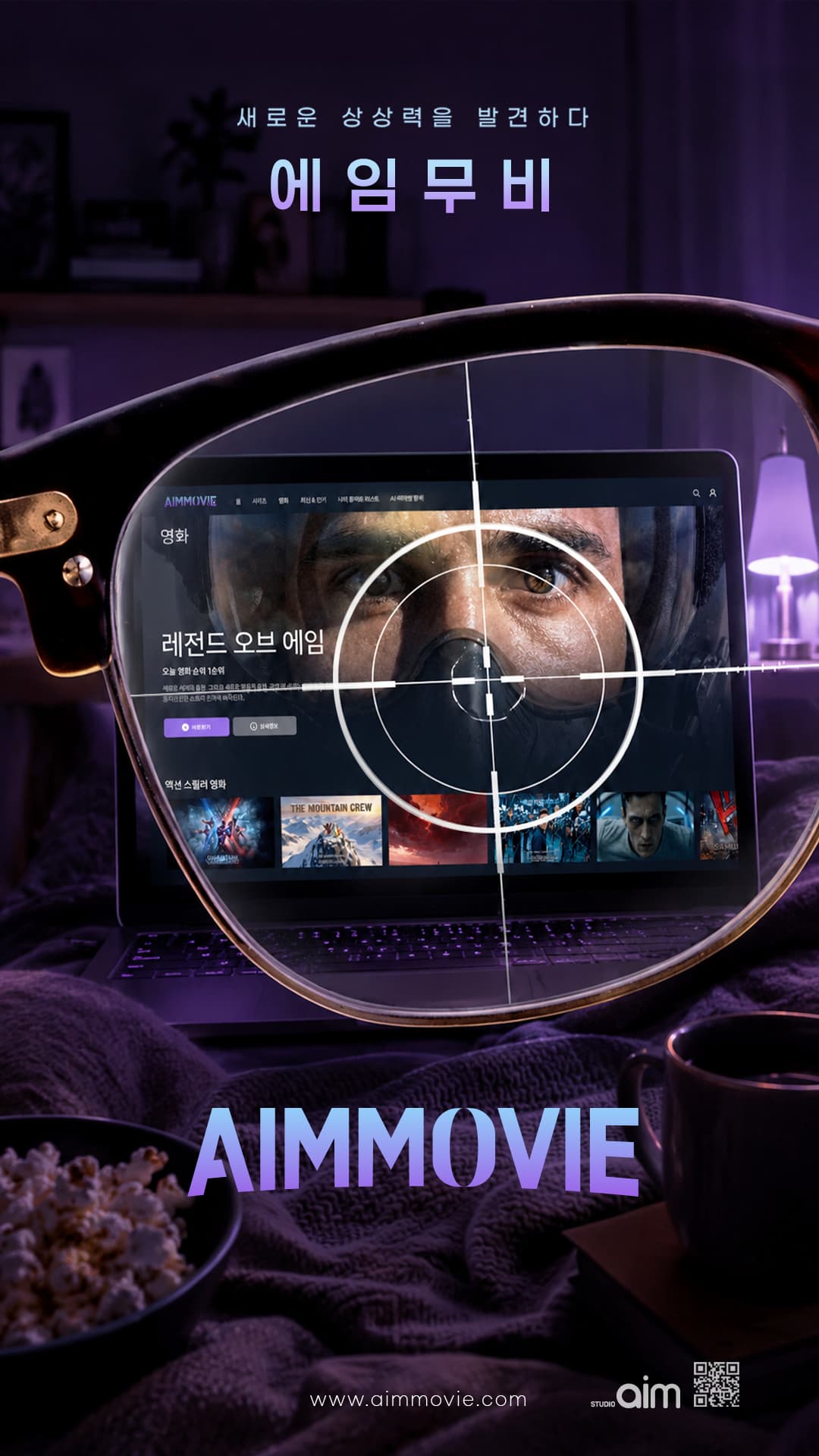
The answer is AIMMOVIE. It is a pay-per-title OTT centered on 5-to-30-minute mid-form works. It offers creators a revenue model that includes payouts of up to 25% per view, and offers audiences a new way to watch: they buy “popcorn” credits and pay only for the titles they want. It connects AI creation directly with viewing demand.
What sets AIMMOVIE decisively apart from other platform startups is the vertical integration of AI-driven content creativity underneath the platform. Each of our products covers one stage of the content lifecycle, and the whole business moves in one flow toward AIMMOVIE.
At the planning stage, SceneFlow, the AI video-production support SaaS selected for a TIPS R&D project, serves as the planning engine. At the production stage, our B2B AI video production business, which has worked on projects for large companies including Hyundai, Kia, Samsung, LG, KT and LEGO, is our cash cow and also the channel through which we gather real-world data to refine SceneFlow. At the quality stage, our in-house QC solution, the AEGIS Quality Gate, manages the quality variance that is typical of AI content.
That proven production capability and technology carries straight over to AIMMOVIE at the distribution stage. The quality standards for content on the platform, the production support we give creators and the production power to run brand advertising are all our own, so AIMMOVIE becomes “an OTT built by a company that knows content.”
In short, we are neither a platform-only company nor a production-only company. We earn from production, accumulate technology through SaaS, and complete the loop with distribution through AIMMOVIE, so each business offsets the others’ risks and accelerates the platform’s growth.
What is Studio AIM’s edge over competitors?
First, a patent barrier that protects AIMMOVIE’s revenue model itself. We have filed a total of eight patents, including an AI-human collaborative video production system and a brand-customized content generation system. Two new OTT-specific patents (a crossover platform and Active PPL) are directly tied to AIMMOVIE’s business model.
Second, Active PPL, a proprietary advertising model. It is a dynamic product-placement system that non-destructively swaps in or places products in key scenes of works whose viewership has already been proven, creating a new ad product built on “sell ads after validation.” We have filed a patent on it. It is a structural differentiator that existing OTT services and YouTube will find hard to match.
Third, quality-control technology. We manage AI content’s biggest weakness, quality variance, with the AEGIS Quality Gate, and we developed and deployed our own CDN for a comfortable viewing environment, which offers a fundamentally different viewing experience from other platforms.
Fourth, proven production and operating capability. Our CEO led the launch of Channel Hyundai, a global OTT service for 197 countries, which won awards in seven categories at the iF and Red Dot Design Awards, and has run a brand channel with 4 million subscribers. The production quality that large corporate clients order again and again is the quality standard for AIMMOVIE content.
Finally, competitiveness in attracting creators. We offer five revenue models that YouTube does not (a 25% view-revenue payout, IP-expansion revenue, viewer-voting revenue, brand collaborations and Active PPL), backed by patents. As a result, even at this early stage of the platform, creators at the level of festival award winners are coming to us first.
What products and services do you offer, and where do things stand?
Our main product is AIMMOVIE, the AI-native mid-form OTT. It is a pay-per-title platform centered on works of 5 to 30 minutes. Viewers rent or own the titles they want with “popcorn” credits (1 popcorn = about USD 0.08, or 100 won), and creators receive a 25% payout per view. The core of the product is participatory features that let the audience step into the work, such as Remix & Play (viewer voting) and Prompted Universe (world-building expansion).
We announced the launch of AIMMOVIE at BIFAN in July 2026. To avoid app store fees, we are launching web-first (responsive web plus PWA) and have also started developing an Android TV version. Legal review of the terms of service and related matters is under way with a law firm, and we are targeting an official opening in August, after bringing in AI creators, including BIFAN award-winning directors, and securing works.
Two businesses run alongside to support AIMMOVIE. One is our B2B AI video production service, which makes AI-based advertising and brand videos for clients including Hyundai Motor, Kia, Samsung, LG, KT and LEGO. It is a proven business that already generates revenue. That production capability becomes the platform’s content quality standard and its ability to execute brand advertising.
The other is our family of AI production SaaS products. SceneFlow, an AI-based video-production support tool, has completed its patent application and, as a TIPS R&D project, is receiving a two-year, USD 608,000 (800 million won) program for technology development. The AEGIS quality-management solution complements it, and the two tools will eventually connect as the production infrastructure offered to AIMMOVIE creators.
To sum up, a proven production business and SaaS technology in R&D are already running, and AIMMOVIE, built on top of them, has only just reached the market.
Who are your target market and key customers?
We define the market with a three-tier filter. TAM is the entire global OTT market. SAM is the mid-form content OTT market within it, estimated using the fast-growing paid short-drama market as a proxy. SOM is the mid-form AI OTT market, assuming a penetration rate for AI-native content within mid-form.
Our customers sit on both sides of a two-sided market. On the supply side, the key customers are AI creators around the world. They are our primary target: their numbers are exploding around AI film festivals, yet they have no channel to monetize, and we are signing up award-level creators first through the festival network, including BIFAN.
On the demand side, the key customers are digital content consumers in their 20s to 40s who have 15 to 30 minutes to watch on a commute or before bed. They are viewers caught between short-form fatigue and long-form burden who want to enjoy a story lightly. In a survey of 900 on-site BIFAN attendees, 91.2% said they would consider signing up when the service launches, which confirmed the demand.
The third customer group is brands and advertisers. This is B2B advertising demand that links Active PPL and brand collaborations to proven works, and the network of large corporate clients we have built through our existing B2B production business becomes AIMMOVIE’s ad sales channel as is.
We will start in the Korean market, but because AI content has low language barriers for both content and creators, we will target a global audience from launch, with multilingual support.
What is your business model?
AIMMOVIE’s basic payment model is the “popcorn” credit system. One popcorn equals 100 won (about USD 0.08), and viewers pay per title to rent or own rather than subscribing for unlimited viewing. The main option is a subscription-style monthly auto-recharge with bonus popcorn, and single-purchase top-ups run alongside it in a dual structure. Content is priced by rating and length (for example, an anchor price for a 10-minute work of USD 1.52, or 2,000 won, to rent and USD 3.04, or 4,000 won, to own).
We have designed six platform revenue streams: (1) content payment revenue, which goes to the platform after the creator’s 25% payout; (2) advertising revenue, such as “free if you wait”; (3) Active PPL, a patent-based ad product that dynamically swaps in or places products within proven works, in which the platform takes 50% of the per-project production cost; (4) a 30% fee on brand-collaboration connections; (5) a 30% fee on fan donations; and (6) transaction fees on IP-expansion deals built on Prompted Universe.
Streams (2) through (6) are brokerage and fee-based revenue with almost no marginal cost, so the model structurally improves its margins as the platform grows. Based on a five-year financial model for AIMMOVIE alone, we plan to reach break-even in 2028.
On top of that, revenue from our existing businesses supports AIMMOVIE’s growth. B2B AI video production is project-based service revenue and our current cash cow, while SceneFlow and AEGIS will expand through a SaaS subscription model.
In other words, it is a three-layer model of production revenue we earn now, technology fees (SaaS) and scalable platform revenue. It spreads risk across stages while capturing the upside of the AIMMOVIE platform’s growth.
What have you achieved so far?
Our most recent achievement is AIMMOVIE’s early traction. In 2026, working with BIFAN, we secured commitments from directors of award-winning AI festival films to list their work, and we are pursuing a screening contract for the winner of the AI Film Grand Prize. In the on-site survey of 900 attendees, 91.2% said they would consider signing up. We are also discussing a premium screening event at a department store and a partnership linking card-company points to popcorn payments.
On revenue, in 2025, our second year since founding, we recorded about USD 251,000 (330 million won) in sales, and in the first half of 2026 we reached about USD 304,000 (400 million won). We are working on repeat projects for large corporate clients including Hyundai Motor, Kia, Samsung, LG, KT and LEGO.
On the funding and government-grant side, we raised a USD 152,000 (200 million won) seed round from Bigbang Angels, and we were selected for the TIPS program and are carrying out SceneFlow R&D (two years, 800 million won, or USD 608,000). We have also been selected for many other support programs, including the K-Content IP convergence production support (a consortium worth 140 million won, or USD 106,000) and the Gyeonggi Content Agency’s public-private matching commercialization support.
On technology, we have filed a total of eight patents. From the AI-human collaborative production system to the OTT-specific patents (the crossover platform and Active PPL), we have put patent protection across every area of the business.
On content IP, we signed an exclusive global AI model contract with TV personality Haha (of Kwan Entertainment) and completed the copyright registration of our own animation IP, Polar Friends. This IP and our celebrity network are assets that generate buzz for AIMMOVIE’s initial lineup.
What gives your team its competitive strength?
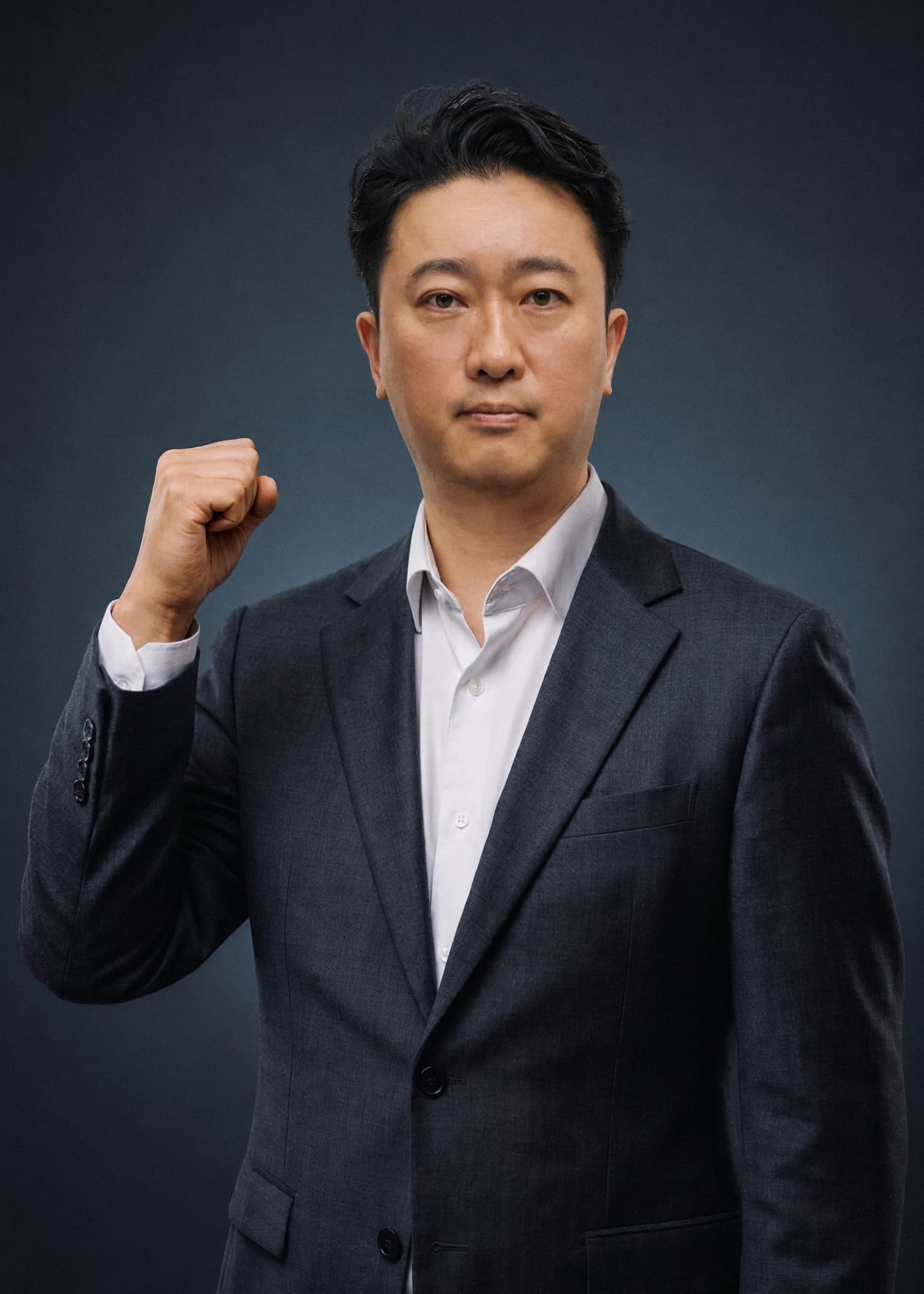
CEO Musin Lee spent about 20 years leading digital and content marketing at Hyundai Motor Group and Innocean Worldwide. In particular, he oversaw the launch of Channel Hyundai, a global OTT service for 197 countries, which won iF Design Awards and Red Dot Design Awards. In other words, he has built an OTT like AIMMOVIE not at the level of a business plan but through a real global launch.
He is also an active AI filmmaker himself. He has directed or taken part in producing AI short films including 404 Not Found, SKY-17 and MISSING, so he understands creators’ pain points firsthand. He studied business administration at Sogang University, holds a master’s degree in advertising and public relations from Korea University, and published the book The Marketer Who Doesn’t Market in 2018.
The team is organized into mission-based units: Production Team 1, Production Team 2 and a development team. CCO Junmyeong Lee leads creative, COO Seokhun Jeong leads operations and CTO Yonggu Lee leads development. AIMMOVIE and SceneFlow run as cross-functional task forces, and the team has shown it can run three business lines at once.
Above all, our team’s strength is that it can speak both the “language of advertisers” and the “language of creators.” Because a team that knows the quality standards of large corporate brands is running the AI creator ecosystem, we can actually sell and execute AIMMOVIE’s core revenue models, Active PPL and brand collaborations, which connect brand capital with creators.
What help have you received through the Gyeonggi Content Agency programs?
Studio AIM is a resident company at the Gyeonggi Content Agency’s Bucheon center. The workspace support greatly reduced our early fixed-cost burden and let us grow within a network of content companies.
On commercialization, we were selected for the 2026 Public-Private Matching Commercialization Support program (G-VIP Reverse Recommendation Matching), which brought an additional USD 7,600 (10 million won) in commercialization funds. We have concentrated it on promoting the AIMMOVIE launch and are using it as seed money for the platform’s early marketing.
In addition, our collaboration with BIFAN, Gyeonggi’s largest content event, connected naturally within the Gyeonggi Content Agency ecosystem. Being able to recruit creators during BIFAN, run the audience survey (900 people) and make the launch announcement is the biggest asset we gained as a company belonging to the Bucheon and Gyeonggi content ecosystem.
Beyond that, we continue to take part in the agency’s support programs, such as IP convergence content production support, and have received feedback on designing projects that link technology development with content production.
In short, we received real help in all three areas of space, funding and network, and the connection with BIFAN in particular is what created AIMMOVIE’s early traction.
Why should investors back Studio AIM?
First, AIMMOVIE is a platform that has claimed its market timing with patents and traction. As AI creator content explodes, we are protecting the revenue model itself with a total of eight patent filings. Through the BIFAN collaboration, we have secured listing commitments from award-winning directors, contact information for more than 900 early prospective customers, and a 91.2% sign-up intent in the audience survey. Based on the financial model for AIMMOVIE alone, we plan to reach break-even in 2028.
Second, we attach the platform to an already proven business. AIMMOVIE launches on top of the cash cow of B2B production revenue from large corporate clients and SaaS technology being refined through TIPS R&D, so the risk of failure is lower and capital efficiency is higher than for a platform-only startup. In the vertical integration of planning, production, quality and distribution, every business strengthens AIMMOVIE.
Third, this is a team that has done this before. A CEO who launched a 197-country global OTT and a team that has produced AI content to the quality standards of large corporations, with the creators’ own perspective as well, are operating the two-sided market. We are confident we are the best-prepared team in Korea to sell and execute AIMMOVIE’s core value of “connecting brand capital with AI creators.”
Do you have a final message?
Our brand voice is “Alone, a threat; together, an opportunity,” and we stand on the side of the creator ecosystem in the AI era. Our creator-first policies, including creator ownership of IP, a 25% payout per view and non-exclusive distribution options, are a strategic choice: we give up some short-term margin so that the best works gather on our platform first. Becoming the standard distribution infrastructure for the AI content industry is the direction AIMMOVIE and Studio AIM want to take with this funding round.
MORE FROM THE POST
- [Korean Startup Interview] Haniverse: Building an Emotional Universe Through AI Miniature Content
- [Korean Startup Interview] Double Zero’s Shoty: Innovating Production Content Creation with AI
- [Korean Startup Interview] StudioMetaK: From Virtual Humans to an Original-IP Entertech Company
- [Korean Startup Interview] Sodalive: Turning Finished Webtoon Characters into AI Creators
- [Korean Startup Interview] Soft Story: Selling Korean Dubbing to the World in “Reverse Localization”
Share

Most Read
- 1
- 2
- 3
- 4
- 5

Leave a Reply