










StudioMetaK is a Korean generative-AI production company that is shifting from outsourced video work to building its own intellectual property (IP).
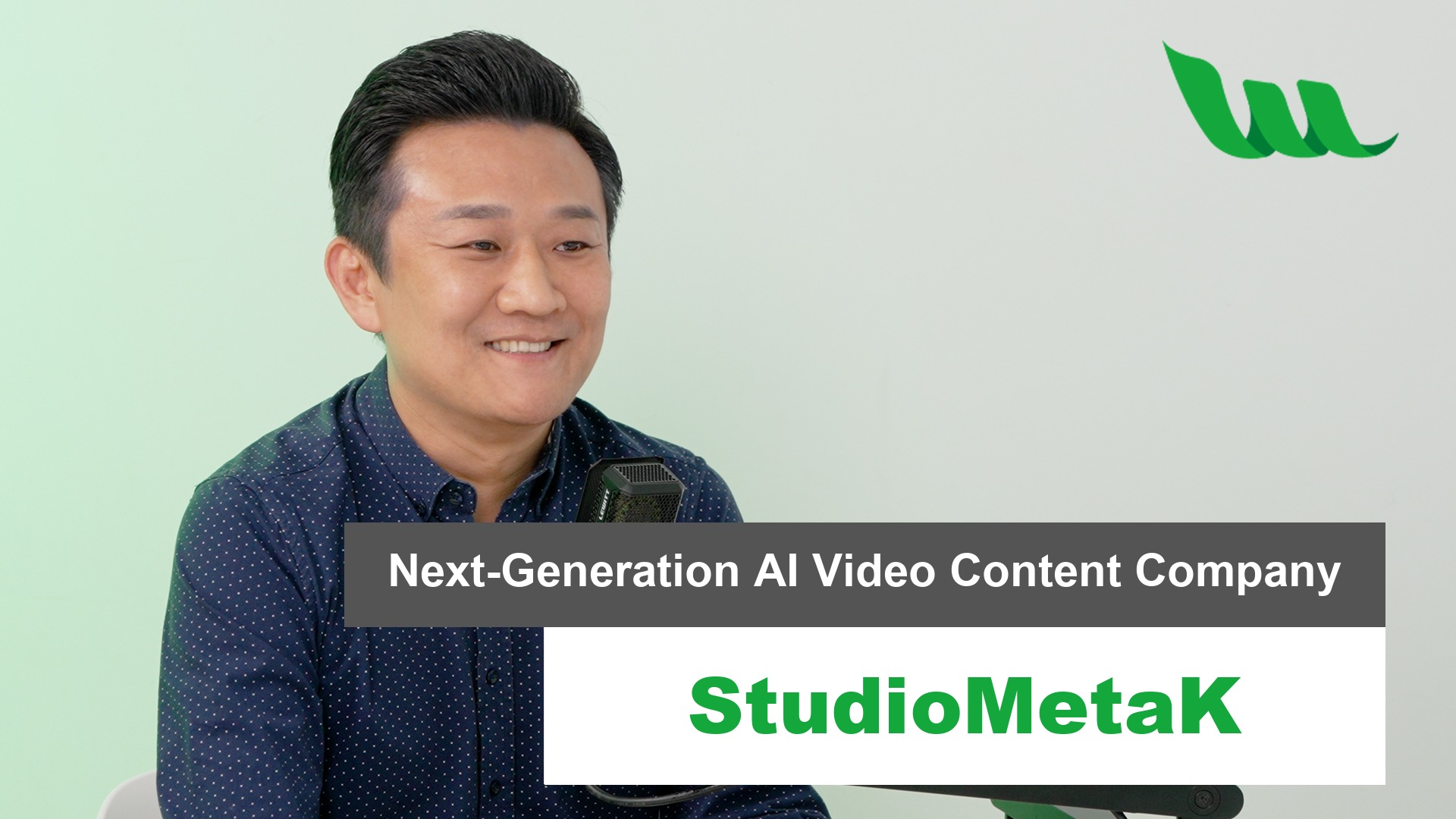
It is preparing to raise USD 7.6–11.4 million (10–15 billion won) in a Series B round in Q4 2026.
“Until last year we talked a lot about virtual humans. This year we’re talking about creating our own original IP,” says CEO Gwangjip Kim, summing up the past year in a single sentence. StudioMetaK started in 2022 as a drama production company. In last year’s interview it spoke mainly about virtual humans, and in a year it has changed the very language it uses to describe itself.
The content industry has been dealing with a shared problem in recent years: rising production costs. Industry insiders say costs have roughly tripled for actors’ and crew wages, filming locations, sets, equipment and post-production, driven by factors including the introduction of the 52-hour work week. For dramas, shrinking broadcast slots have made it harder for big productions to clear their break-even point. Even theatrical animation, once considered relatively low-budget, now costs USD 3.8 million to as much as USD 15.2 million (5 billion to 20 billion won) to make in Korea, which clashes with a market where passing a few hundred thousand admissions is no easy feat. In the United States too, big-budget financing is getting harder to find outside the major studios, and production capital is clearly moving toward independent films and low-budget animation. As more good projects fail to become real works because of production costs, attempts to use generative AI to change the cost structure itself are gathering pace across the industry at home and abroad.
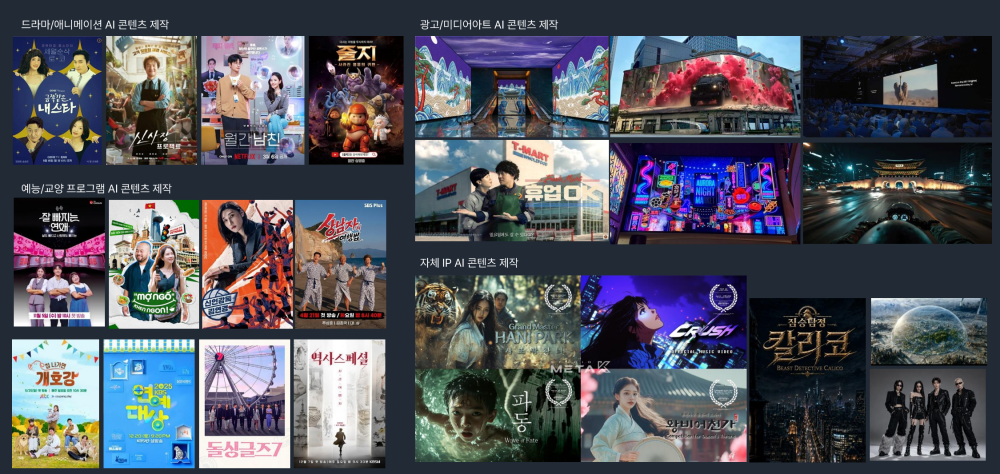
Against this backdrop, StudioMetaK has been using generative AI to replace costly production processes such as AI previsualization, large crowd scenes and overseas locations, bringing costs down. It is moving its center of gravity from outsourced broadcast and advertising work toward owning its own IP, and it presents as its core strength an “orchestration” capability that integrates multiple generative-AI and CG technologies into real production workflows.
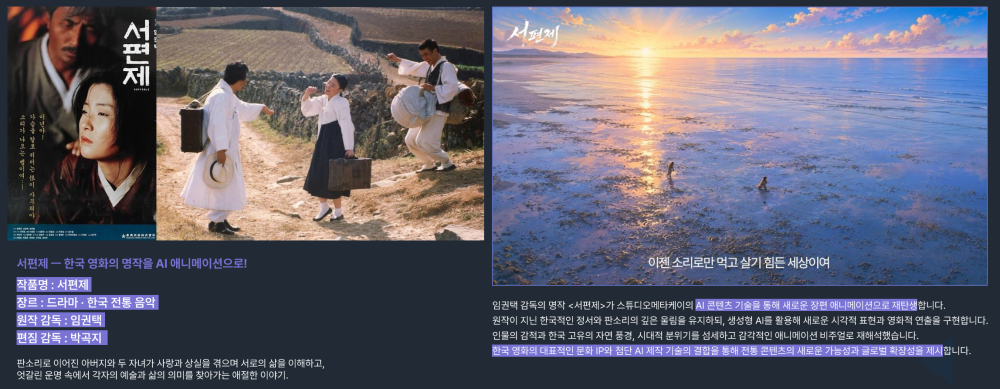
The company is preparing a project to re-edit director Kwon-taek Im’s film “Seopyeonje” with AI and release it as an animated feature, and it is running several experiments at once to make theatrical animation for USD 380,000–760,000 (500 million to 1 billion won), about one-tenth of the domestic production cost. This year it also won a national R&D project worth USD 11.6 million (15.3 billion won) to build its own AI solution platform, and its revenue surpassed last year’s full-year figure in just the second quarter. It has recently selected an IPO lead underwriter as well, and is preparing the Series B round together with a medium- to long-term capital-markets strategy.
StudioMetaK is supported by the Pangyo Hub Value-up Package program, run by the Gyeonggi Content Agency’s Pangyo Gyeonggi Culture Creation Hub. The program helps startups explain their services and growth potential in the language investors use.
What has changed the most compared with last year?
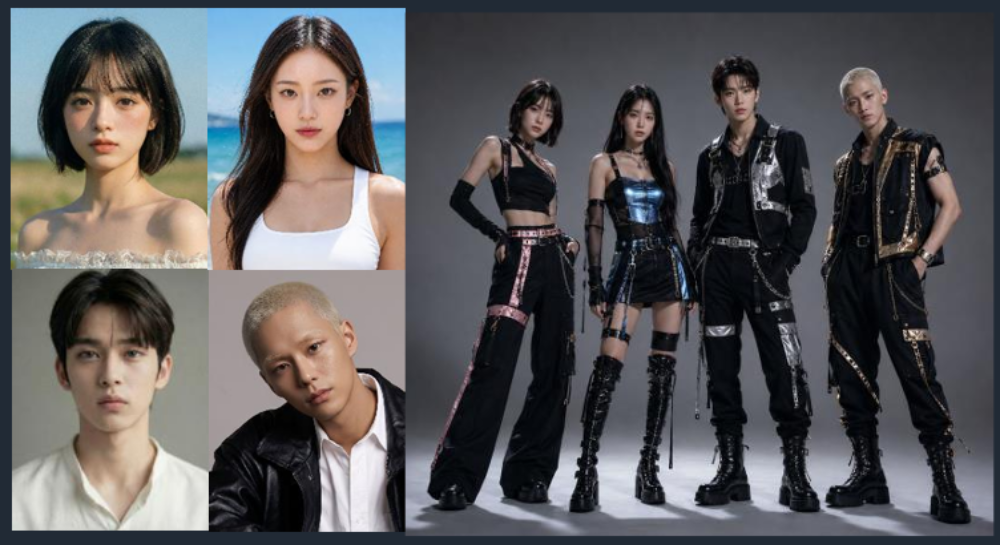
We think StudioMetaK has grown a lot over the past year, both in quantity and in quality. When we were founded in 2022, we started as a drama production company. In 2023 and 2024, we did a lot of business using virtual humans, and from 2025 and 2026 we have been going into AI content in earnest. We still continue the virtual-human business. The virtual humans StudioMetaK has created appear directly in dramas and films and sing OSTs, and we are developing them so that the IP itself generates revenue.
Until last year, we mostly produced content for outsourced industries such as broadcasting and advertising. From this year, we are focusing on content that produces StudioMetaK’s own IP, such as theatrical animation and feature films made in a hybrid way. I don’t think content has to be made with AI. What matters is making good content, and whether you use CG, live action or AI, the point is to make it well while lowering cost. So this year our aim is to produce a variety of IP ourselves.
What sets StudioMetaK apart technically from its competitors?
It isn’t that we are especially good compared with others; I think our advance learning put us slightly ahead. We used to feel we were two to three years ahead, but recently that gap has narrowed to three to six months. So StudioMetaK keeps up its technology development and research. Where we once simply used tools, we are now also taking APIs and building SaaS-based solutions.
The hardest part of making long-form video isn’t creating a single character or scene but keeping them consistent. Even a year ago, consistency was a big challenge, but now it is solved to a certain degree even by basic tools. What matters more is the ability to compose a scene. Deciding the “look”, such as whether to shoot at eye level or from a high angle and with which lens, ultimately takes a professional eye.
So what I think makes us different is that, rather than hiring people who are good with AI, we hire people with solid fundamentals in shooting, editing and sound, and teach them AI. Teaching the basics of film grammar to someone who handles AI tools takes longer, I think. Only with an understanding of video, meaning basic film grammar and professional knowledge of lighting and camera equipment, can you translate it into prompts and realize it with AI.
Technically, we focus on orchestration, combining multiple AI models and CG/VFX techniques inside a single pipeline. Rather than relying on any one generative model, we combine technologies to suit the project, keeping people, costumes and backgrounds consistent and securing continuity between cuts. We include generation-control technologies that we call Narrative Consistency, ID Preserve and Restoration in the pipeline, so a character’s face, costume and style hold across an entire long-form video and cuts connect smoothly. This is the point where we move from “making video with AI” to an “AI video production system”. Also, AI tools often refuse outright to render violent or dangerous scenes, but StudioMetaK has experience negotiating directly with the model companies to be able to produce scenes at the level required for commercial projects.
This approach is especially effective in costly and risky processes such as overseas locations, large crowds, dangerous action, wide shots, set building, repetitive VFX, previsualization, digital doubles and post-production compositing. Previously, you secured as many actors, crew, locations and sets as possible before making the video. StudioMetaK is changing the production process itself: we design the virtual space and scenes first, and shoot only the parts that actually need real people.
Can you tell us about recent results or projects in progress?
Our revenue already exceeded last year’s full-year revenue in the second quarter of this year, and the third quarter is going well, so we expect strong growth over last year. Gratefully, several securities firms contacted us first, and we have selected an IPO lead underwriter and are now going through due diligence. However, we would rather not disclose our target valuation here, and plan to discuss it directly in one-on-one meetings with interested investors.
On the investment side, we raised USD 76,000 (100 million won) in seed funding from VentureSquare in July 2023, then USD 1.5 million (2 billion won) from Korea Investment Partners in April 2025 and USD 760,000 (1 billion won) from Timeworks Investment in May of the same year as Series A. We have also been selected for the Korea Credit Guarantee Fund’s First Penguin program, Scale-up TIPS, the Institute of Information & Communications Technology Planning & Evaluation (IITP) media-intelligence R&D project, the Grand Prize at the Korea Creative Content Agency’s demo day, and NVIDIA’s Inception and N-Up programs, which recognized our technology and growth potential. This year we won USD 11.6 million (15.3 billion won) in national projects alone and are putting it into building a SaaS-based AI solution platform.
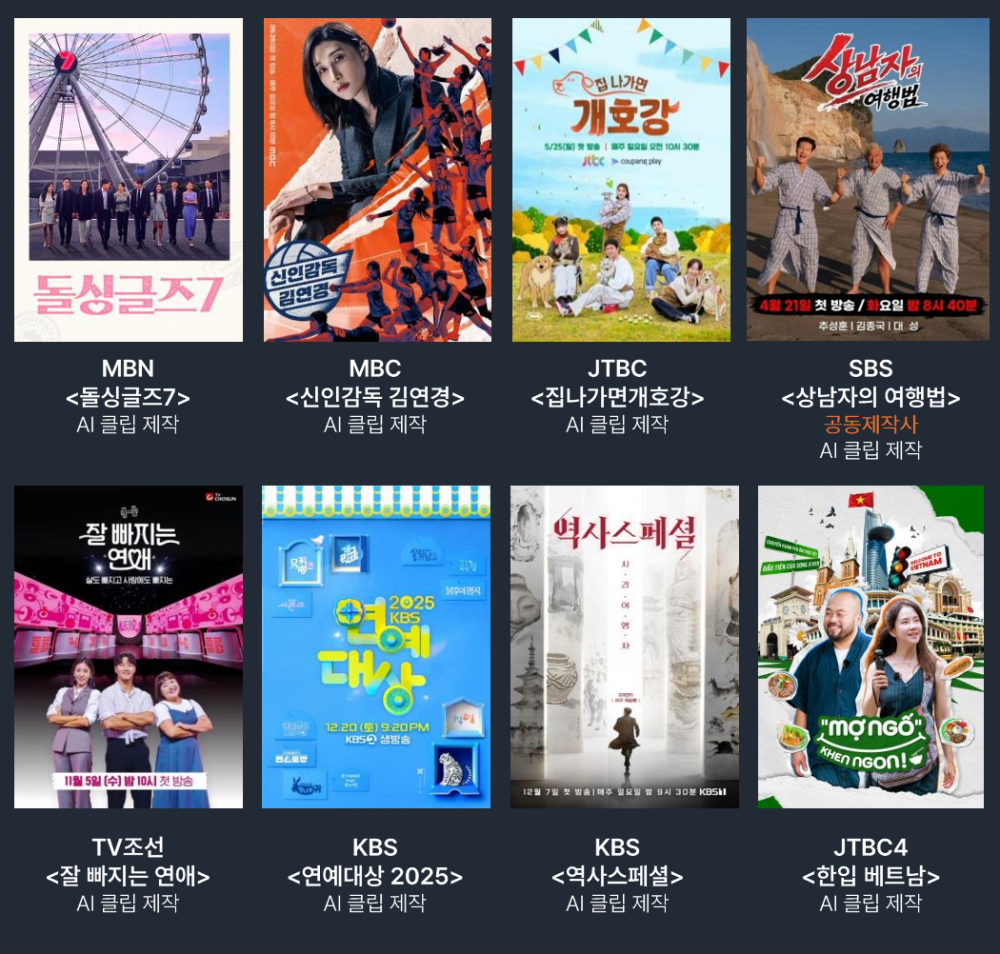
Real production references keep accumulating too. For MBC’s “Rookie Director Kim Yeon-koung,” we used AI to replace scenes that would have been difficult to film on location in Japan and to create large spaces such as a stadium. We have also applied generative AI to actual production workflows for a KBS history program, a global OTT (Netflix) drama and a Kia advertisement. Having completed more than 100 commercial projects, I think we’ve built a virtuous cycle running from applying AI technology, to real production, to delivery to broadcast, advertising and film, to customer feedback, to pipeline improvement.
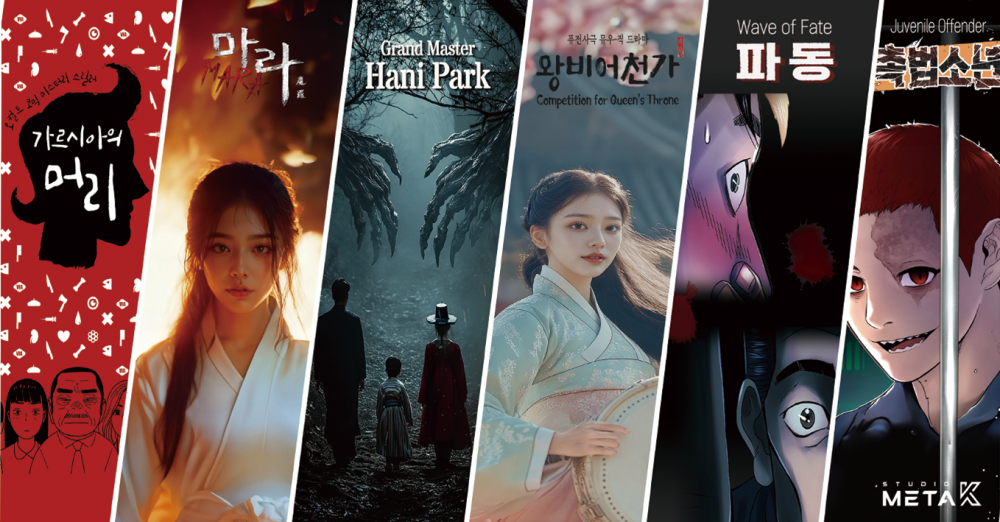
On the content side, we are working on a project to re-edit director Kwon-taek Im’s film “Seopyeonje” with AI technology and turn it into an animation. We have already held the production announcement, and we are re-editing the original 120 minutes down to about 90 and negotiating with a distributor, aiming for a release next summer. In addition, we are preparing a number of theatrical animations with animation studios and webtoon companies that own well-known IP, and we expect more than half of them to move into actual production.
We also have several original scripts that we planned and developed back when we started as a drama production company, and we plan to bring the big-scale ones among them to the screen first using AI technology.
You are getting calls from overseas as well, not just at home.
Contact from overseas has picked up noticeably recently. Not long ago I was invited, as the first foreign speaker, to present at the world’s largest AI media conference, held at Amazon Studios in the United States, and since then several overseas companies have been reaching out to us first. Until last year the mood in the US was cautious about using AI and it was mainly used for indie films, but recently the major studios also seem to be actively adopting AI.
I think Korea’s strength is storytelling. But in Korea lately it is hard to make a film with a budget above USD 2.3 million (3 billion won), so production tends to crowd into live-action genres such as romance, comedy and horror. By contrast, I recently confirmed on the ground that in the US there are quite a lot of independent films made with budgets in the USD 7.6 million (10 billion won) range, even outside the major studios. These projects are rather free to use AI, so we are negotiating on several recently, and last month I went to the US and signed a contract in person for one of them. However, because of non-disclosure agreements (NDAs), we can’t yet name the counterparties or the projects.
We approach theatrical animation with similar logic. In the US a single theatrical animated film usually costs more than USD 76 million (100 billion won), and in Korea USD 3.8–15.2 million (5–20 billion won), but StudioMetaK can make one for USD 380,000–760,000 (500 million to 1 billion won). So we are building a structure where, instead of funding one film, we bundle 10 films and fund them at once at about USD 3.8 million (5 billion won), so that even one hit can recoup the whole. We are negotiating to share IP ownership among StudioMetaK, co-producers and the production companies that own the original IP, and we are working so that we hold the largest stake.
What is StudioMetaK’s business model?
We operate on three main pillars. The first is B2B project-based revenue, producing content that combines generative AI and CG/VFX for broadcasters, production companies, advertisers and exhibition organizations. It is currently our most direct source of revenue. The second is an IP co-venture model that goes beyond simple outsourced production: we co-plan and co-produce IP such as films, animation and virtual artists, and share distribution, licensing and box-office revenue. Because generative AI lowers production costs, the advantage is that the same capital can be invested in more IP to build a portfolio.
The third is to turn the AI production pipeline and orchestration technology StudioMetaK has accumulated into a solution called “MetaK AI Studio OS.” We are developing both a cloud-based version and a local plug-in version for large projects that can’t use the cloud for security reasons, and we aim to release a beta version within the year. The core of this solution is training it on the film grammar that StudioMetaK’s experts hold. We are fine-tuning it by analyzing the style of specific cinematographers and directors so that outputs come out in that style. If we go in this direction, we expect to complete a structure in which “IP revenue” and “platform and solution revenue” are built together on top of “project production revenue.”
What do you see as your team’s competitive edge?
The StudioMetaK team’s biggest strength is that a tech team that knows content and a production team that understands AI work together in a single organization. Producers, directors and planners work on projects alongside CG/VFX, Unreal Engine, generative AI, post-production compositing and software development staff, so when a new AI model comes out, we don’t stop at simple testing and can apply it quickly to the real production process. We also have experience from repeatedly carrying out commercial projects in advertising, broadcast and film, where quality standards and delivery deadlines are strict. This kind of field know-how is hard to get from papers or demos alone; I think it accumulates only through repeated rounds of real customer feedback and revisions.
Why should investors back StudioMetaK?
First, we are an AI content company already validated by the market. We have completed more than 100 commercial projects and delivered real results to customers with high quality standards, such as broadcasters, OTT platforms and advertisers. So this investment is less early-stage money to test technical feasibility than growth capital to expand already-proven production capability into bigger revenue and global projects.
Second, lowering production cost with AI can change the revenue structure of the IP business itself. Films and animation that had to concentrate on one or two titles because of high production costs can be made at far lower cost and built into a portfolio of several, and we can extend revenue sources beyond production services to co-production, licensing, distribution and even virtual artists.
Third, the production data and workflow know-how we accumulate in real projects turn back into technology assets, and that has a structure that expands into solutions and global business. We plan to extend this into B2B solutions such as MetaK AI Studio OS, and since we are preparing a Series B and a medium- to long-term capital-markets strategy, including a technology special listing, together, I think investors can clearly picture a path for growth and exit.
What help are you getting from the Gyeonggi Content Agency (Pangyo Hub), and what do you expect from the Value-up Package?
The Pangyo Hub program of the Gyeonggi Content Agency is a big help in organizing StudioMetaK’s technology and production results into a growth story investors can understand. We have built up commercial project track records and technology quickly, but at the Series B stage, I think it is important to explain repeatable technology assets, an IP business model and a global growth strategy clearly so that we don’t look like a mere production house. The Value-up program gave us a chance to review these points from an outside perspective and sharpen our IR message and fundraising strategy.
The Gyeonggi Content Agency’s network and its investor-matching events also helped a great deal by widening our contact with major investors. Through public-exposure opportunities like this Wowtale interview, I think we’ve been able to let the market know more accurately that StudioMetaK is not just a company that makes AI video, but an entertech company that changes the cost structure of content production with AI and expands into its own IP. We want to keep making active use of the network that can lead to investor meetings and business partnerships.

What is the future StudioMetaK ultimately envisions?
What we aim to be is not an AI video production agency but a global IP entertech company that changes how the content industry produces. Korea has world-class IP and creative talent in dramas, films, webtoons and music, but rising production costs mean many good projects never become real works. If generative AI lowers production costs and physical constraints, more creators can make more works, and the successful IP among them can go to the global market.
We refer to Higgsfield, the US generative-AI video company whose valuation jumped to USD 5.4 billion after raising USD 400 million recently, as one of our peers. But where they take existing foundation models and add a margin, StudioMetaK aims to be a company that also creates original IP. Going forward, our goal is to become a studio that connects films, animation and virtual artists with our own AI production platform and exports Korea’s content-planning ability and AI production technology to the world.
MORE FROM THE POST
- [Korean Startup Interview] Double Zero’s Shoty: Innovating Production Content Creation with AI
- [Korean Startup Interview] Sodalive: Turning Finished Webtoon Characters into AI Creators
- [Korean Startup Interview] Soft Story: Selling Korean Dubbing to the World in “Reverse Localization”
- [Korean Startup Interview] Ludens: FanDoor Brings Unity-Level Interactive 3D to the Web
- [Korean Startup Interview] Studio AIM: A Mid-Form OTT Where AI Creators Get Paid
Share

Most Read
- 1
- 2
- 3
- 4
- 5

Leave a Reply