





Surgeons can now reach nearly any organ through a needle puncture, so the bottleneck has moved to finding the way. Inside blood vessels physicians cannot see directly, relying on X-ray images and the feel of the instrument in their hands, and outcomes vary with the experience of the person holding it. A startup that wants to teach machines that skill has come out of stealth with a $47 million seed round.
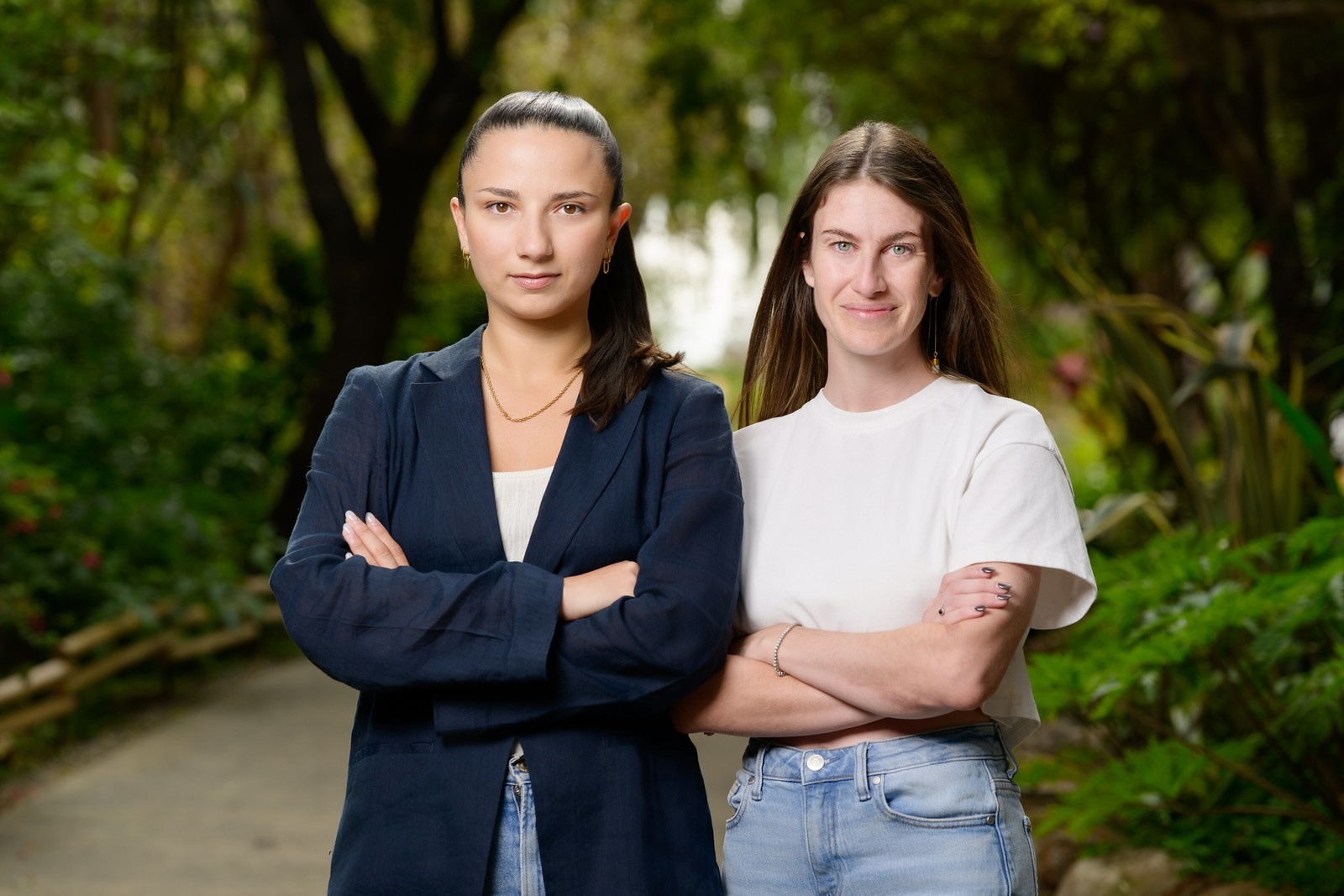
San Francisco-based Mosaic Intelligence Labs announced the seed round on Nov. 10. Investors include 8VC, Fundomo, Lingotto Innovation and Obvious Ventures. According to The Information, the one-year-old company raised the money in two seed rounds, led by 8VC and Fundomo respectively. Its valuation was not disclosed. Fundomo also took part in Mercor’s $750 million Series D, and Lingotto joined Multiply Labs’ $75 million Series B as a new investor.
Mosaic is starting with endovascular intervention, in which physicians guide flexible wires and catheters through blood vessels to deliver treatment. Because blood vessels lead to virtually every organ, the approach has room to grow. Today physicians combine live X-ray images, preoperative scans and the feel of instruments to work out where they are, and the company says interpreting those signals takes years of practice and is hard to capture or pass on.
Mosaic treats surgical intelligence as a learning problem and begins by giving surgical instruments their own senses. It is developing technology that senses where instruments meet anatomy and uses advanced computation to reconstruct the vascular environment from within, giving physicians a continuously updated three-dimensional picture of anatomy and instrument position. A robotic interface for precise instrument control is paired with it. CEO Ileana Pirozzi told The Information the catheter can “find its own way” through blood vessels. The company says it will capture synchronized data on the environment, instrument movement and physician actions and combine it with increasingly accurate physical models, so machines can relate what they sense to what happens when they move. It frames this with the robotics idea of a “world model” and the biological idea of an “umwelt,” the perceptual world an organism builds from its senses, and says the loop between perception and action is what current instruments lack. CTO Mackanic said that without it they are structurally locked out of becoming intelligent.
Longer term, Mosaic sees the opportunity extending beyond today’s vascular treatments. Catheters can carry drugs, energy, biologics and other therapies directly to a target site, so more reliable navigation could widen the treatments delivered through the vascular system and the settings where clinicians can offer them. The company has not disclosed its prototype stage, clinical work or regulatory status. It is hiring in San Francisco across hardware engineering, sensing, perception, machine learning and clinical engineering, and says its team includes people who built surgical systems used to treat more than 20 million patients, as well as rockets, cars, artificial hearts and drugs.
The co-founders are CEO Ileana Pirozzi and CTO Alison “Ali” Mackanic. They met during their doctoral studies at Stanford and, working alongside clinicians, saw that less invasive techniques had expanded what medicine could do while making the ability to perform hard procedures increasingly tied to individual experience. Pirozzi said years in operating rooms showed how much depended on knowledge held in the hands and minds of the person holding the instrument, which led her to ask how the knowledge of the best surgeons could be scaled.
Competition in vascular robotics has already begun. The closest rival is Magnendo, a Boston-based startup led by MIT-trained CEO Yoonho Kim that steers guidewires through blood vessels with magnetic fields to reach neurovascular targets for conditions such as stroke and aneurysm. According to MassDevice and EVToday, it raised an $18 million Series A led by Penumbra in July and is preparing first-in-human studies. Houston-based XCath is developing its Iris robot for neurovascular procedures and raised a $30 million Series C in March co-led by Crescent Enterprises and Fred Moll, while ETH Zurich spin-off Nanoflex Robotics controls catheters electromagnetically. Where they lean on magnetic or electromagnetic actuation, Mosaic starts with sensing at the point where instruments touch anatomy and three-dimensional reconstruction.
Across surgical robotics more broadly, a race toward autonomy is also underway. Aleph Surgical raised a $7.5 million pre-seed led by a16z to automate surgery fully with a pretrained foundation model. Intuitive Surgical, the market leader, has made assisting surgeons rather than replacing them its strategy, while Bill Gates-backed Vicarious Surgical raised about $300 million and still went into liquidation this year, a reminder of how capital-intensive and risky surgical robotics can be.
MORE FROM THE POST
- Imperial Spinout Machenta Raises $40M Seed for Robots That Learn From a Single Demonstration
- Physical AI Manufacturer Multiply Labs Raises $75M Series B
- Veeda AI Raises $90M Seed to Build “The Matrix” for Physical AI
- Transfyr Launches With $25M Seed to Record the Science That Never Gets Written Down
- Robot Brain Developer Generalist Raises Another $200M, Two Months After Its $400M Round
- 8VC
- BioHealth
- funding
- Fundomo
- HealthCare
- Lingotto
- Mosaic Intelligence Labs
- Obvious Ventures
- Overseas funding
- physical ai
- robotics
- seed
- USA
Share

Most Read
- 1
- 2
- 3
- 4
- 5

Leave a Reply