




Bringing a single drug to market typically takes about a decade and costs on the order of a billion dollars, with the early search for candidate molecules among the slowest and most expensive stages. Isomorphic Labs, the Google DeepMind spin-out that wants to shorten that stage with AI, has raised a $5 billion Series C.
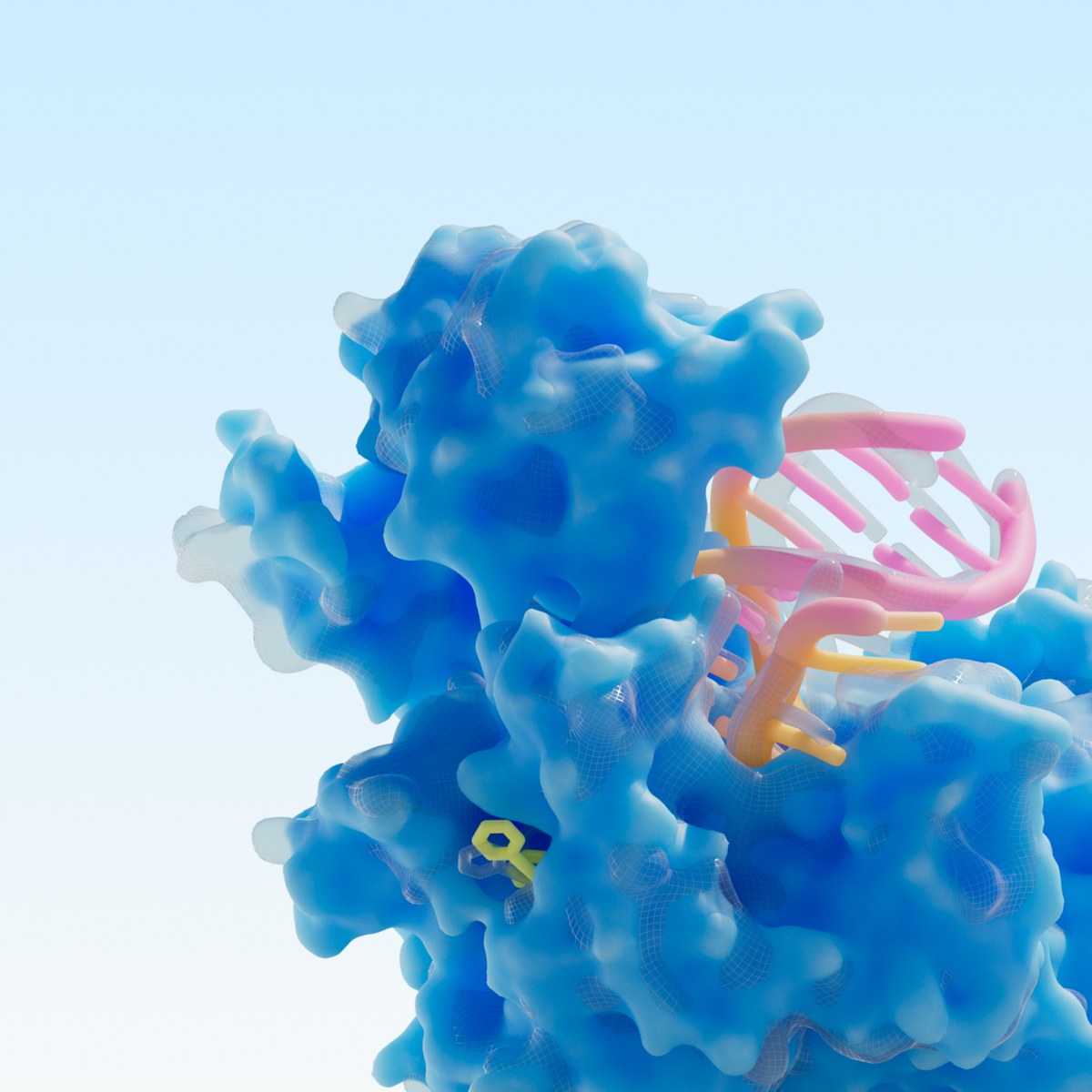
Isomorphic Labs was founded in 2021 and is headquartered in London, with offices in Cambridge, Massachusetts and Lausanne, Switzerland. Its core asset is IsoDDE, a proprietary drug design engine that unifies a suite of foundational simulation AI models working across multiple therapeutic areas and drug modalities. The engine explores vast chemical spaces so the company’s team can design and refine molecules with drug-like properties.
The company says the models push predictions toward experimental accuracy, and that combining them with its own agents, which reason over complex biological systems, lets advances carry over repeatedly into its candidate pipeline. It reports positive preclinical results for internal programs in oncology and immunology and for partnered programs, and says it is preparing to enter the clinic.
Founder and CEO Sir Demis Hassabis co-founded Google DeepMind and shared the 2024 Nobel Prize in Chemistry for AlphaFold. Max Jaderberg is President. The company describes its team as machine learning researchers working alongside experienced drug hunters.
Isomorphic announced the $5 billion round on November 17. Greenoaks and Sequoia Capital co-led, with a16z and several other new investors joining. Parent Alphabet continued to invest significantly. All existing investors took part: Thrive Capital, MGX, GV, CapitalG, Temasek and the UK Sovereign AI Fund. The valuation was not disclosed.
It follows an initial $600 million external round in 2025 and a $2.1 billion Series B in May, and is larger than both.
The company will use the money to mature IsoDDE and push into new biology with more advanced models. It is also building a partner ecosystem to improve the understanding of disease mechanisms, along with AI-first translational and clinical development infrastructure, as it moves its candidates toward clinical trials.
Hassabis said the company was founded on the conviction that biology could be modelled at the most fundamental molecular level and sped up with AI, and that the round lets it drive its first therapeutic programs toward the clinic. Jaderberg said the models produce repeatable scientific advances every week that translate into better molecular profiles. Greenoaks founder Neil Mehta said Isomorphic is building deep learning systems that predict complex biological behavior and map the path to new medicines, and Sequoia partner Konstantine Buhler said it is inspiring to see the team turn advanced AI into a growing portfolio of drug candidates.
Capital Keeps Flowing to AI Drug Design
Large rounds are going to AI drug design across the board. Chai Discovery raised $400 million led by Index Ventures at a $3.8 billion valuation, and Eli Lilly and Pfizer already use its platform. Basecamp Research raised a $140 million Series C to move its in-body cell therapy pipeline toward the clinic. Superluminal, which uses AI to find drugs for GPCR targets, raised a $60 million Series B and expects its obesity drug candidate to enter the clinic this year.
Some players invest differently. Pathos AI raised a $237 million Series E led directly by drugmaker Bristol Myers Squibb at a valuation of about $3 billion. It uses AI to decide which clinical assets to back rather than designing drugs itself. Formation Bio set up a $600 million fund to buy 10 to 15 stalled clinical-stage drugs and develop them with AI. Warp Sciences, a chemistry CRO founded by former OpenAI science head Kevin Weil, raised a $215 million Series A to have chemists and robots synthesize drug candidates together.
Big pharma and frontier AI labs are moving in too. Nvidia and Eli Lilly launched a joint AI drug discovery lab with up to $1 billion over five years. OpenAI acquired drug discovery AI agent startup Orchestra Bio, and Anthropic bought Coefficient Bio for $400 million. a16z argues that AI will make pharma even bigger by raising the odds of success and shortening development time.
Outside Wowtale’s coverage, Xaira Therapeutics, which launched in 2024 with about $1 billion, and Recursion, which merged with Exscientia the same year, are among the best-known names. Isomorphic signed research collaborations with Eli Lilly and Novartis in 2024, and its pitch is that it pairs models with the backing of parent Alphabet and builds its own pipeline of drug candidates directly.
For more on competitors, see here.
MORE FROM THE POST
- LangChain Raises $300M Series C at a $3B Valuation Led by CapitalG
- Fractile Raises $720M Series C to Break the AI Inference Memory Bottleneck
- AI Drug Designer Basecamp Research Raises $140M Series C
- Heidi Raises $340M for Its AI Care Partner, Now Valued at $900M
- Angle Health Raises $600M at a $2.7B Valuation
- a16z
- AI
- Alphabet
- BioHealth
- biotech
- CapitalG
- Drug Discovery
- funding
- Greenoaks
- GV
- Isomorphic Labs
- mega funding
- MGX
- Overseas funding
- sequoia capital
- seriesC
- Temasek
- Thrive Capital
- UK Sovereign AI Fund
Share

Most Read
- 1
- 2
- 3
- 4
- 5

Leave a Reply