










As AI-guided drones and weapons move onto the battlefield, a new problem follows: how do you test them before they are deployed? Real-world exercises alone cannot recreate thousands of threat scenarios. Agon, a British defence AI startup, says it can solve that with a virtual battlefield, and it has raised a $70 million Series A. The round values the company at $450 million.
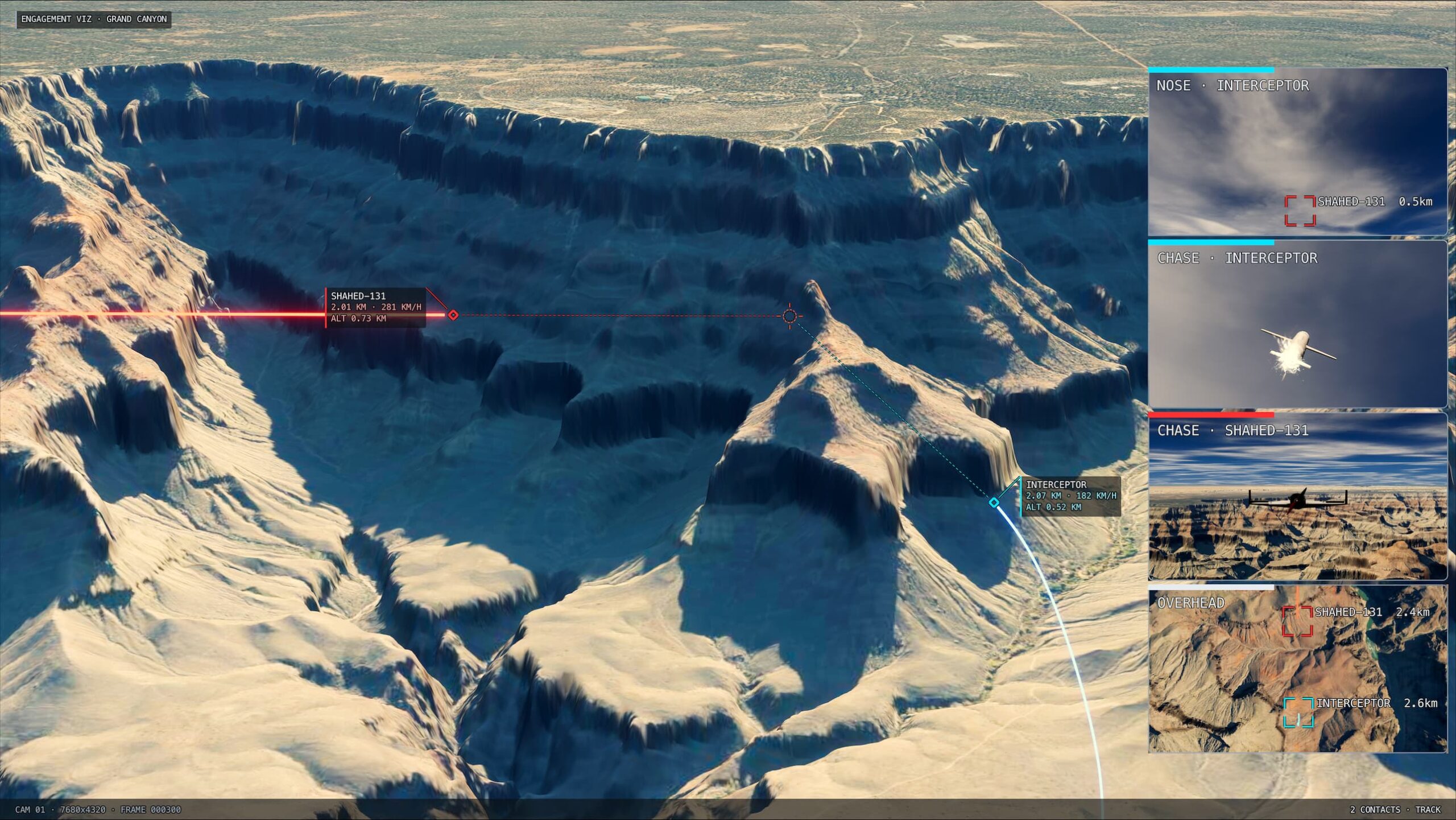
Agon does not make weapons. It builds the infrastructure to train and validate autonomous defence systems. It launched in London and Berlin, with its headquarters in the UK and an office in Germany. Its core product is a “synthetic battle arena”. Developers and defence organisations can run autonomous systems against thousands of demanding scenarios before deployment, and virtual adversaries informed by live conflict intelligence change tactics as they go. Users can simulate mass drone attacks designed to overwhelm air defences, or see how systems behave when communications are cut and navigation is degraded. According to press reports, air defence is the first use case, with more domains to follow, and the company is working with unnamed drone and autonomy firms as design partners.
Why Europe needs its own virtual proving ground, CEO Tristam Constant has explained, according to press reports: there are almost no places to test swarming drones other than Ukraine’s front line, which is a poor test site. Simulation cannot fully replace the fidelity of a real battlefield, he said, but it allows faster testing at larger scale. The company also stresses that its environment is grounded in physics, unlike a game.
Its longer-term goal is a European defence AI lab, building sovereign AI infrastructure and “physical foundation models”. A foundation model is a general-purpose AI model pre-trained on vast amounts of data and then used for many tasks, the way large language models such as ChatGPT are trained on text. According to the press release, Agon’s models deal with the physical world rather than language: they help drones and unmanned systems understand their surroundings, make decisions and adapt to change. The bottleneck is data. Defence data is scarce and often classified, so it is hard to share across countries, according to press reports. A virtual battlefield looks like the place where such a model can be trained and the data generated, though the company has not disclosed how its models are built or trained.
Constant has 20 years in defence across the British Army, Anduril and Applied Intuition, where he was most recently Head of European Defence. Co-founder Junaid Hussain founded European air defence unicorn Cambridge Aerospace and Google-backed AI and gaming startup Iconic. David Helgason, the Icelandic founder of Unity, the world’s most widely used game engine, is chairman and founding investor. Press reports say staff include alumni of Google, Amazon Web Services, Helsing and Palantir.
Agon came out of stealth in July with a $30 million seed round, made up of a $7 million pre-seed and a $23 million seed, backed by Lakestar, Lux Capital, Northzone and XYZ, according to press reports. The Series A, which came about four months later, was led by Northzone, which also invested in the first round. Existing investors Lakestar, XYZ Venture Capital, Lux Capital, Global Founders Capital and Speedinvest took part. Helgason increased his investment, and Roelof Botha, the former global leader of Sequoia Capital who sits on the boards of SpaceX and Unity, joined as a new investor. With the round, total funding reaches $100 million. The company says it is one of the largest European defence technology Series A rounds of 2026.
The most notable names are two UK Government-backed funds investing together for the first time. The UK Sovereign AI Fund is Britain’s sovereign venture fund for scaling British AI companies, and the National Security Strategic Investment Fund (NSSIF) is the government’s deep-tech venture fund for national security and defence, focused on dual-use technologies. UK AI Minister Kanishka Narayan said Britain needs sovereign defence AI capabilities, and that the goal is not only British-made AI the military can use but defence AI built in the right way.
The money will go toward expanding engineering and research teams, speeding up development of its platform and foundation models, and deepening work with industry and government customers. Its investor base also includes Ukraine’s D3 Venture Capital. The company did not disclose revenue or customer contracts, and according to press reports it has not publicly named a customer.
Defence AI is already drawing heavy capital. According to Wowtale’s defence startup landscape, venture funding for defence startups reached $49.1 billion in 2025, up nearly 80% from a year earlier, per PitchBook. Helsing, Europe’s largest defence AI company, raised $1.8 billion in July, while Anduril raised a $5 billion Series H at a $61 billion valuation and Shield AI, maker of autonomous flight software, raised $2 billion at a $12.7 billion valuation. They build weapons and autonomous platforms; Agon is pitching the infrastructure to train and validate such systems. For more on the competitive landscape, see here.
Agon is young, though, and how far a synthetic arena can replace or supplement real military testing will depend on customer contracts and validation results.
MORE FROM THE POST
- Hardware Engineering Platform Nominal Raises $240M Series C at $3B Valuation
- Spatial Intelligence Startup SE3 Raises $30M Series A Led by Accel
- European Defence Acquisition Platform Onodrim Raises $300M Series A at $1.3B Valuation
- Genesis AI Raises $500M Series A to Build Human-Handed General-Purpose Robots
- Foundry Robotics Raises $100M Series A to Run Autonomous Assembly Factories
- Agon
- AI
- defence
- funding
- Global Founders Capital
- Lakestar
- Lux Capital
- National Security Strategic Investment Fund
- Northzone
- Overseas funding
- physical ai
- seriesA
- Speedinvest
- UK Sovereign AI Fund
- XYZ Venture Capital
Share

Most Read
- 1
- 2
- 3
- 4
- 5

Leave a Reply