



- AI
- ·
- Tech Giant
NVIDIA Ships Groq 3 LPX, Built on the $20B License It Bought From Its Own Challenger


Agentic AI imposes two distinct burdens on inference. One is processing enormous amounts of context. The other is generating tokens at extremely low latency. An agent runs through hundreds or thousands of inference steps to finish a single task, producing a huge volume of tokens along the way. How many tokens come out per second determines how fast the agent can think and act.
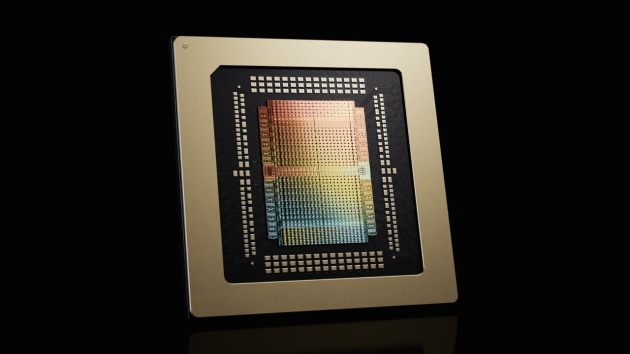
NVIDIA has put Groq 3 LPX, an inference accelerator built for exactly that problem, into full production, the company announced at Hot Chips 2026. It is an extension of the Vera Rubin platform: GPUs handle training and general-purpose work while this chip takes the inference-intensive load.
The numbers: in Artificial Analysis benchmarking, running the open-source agentic model Gemma 4 31B with a 100,000-token context, it recorded 3,400 output tokens per second — the fastest ever measured for that model. NVIDIA says agentic tasks such as coding drop from hours to minutes, with 4x the responsiveness of the nearest alternative platform.
A $20 Billion License Became a Product
Why the chip is called “Groq” is the heart of this story.
Groq was founded in 2016 by Jonathan Ross, who designed the first generation of Google’s TPU. Its Language Processing Unit (LPU) took a different path from GPUs — a deterministic processor design with a dataflow architecture — to deliver ultrafast inference, which earned the company its reputation as NVIDIA’s most credible challenger. In September 2025 it raised $750 million at a $6.9 billion valuation.
Then, in December 2025, NVIDIA licensed most of Groq’s assets for $20 billion in cash. That figure dwarfs the $7 billion NVIDIA paid for Mellanox in 2019, making it the largest deal in the company’s history. Ross and other key executives joined NVIDIA. Jensen Huang drew a careful line at the time: NVIDIA was hiring talented people and licensing Groq’s intellectual property, not acquiring Groq as a company. In other words, an acqui-hire.
Eight months later, that license has shipped as an NVIDIA product — a rack-scale accelerator built from 256 LPUs.
The Challenger Becomes a Customer
Having stepped back from chipmaking, Groq pivoted to being an AI inference cloud. It raised $650 million in June to change direction, and $350 million more this month in a round labeled Series A. The $3.5 billion valuation is 49% below the $6.9 billion it carried as a chip company.
The first cloud to adopt Groq 3 LPX is Nebius, which plans to bring it to Nebius Token Factory, its production inference platform. Danila Shtan, Nebius CTO, said that generation is the phase of inference that determines how responsive a system actually feels, and that Groq 3 LPX is built to accelerate precisely that — delivered through the same API developers already use, with no migration to a new stack.
Groq comes next. NVIDIA said that following Nebius, Groq plans to be among the platform’s earliest adopters — meaning it will deploy, as a cloud operator, hardware built on technology it originally created. Last year’s license was non-exclusive, so Groq did not lose the technology. It stepped out of manufacturing chips, not out of the field.
Both are still at the planning stage; neither has announced when the capacity goes live.
Samsung Foundry Is the Sole Manufacturer, on 4nm
The LPUs inside this chip are manufactured exclusively by Samsung Electronics’ foundry division on its 4-nanometer process. NVIDIA’s announcement makes no mention of a foundry, but Jensen Huang confirmed the arrangement at GTC in March, saying Samsung was building the Groq 3 LPU and that NVIDIA was ramping production as fast as it possibly could.
In Korea the volume is treated as an inflection point for Samsung’s foundry business, which has been running at a loss. KB Securities expects a return to profit in the third quarter — the first in four years since 2022 — excluding items such as performance bonus provisions. With TSMC’s advanced-node capacity tight, Samsung has absorbed demand from customers looking for an alternative supplier.
Where This Sits in the Inference Race
Unlike training, which NVIDIA effectively dominates, inference is contested. Cerebras and SambaNova push speed through purpose-built architectures, and there are in-house chips such as Google’s TPU and Amazon’s Trainium.
That NVIDIA bought and productized a chip outside its GPU lineage reads as an admission that inference is not a problem GPUs alone optimize for. Where a dedicated architecture is needed, the company decided buying that technology for $20 billion was faster than building it.
The rack platform pairs BlueField-4 DPUs with Vera CPU racks, Vera BlueField-4 STX storage and Spectrum-6 SPX Ethernet. NVIDIA describes Vera Rubin as spanning seven chips and five purpose-built racks.
MORE FROM THE POST
Share

Most Read
- 1
- 2
- 3
- 4
- 5

Leave a Reply