





Somewhere in the world, an energy worker dies on the job roughly every 75 minutes — about 7,000 deaths a year. That estimate comes from applying the International Labour Organization’s economy-wide fatal-accident rate to the International Energy Agency’s count of 76 million global energy workers, so the real number in high-risk segments like oil and gas is likely higher. Explosive ordnance disposal (EOD) and hazmat response teams face a similar reality. NATO consistently ranks them as the highest-risk units in any force, yet they still rely on decades-old wheeled, single-arm robots on the ground — and when a task needs two hands and real dexterity, a person still has to put on the suit and walk in.
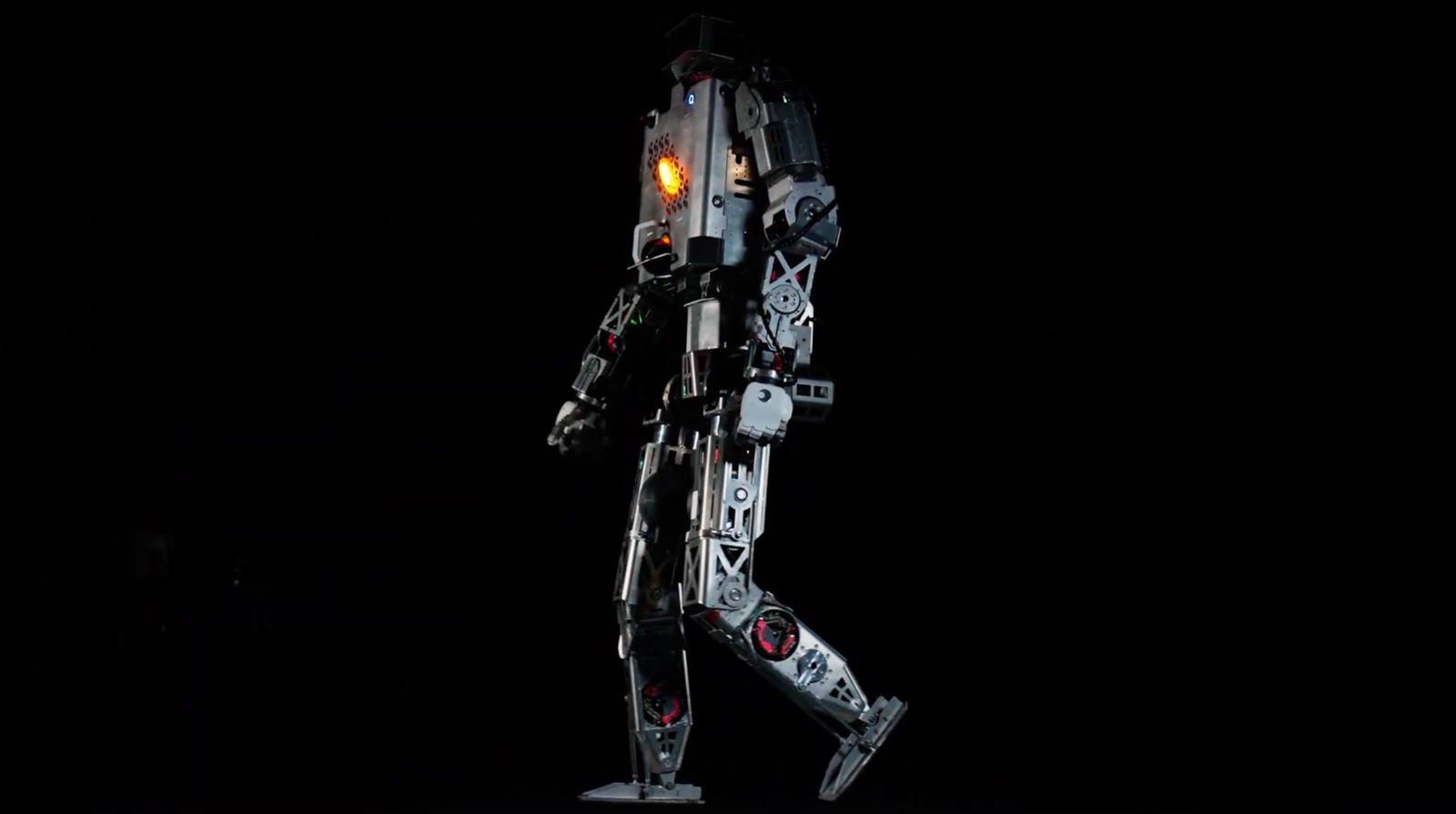
Minerva Humanoids said it has raised $10 million in pre-seed funding as it exits stealth, led by General Catalyst, with Long Journey Ventures and Credo Ventures co-leading. A long list of angel and strategic investors, including the founders of Hugging Face and Codecademy, also joined. The company plans to launch its first paid pilots this fall.
Letting a Robot Take the Physical Risk Instead of a Person
Minerva’s robot, Roger, is not fully autonomous — it’s a semi-autonomous humanoid remotely operated by a trained specialist. The company’s in-house AI system, Minerva Intelligence, handles balance, fall recovery, and navigation, while the specialist wears a VR headset to see through the robot’s eyes and perform fine manipulation and judgment calls directly. Low-latency control keeps the response immediate, and the company says operators learn full-body control in minutes. “People are dying every day doing jobs the rest of the world takes for granted,” said CEO Sandor Felber. “We didn’t set out to replace the people doing them. We set out to build a robot that lets them do the job efficiently from the comfort of their office or home, without asking them to risk their lives for our safety or our energy.”
Dominic Asquith, a British Special Forces veteran and Minerva’s Head of Hazardous Operations, said: “Every EOD operator knows the long walk. When the robot can’t complete the task and the operator has to put the EOD suit on and approach the device alone. The tracked, single-arm systems we’ve relied on for decades send a lot of people on that walk because the task needs two hands and real dexterity. Roger is a step-change for our community: the operator’s judgement and hands are on the device while their body stays in the safety of the command post.”
Minerva describes itself as “Western sovereign”: its software and AI are developed primarily in the US, while Roger’s initial prototypes are manufactured and assembled in Germany, letting the company iterate quickly on hardware. It plans to eventually produce robots in both the US and Germany using a Western industrial base, without relying on single-source Chinese components. It went from an idea to a fully functional walking humanoid in just five months. The company has research partnerships with the Mohamed bin Zayed University of Artificial Intelligence (MBZUAI) on humanoid capabilities for the energy sector, and with the University of Waterloo on perception in smoke, darkness, and other vision-denied conditions. Ahead of its official launch, Minerva showcased Roger at the NATO EOD Centre of Excellence in Samorin, Slovakia, and has already completed on-site testing for high-risk public-safety applications at two of the world’s 10 busiest airports.
An MIT-and-Tesla Alum Paired With a Boston Dynamics Veteran
CEO Sandor Felber played a core role in building MIT CSAIL’s AI-driven humanoid robotics research line and worked on Tesla’s Optimus program. CTO Maurice Rahme spent six years at Boston Dynamics, where he was a technical lead taking Stretch, the company’s warehouse box-unloading robot, from early prototype to commercially deployed product. Stretch is a wheeled, single-arm logistics robot, not a humanoid. The two co-founded Minerva in San Francisco in late 2025.
General Catalyst partner Robin Dechant said: “Building a humanoid from scratch is often a years-long project, but Sandor and Maurice did it in less than six months. Shipping hardware at this speed takes physical AI out of the lab and into the world where it matters and builds resiliency into critical sectors by removing people from the most dangerous working environments.” Long Journey Ventures partner Lee Jacobs said: “Robots can go where no man should. Minerva is bringing the world robots that will protect the Western world’s critical infrastructure, and we couldn’t be more thrilled to have been their second believer.” General Catalyst has repeatedly backed defense and dual-use startups, including Anduril and Helsing.
Competitors: Neither General-Purpose Humanoids Nor Legacy EOD Robots
Minerva doesn’t fit neatly into either existing camp. General-purpose humanoid makers like Figure AI, Apptronik, and Agility Robotics target warehouse, factory, and home work — bomb disposal and hazmat response aren’t their core markets.
On the other side sit the legacy EOD robots that have been deployed for decades. The UK’s QinetiQ has delivered more than 4,000 of its TALON robots since 2000, and Northrop Grumman’s Remotec has deployed more than 1,000 Andros units, but both are wheeled platforms with a single arm, limiting them on tasks that need two hands. The UK’s Shadow Robot Company, which supplies dexterous teleoperated hands and arms for hazardous environments like nuclear decommissioning, is the closest functional analog to Minerva — but it isn’t a full humanoid. Sarcos, which worked in a similar space with exoskeletons and teleoperated robots, rebranded as Palladyne AI and pivoted away from hardware entirely, toward defense autonomy software.
Minerva’s “Western sovereign” framing fits a broader investment theme: capital flowing toward defense and infrastructure startups, like Anduril and Helsing, that emphasize non-Chinese supply chains. Co-lead investor Credo Ventures has also backed US defense-tech startup Picogrid, suggesting this round is tied to that sovereign-supply-chain thesis as much as it is a bet on robotics itself.
MORE FROM THE POST
- Frontier Computing Raises $10M Pre-Seed to Grow AI on Living Neurons
- SYNCERE Raises $11M Pre-Seed for LUME, a Floor Lamp That Folds Your Laundry
- Fully Autonomous Surgical Robot Maker Aleph Surgical Raises $7.5M Pre-Seed
- Feather Raises $7.6M Pre-Seed to Build the ‘Android of Robotics’
- BrightAI Raises $97 Million to Put Physical AI on Pipes, Poles and Power Lines
- Credo Ventures
- funding
- General Catalyst
- humanoid robot
- Long Journey Ventures
- Maurice Rahme
- Minerva Humanoids
- Overseas funding
- pre-seed
- Roger
- Sandor Felber
- Teleoperation
Share

Most Read
- 1
- 2
- 3
- 4
- 5

Leave a Reply